
STCrushers Is A Professional Minging Equipment Manufacturer since 2004, Providing High Quality Crushers, Sand Making Machines, Drying Equipment and more.
STCrushers Is A Professional Minging Equipment Manufacturer since 2004, Providing High Quality Crushers, Sand Making Machines, Drying Equipment and more.
Urban sludge—byproduct of municipal wastewater treatment—has become a global environmental challenge. A medium-sized city generates 500-1,000 tons of sludge daily, with high moisture (80-90%), organic pollutants, and heavy metals. Traditional disposal methods like landfilling or incineration cause soil/water contamination and waste valuable organic and mineral resources. The rotary kiln calcination & granulation process changes this, turning toxic sludge into reusable granular products (e.g., soil conditioners, building material additives) while meeting strict environmental standards. For cities pursuing carbon neutrality and circular economy goals, this technology is not just a waste treatment solution but a way to unlock the economic value of sludge.
The Pain Points of Traditional Urban Sludge Disposal
Cities worldwide struggle with sludge management due to three critical issues:
Environmental risks: Landfilled sludge leaches heavy metals into groundwater, while unregulated incineration releases dioxins (carcinogenic pollutants). The EU’s Waste Framework Directive fines cities up to €50,000 for non-compliant sludge disposal.
High costs: Transporting wet sludge to landfills costs $50-80/ton, and incineration requires expensive fuel (natural gas or coal). A city in southern China spent $2 million monthly on sludge disposal in 2024.
Resource waste: Sludge contains organic matter (20-30%), nitrogen, phosphorus, and silica—resources that can be recycled into high-value products if processed correctly.
Rotary kiln calcination & granulation solves all these problems by combining harmless treatment with resource recovery.
Rotary Kiln Technology: Tailored for Urban Sludge Treatment
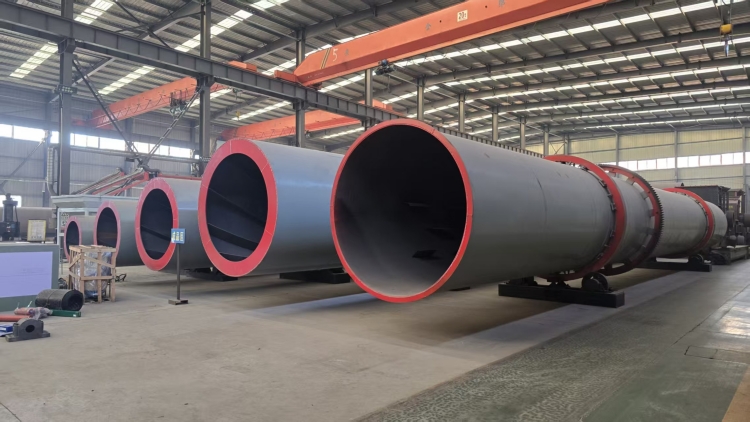
Unlike standard industrial rotary kilns, sludge-specific models feature three key design upgrades to handle sticky, pollutant-laden sludge:
1. Multi-Zone Temperature Control
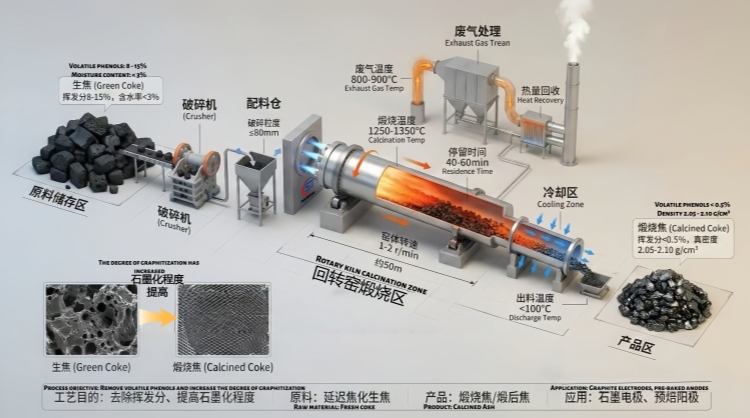
Rotary kilns for sludge are divided into drying (150-200°C), calcination (500-600°C), and granulation (300-400°C) zones. This staged heating:
Removes moisture efficiently in the drying zone, avoiding sludge clumping.
Breaks down organic pollutants and kills pathogens in the calcination zone (sterilization rate ≥99.9%).
Fuses sludge particles into uniform granules (2-5mm) in the granulation zone, easy to store and reuse.
2. Hazardous Emission Control
Integrated flue gas treatment systems (baghouse filters + activated carbon adsorption) capture 99% of heavy metals and dioxins from kiln exhaust, meeting the EU’s Industrial Emissions Directive (IED) and China’s GB 18484-2020 standards. A rotary kiln plant in Berlin emits just 0.01 ng/m³ of dioxins—far below the EU’s 0.1 ng/m³ limit.
3. Energy-Saving Design
Waste heat from the calcination zone is recycled to preheat incoming sludge, cutting fuel consumption by 35%. Some advanced models even use sludge’s own organic matter as fuel (after drying), achieving self-sustaining operation for 60% of the process.
The Complete Sludge Calcination & Granulation Process
The workflow transforms wet sludge into usable granules in four steps:
Sludge Dewatering: Wet sludge (85% moisture) is pressed by a belt filter press to reduce moisture to 60%, lowering kiln energy use by 20%.
Kiln Calcination: Dewatered sludge is fed into the rotary kiln, where staged heating removes moisture, decomposes organics, and melts inorganic particles.
Granulation: Molten sludge particles are cooled and agglomerated into 2-5mm granules via a rotary granulator (attached to the kiln’s discharge end).
Quality Screening: Granules are sorted by size—oversized particles are crushed and reprocessed, while undersized ones are returned to the granulator. 合格 granules are packaged for sale.
Real-World Case: A Chinese City’s Sludge-to-Resource Success
A city in Jiangsu, China, with a daily sludge output of 800 tons, installed a 3.2m×20m rotary kiln calcination-granulation line in 2024:
Environmental Impact: Sludge landfill volume dropped by 100%, and exhaust emissions met China’s strictest standards. The city avoided $1.2 million in annual environmental fines.
Economic Benefits: Produced 200 tons of soil conditioner granules daily (sold for $80/ton to local farms), generating $4.8 million in annual revenue. The kiln’s waste heat recycling cut fuel costs by $300,000 monthly.
ROI: The $15 million plant paid for itself in 3 years, far faster than traditional sludge disposal facilities (which have no revenue and ongoing costs).
Market Outlook: Rotary Kilns for Urban Sludge Treatment
The global urban sludge treatment market is projected to grow at 8.5% CAGR through 2030, driven by:
Stringent environmental laws: Governments worldwide are banning sludge landfilling (the EU will phase it out by 2030).
Circular economy goals: Cities are prioritizing resource recovery over waste disposal.
Technological advancements: Rotary kilns are becoming more energy-efficient and cost-effective for small-to-medium cities.
For wastewater treatment plants and urban waste management companies, rotary kiln calcination & granulation is not just a compliance measure—it’s a profitable business model that turns sludge from a liability into an asset.
If you’re planning a sludge treatment project, contact us for a customized rotary kiln solution. We’ll analyze your sludge composition, output goals, and environmental standards to design a line that maximizes resource recovery and minimizes operational costs.

 WhatsApp
 Email
Email
 +86 15538010601