
STCrushers Is A Professional Minging Equipment Manufacturer since 2004, Providing High Quality Crushers, Sand Making Machines, Drying Equipment and more.
STCrushers Is A Professional Minging Equipment Manufacturer since 2004, Providing High Quality Crushers, Sand Making Machines, Drying Equipment and more.
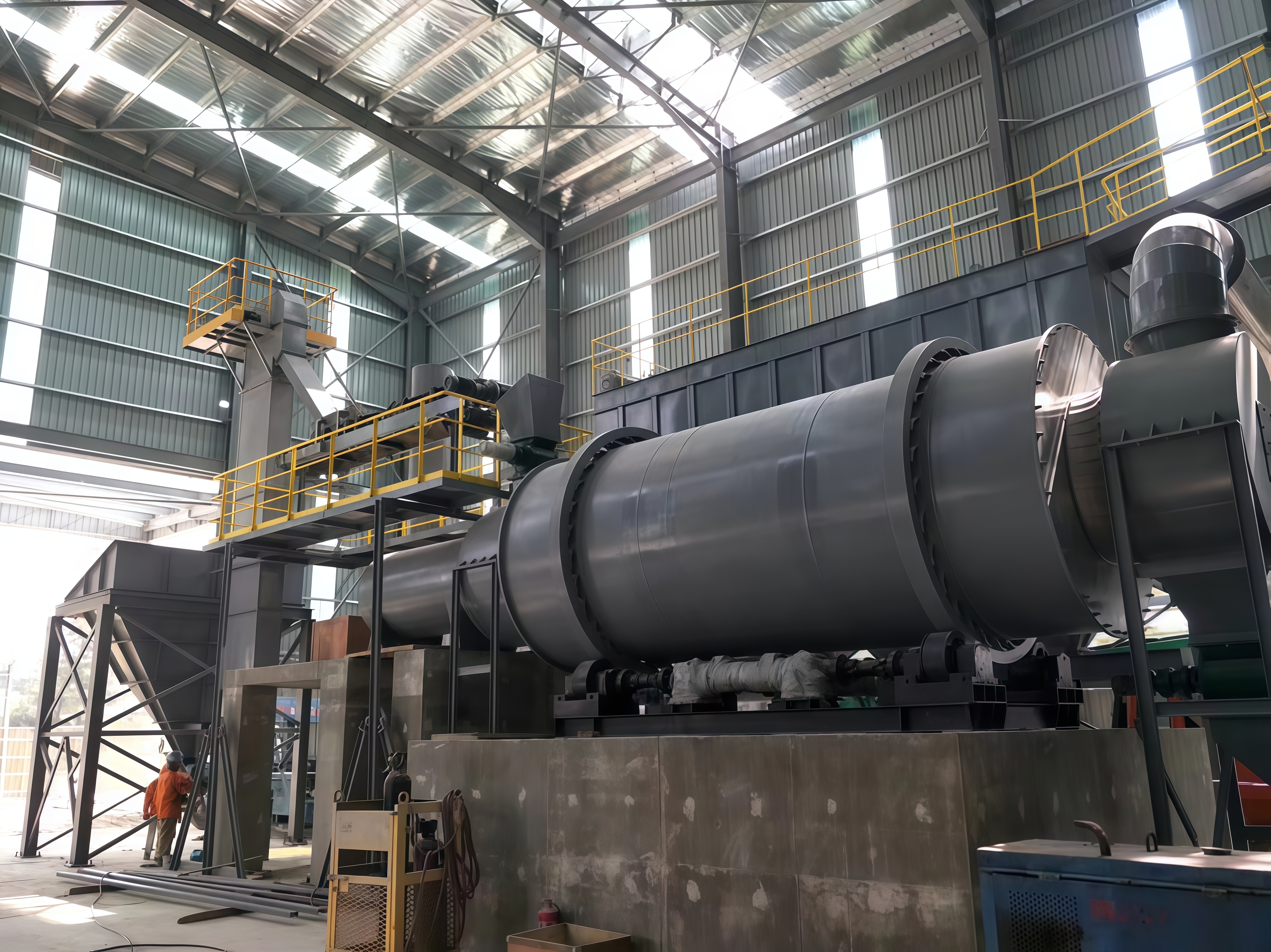
Both types operate on the same core principle: a rotating drum tumbles material through a stream of hot air (direct heating) or over heated surfaces (indirect heating), facilitating evaporation. The key distinction lies in their design and heat utilization.
Single-Drum Dryer: This is the classic, straightforward design. Material enters one end of a single, long rotating cylinder and exits at the other. Heat is applied internally.
Three-Drum Dryer: Also known as a triple-pass dryer, it features three concentric cylinders. Material enters the innermost drum, travels to the outermost, and then back through the middle drum before exiting. This creates a longer, more controlled path within a compact footprint.
Design & Advantages:
The triple-pass design is its hallmark. The hot gases flow co-currently (in the same direction) with the material in the inner drum and then counter-currently in the outer shells. This allows for:
Superior Thermal Efficiency: Heat is transferred and re-used across the three shells, drastically reducing fuel consumption and exhaust gas temperatures. It's significantly more energy-efficient than a single drum.
Compact Footprint: Achieving the same drying length in a much shorter overall machine, saving valuable floor space.
Gentle, Controlled Drying: The extended, multi-stage process allows for precise control over temperature profiles, minimizing thermal shock to sensitive materials.
Reduced Dust & Emissions: Lower air velocities and enclosed design help contain fine particles.
Ideal Applications & Materials:
This dryer excels where high efficiency, precise moisture control, and product integrity are critical. It's often the preferred choice for:
High-Moisture, Fine, or Sticky Materials: Such as wood chips, sawdust, bark, and biomass for pellet production. The gentle tumbling prevents clumping.
Temperature-Sensitive Minerals & Chemicals: Like silica sand, gypsum, clay, certain salts, and fertilizer granules where strict temperature limits must be observed to prevent degradation or chemical change.
Advanced Industrial Processes: Where consistent, uniform final moisture content is paramount for downstream processing (e.g., in sand for foundry or glass production).
Design & Advantages:
Its simplicity is its strength. A single rotating cylinder can be configured for direct, indirect, or combined heating.
Robustness & Simplicity: Easier to manufacture, maintain, and clean. Can handle more abrasive materials with less internal complexity.
High Capacity & High-Temperature Operation: Suitable for very high throughputs and can be designed to withstand extremely high inlet temperatures.
Configuration Flexibility: Can be easily fitted with specialized flights (internal lifters), breakers, and tailored air-flow systems (co-current or counter-current) for specific material behavior.
Lower Initial Investment: Generally has a lower purchase cost than a three-drum system of similar capacity.
Ideal Applications & Materials:
This dryer is the go-to for high-volume, robust processing of less sensitive or abrasive materials. It is widely used for:
Aggregates and Heavy Minerals: Sand, gravel, crushed stone, ore concentrates, and slag. Its sturdy construction tolerates abrasion well.
High-Throughput Bulk Materials: Where precise moisture control is less critical than sheer volume, such as in some mining and quarrying operations.
Materials Requiring High-Temperature Exposure: Certain chemical processes, waste drying, or minerals that require calcination where very high gas temperatures are used.
Wide-Ranging Bulk Solids: Including fertilizers, animal feed, and certain types of biomass where cost-effectiveness is a primary driver.
| Feature | Three-Drum Dryer | Single-Drum Dryer |
|---|---|---|
| Thermal Efficiency | Very High (excellent heat recovery) | Moderate to Good |
| Footprint | Compact for its drying capacity | Longer, requires more space |
| Gentleness on Product | High (controlled, multi-stage drying) | Moderate to Low (can be harsher) |
| Dust Generation | Lower | Typically Higher |
| Abrasion Resistance | Moderate (complex internals) | High (simple, rugged design) |
| Temperature Control | Precise | Less precise |
| Initial Cost | Higher | Lower |
| Operating Cost | Lower (due to fuel savings) | Higher |
| Ideal Material Traits | Moist, fine, sticky, heat-sensitive | Abrasive, granular, high-volume, less sensitive |
The choice isn't about which is better overall, but which is optimal for your specific material and process goals.
Choose a Three-Drum Dryer if your priority is maximizing energy efficiency, processing sensitive or fine materials, and achieving uniform, high-quality output in a space-conscious setting. The higher initial investment is paid back through lower fuel costs and superior product quality.
Choose a Single-Drum Dryer for high-tonnage, rugged applications, handling abrasive or granular materials, or when capital cost is a major constraint and operational simplicity is valued. It remains the versatile, reliable standard for many industries.
Understanding the nature of your feedstock—its moisture content, particle size, abrasiveness, and thermal sensitivity—is the first step to selecting the perfect drying solution.

 WhatsApp
 Email
Email
 +86 15538010601