
STCrushers Is A Professional Minging Equipment Manufacturer since 2004, Providing High Quality Crushers, Sand Making Machines, Drying Equipment and more.
STCrushers Is A Professional Minging Equipment Manufacturer since 2004, Providing High Quality Crushers, Sand Making Machines, Drying Equipment and more.
A 100 TPH sand production line is a practical choice for many small and medium-sized aggregate investors. It offers a good balance between output, investment cost, and operational flexibility. However, designing an efficient 100 tons per hour sand production line is not simply about choosing a few machines. The entire process must be planned around the raw material, finished sand requirement, and site conditions.
The first step in design is to understand the raw material. Is it granite, basalt, limestone, river stone, or construction waste? Hard materials require stronger crushing equipment and usually generate more wear. Softer materials may allow a simpler process. Material hardness, abrasiveness, and moisture all influence machine selection.
The second step is to confirm the feed size. Large raw stone from a quarry often requires a jaw crusher for primary crushing. If the feed material is already smaller, the process may start from a different point. The maximum feed size directly affects crusher model and the arrangement of the first stage.
The third step is to define the final product specification. Is the customer producing sand for concrete, mortar, road construction, or general building use? Different applications may have different requirements for particle shape, fineness modulus, and cleanliness. If the final sand needs a more cubic shape and controlled grading, the shaping stage becomes more important.
A common 100 TPH sand production line often includes the following process:
Feeding – Raw material enters through a vibrating feeder.
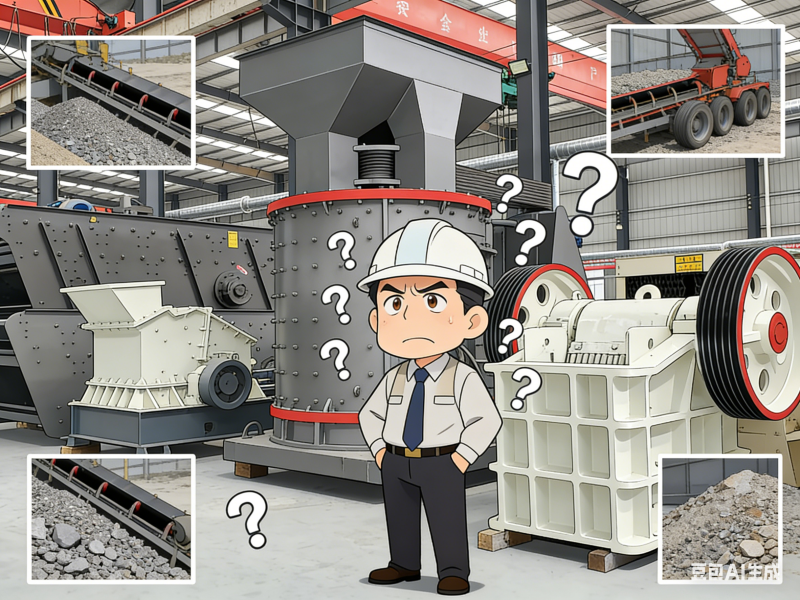
Primary crushing – A jaw crusher reduces large stone.
Secondary crushing – A secondary crusher reduces material further.
Sand making – A sand making machine shapes and fine-crushes the material.
Screening – A vibrating screen separates qualified sand and returns oversized material.
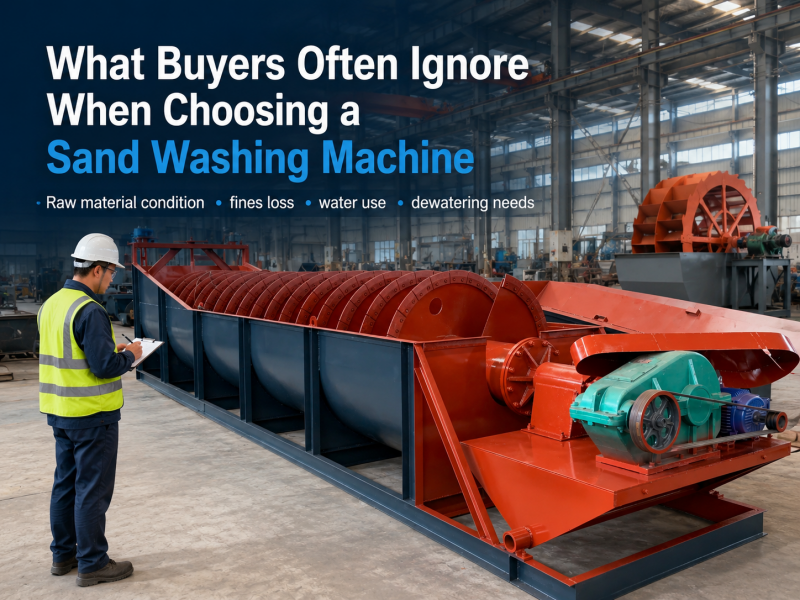
Washing – If required, a sand washer removes impurities and excess powder.
Conveying and stockpiling – Belt conveyors move material between stages.
The crushing stage should be designed to provide stable feed for the sand maker. If the material entering the sand making machine is too large or inconsistent, the final sand quality may fluctuate. This is why screening between stages is often necessary.
For a 100 TPH line, equipment matching is especially important. The feeder, crusher, screen, and conveyor should all be selected according to actual throughput, not just nominal machine size. A mismatch can cause a bottleneck. For example, if the crusher can process 100 TPH but the screen or conveyor cannot, the line will not reach its target output.
The plant should also be designed with closed-circuit operation in mind. Oversized material from the screen is often returned to the crusher or sand making machine for further processing. This recycling loop improves product size control and increases resource utilization.
If the project requires cleaner finished sand, a sand washing machine should be added. This is often recommended when the product will be used in concrete or other higher-standard applications. However, washing also means the plant may need water treatment or recycling support.
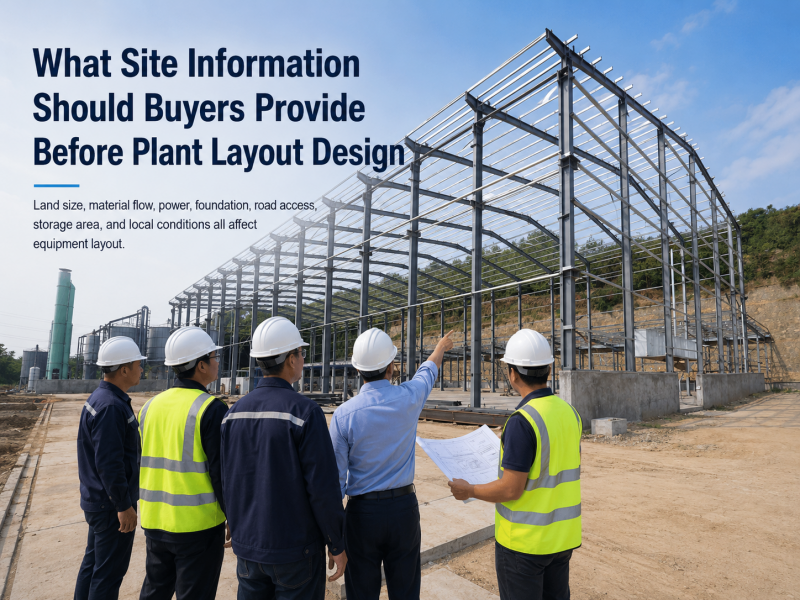
Site layout is another important design factor. The arrangement of machines should minimize unnecessary conveying distance and make maintenance easier. When space allows, the line should be designed for smooth material flow and future expansion. A well-planned layout reduces installation problems and simplifies daily operation.
A 100 TPH sand line should also consider power supply, dust control, and maintenance access. These practical details are sometimes underestimated during early planning, but they can strongly affect the long-term stability of the plant.
When designing such a line, it is helpful to prepare the following information: - Raw material type - Feed size - Target capacity - Required finished sand size and quality - Whether washing is needed - Site dimensions and layout conditions - Local power and water conditions
In many cases, the best 100 TPH sand plant is not the most complicated one. It is the one with a reasonable process, properly matched equipment, and stable final product quality.
At Sentai machinery, we design sand production lines based on practical project conditions. Whether the raw material is limestone, granite, or river pebbles, a well-designed 100 TPH system can help reduce operating cost and improve final sand value.
Planning a 100 TPH sand plant? Contact Sentai machinery for a tailored process flow and equipment configuration based on your material and site conditions.
Related Articles:
What Equipment Is Needed for a Sand Making Plant?
How to Choose the Right Stone Crusher for Your Project
Best Crusher for Limestone Crushing

 WhatsApp
 Email
Email
 +86 15538010601