
STCrushers Is A Professional Minging Equipment Manufacturer since 2004, Providing High Quality Crushers, Sand Making Machines, Drying Equipment and more.
STCrushers Is A Professional Minging Equipment Manufacturer since 2004, Providing High Quality Crushers, Sand Making Machines, Drying Equipment and more.
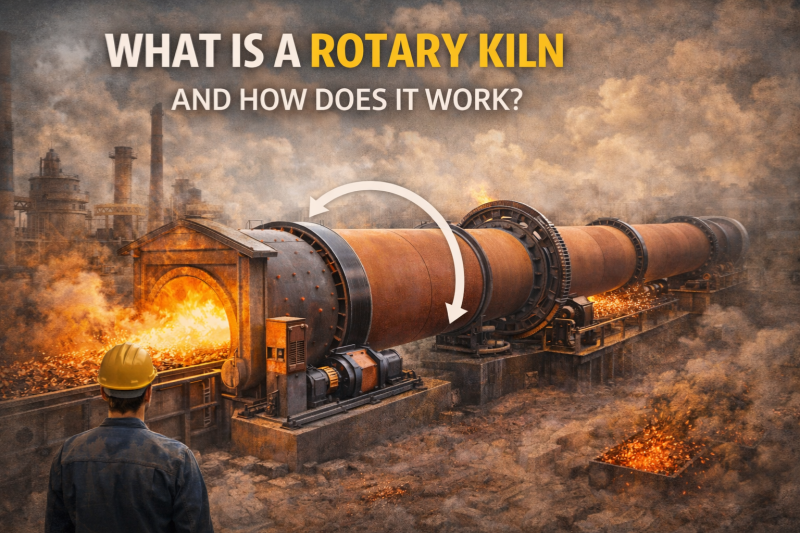
A rotary kiln is a thermal processing device used in many industrial fields such as cement production, lime calcination, ceramsite production, kaolin processing, metallurgy, and mineral treatment. It is widely valued because it can process material continuously under controlled temperature conditions and is suitable for large-scale industrial production.
So what exactly is a rotary kiln, and how does it work?
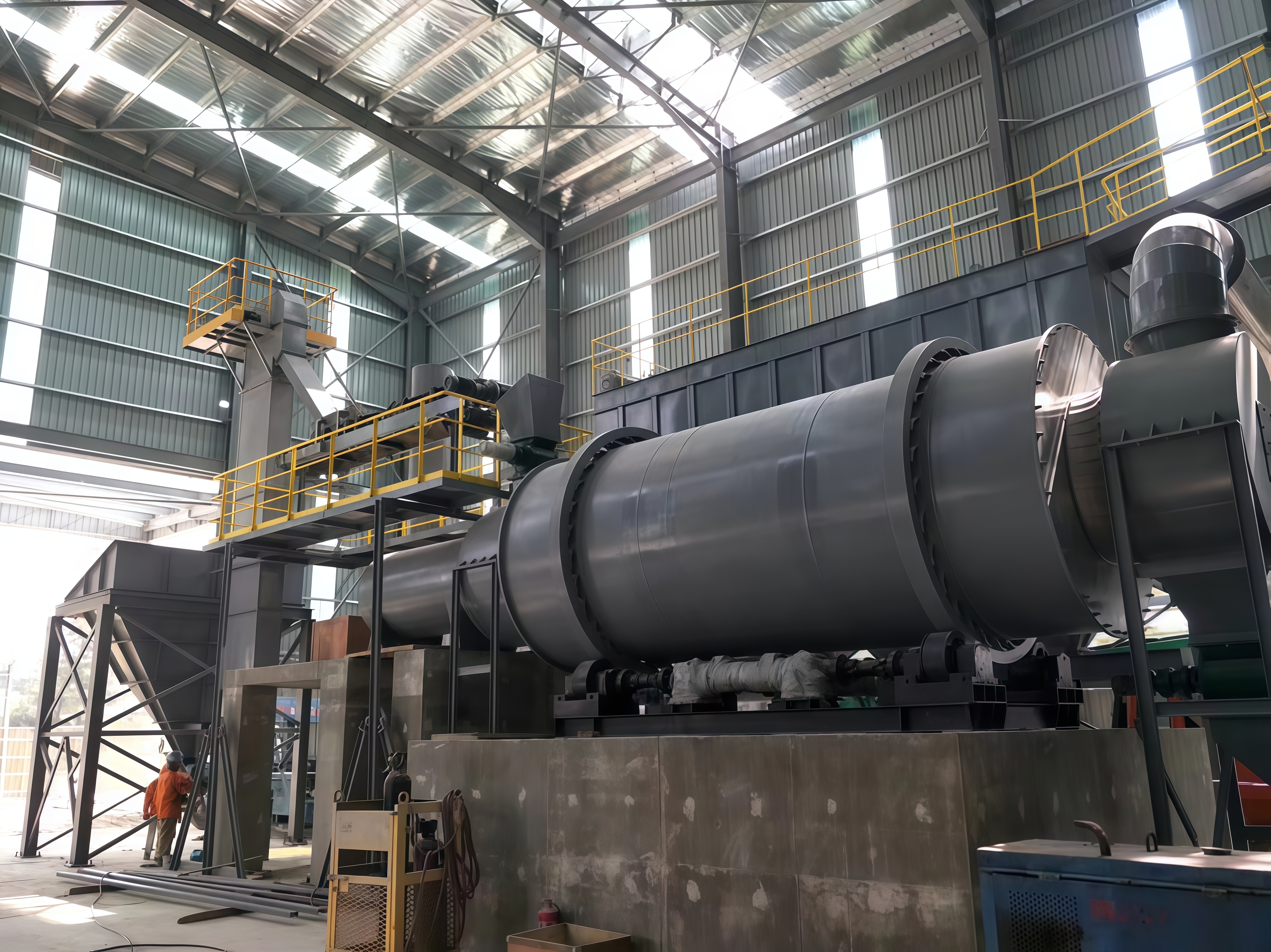
A rotary kiln is a large rotating cylindrical vessel installed with a slight inclination. During operation, material enters from the higher end of the kiln and gradually moves toward the lower discharge end as the cylinder rotates. At the same time, heat is applied through a burner or other thermal system, allowing the material to undergo drying, heating, calcination, or other thermal changes depending on the process requirement.
The basic working principle of a rotary kiln is continuous rotation plus controlled heat exchange. As the kiln rotates, the material inside is lifted and turned repeatedly. This movement improves contact between the material and the hot gas or flame, helping the process take place more evenly across the material bed.
One of the key advantages of a rotary kiln is its ability to handle continuous industrial production. Unlike batch-based thermal equipment, rotary kilns are suitable for long-term, stable operation where large quantities of material need to be processed under controlled conditions.
A typical rotary kiln system includes several main parts: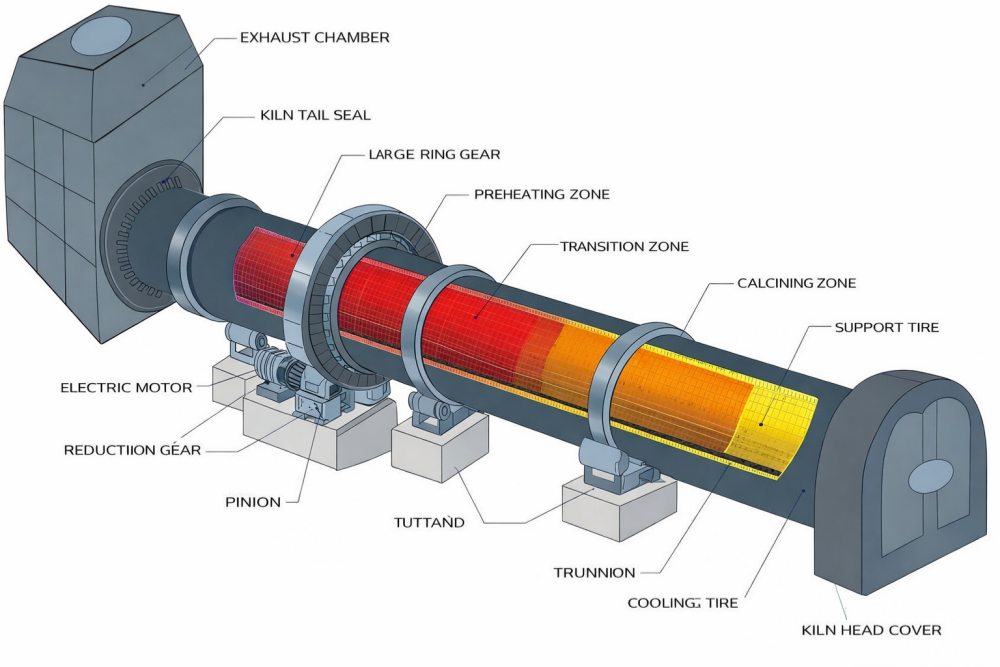
Kiln shell
Supporting rollers
Riding ring or tire
Drive system
Burner or heat source
Sealing system
Inlet and outlet section
Control system
The kiln shell is the main cylindrical body where the process takes place. It rotates slowly and supports the movement of material from feed end to discharge end. The supporting rollers and riding rings help carry the kiln body and keep it rotating steadily. The drive system powers the movement of the kiln, while the burner provides the required thermal energy.
The sealing system is also very important because it helps control heat loss, air leakage, and process stability. In industrial operation, poor sealing can lead to lower thermal efficiency and more unstable kiln performance.
The exact process inside a rotary kiln depends on the material being treated. In some applications, the kiln is mainly used for drying and preheating. In others, it is used for calcination, chemical transformation, or high-temperature heat treatment. For example, in lime production, limestone is heated to produce quicklime. In ceramsite production, raw pellets are heated and expanded under controlled conditions. In kaolin processing, thermal treatment changes the material properties for later industrial use.
The most important factors affecting rotary kiln performance include:
Material type
Feed size
Moisture content
Required processing temperature
Retention time
Heat source efficiency
Kiln sealing and control accuracy
When selecting a rotary kiln, buyers should not look only at kiln size. They should also consider the process goal, production capacity, fuel condition, environmental requirements, and the characteristics of the raw material. A rotary kiln is not just one machine. It is part of a complete production system.
In summary, a rotary kiln is a continuous high-temperature processing device used in a wide range of industries. Its working principle is based on rotation, material movement, and controlled heat treatment. With proper design and matching, it can provide stable and efficient thermal processing for many industrial materials.
At Sentai machinery, we provide rotary kiln solutions for different industrial applications based on raw material characteristics, process goals, and production needs. Choosing the right kiln design is the foundation of stable long-term operation.
Looking for a rotary kiln solution? Contact Sentai machinery with your material type, capacity, and process requirement for practical technical support.
Related Articles:
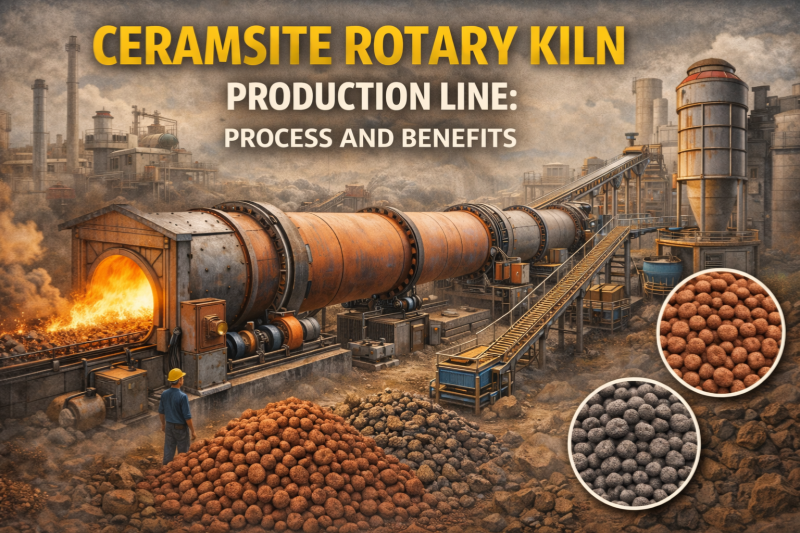
Ceramsite Rotary Kiln Production Line: Process and Benefits
Gold Ore Processing Plant Design: From Crushing to Separation
 WhatsApp
 Email
Email
 +86 15538010601