
STCrushers Is A Professional Minging Equipment Manufacturer since 2004, Providing High Quality Crushers, Sand Making Machines, Drying Equipment and more.
STCrushers Is A Professional Minging Equipment Manufacturer since 2004, Providing High Quality Crushers, Sand Making Machines, Drying Equipment and more.
A rotary dryer is designed to remove moisture continuously and efficiently, but in actual production many users find that drying performance gradually declines. The material may still come out wet, fuel consumption may increase, and the whole production line may become unstable. When this happens, the problem is usually described in simple terms: the rotary dryer efficiency is too low.
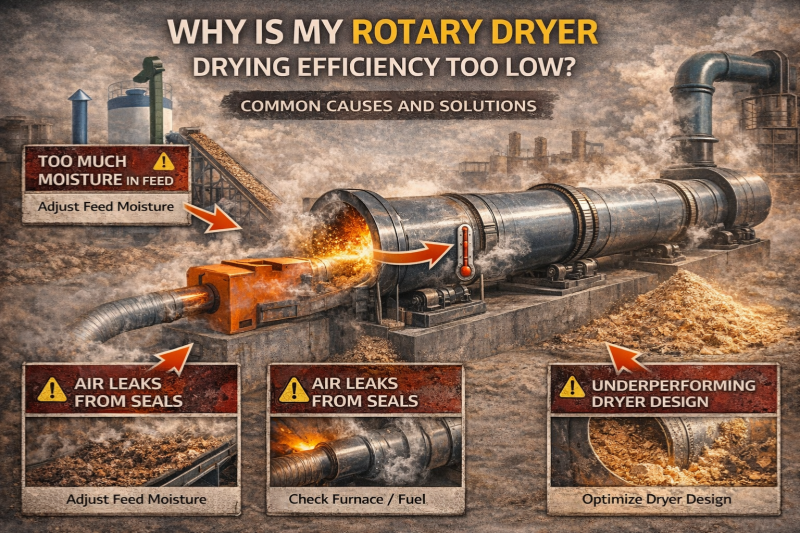
In most cases, low drying efficiency is not caused by one single problem. It is usually the result of several factors working together, such as raw material moisture, feeding instability, poor heat utilization, airflow imbalance, or maintenance issues. Understanding these causes is the first step toward improving dryer performance.
One of the most common reasons is higher-than-expected raw material moisture. Every dryer is designed around a certain moisture range. If the actual feed material is much wetter than planned, the dryer may not provide enough residence time or thermal energy to reduce moisture to the target level. This means the final product may remain too wet even if the machine is running normally. In this situation, the solution may involve reducing feed rate, increasing heat input, or adjusting the overall process.
Another common cause is uneven feeding. Rotary dryers work more efficiently when material enters the drum at a stable and controlled rate. If the feed volume fluctuates too much, the internal drying condition becomes unstable. Sometimes the drum is underloaded, wasting heat. At other times it is overloaded, which reduces heat exchange and increases the chance of uneven drying. A steady feeding system is one of the most important foundations of good dryer efficiency.
Heat source performance is another key factor. If the burner, furnace, or other heat supply system is not operating efficiently, the dryer cannot maintain sufficient thermal energy. Sometimes the issue is not that the dryer itself is weak, but that the available hot air temperature is too low or too unstable. In other situations, poor fuel quality or incomplete combustion may reduce usable heat and increase operating cost at the same time.
The condition of the airflow system also strongly affects drying efficiency. A rotary dryer depends on proper hot air movement through the drum. If airflow is insufficient, poorly distributed, or unstable, heat exchange becomes less effective. Material may not dry uniformly, and moisture removal may slow down. Problems in the induced draft fan, duct system, dust collection unit, or sealing system can all influence airflow quality.
Poor internal heat exchange inside the drum is another possible reason. The purpose of the drum’s internal lifting structure is to scatter and turn the material so that it contacts the hot air more effectively. If the internal condition is poor, or if material movement inside the dryer is not ideal, the contact between heat and material becomes weaker, reducing drying efficiency.
Another factor is material buildup and sticking. Some industrial materials are more likely to stick inside the drum, especially when moisture is high or the material contains fine sticky components. Once buildup occurs, the active heat exchange area may decrease, material flow may become uneven, and drying quality may suffer.
Poor sealing can also create major efficiency loss. If too much cold air enters the system through leakage points, the hot gas temperature inside the dryer may drop. This makes the drying process less efficient and increases fuel demand. In many plants, sealing problems are often overlooked even though they have a direct impact on thermal performance.
Lack of routine maintenance and inspection can gradually reduce dryer efficiency as well. Worn components, unstable drive conditions, dust accumulation, fan problems, or neglected cleaning may all contribute to weaker performance over time. The dryer may still run, but it will no longer operate at an efficient level.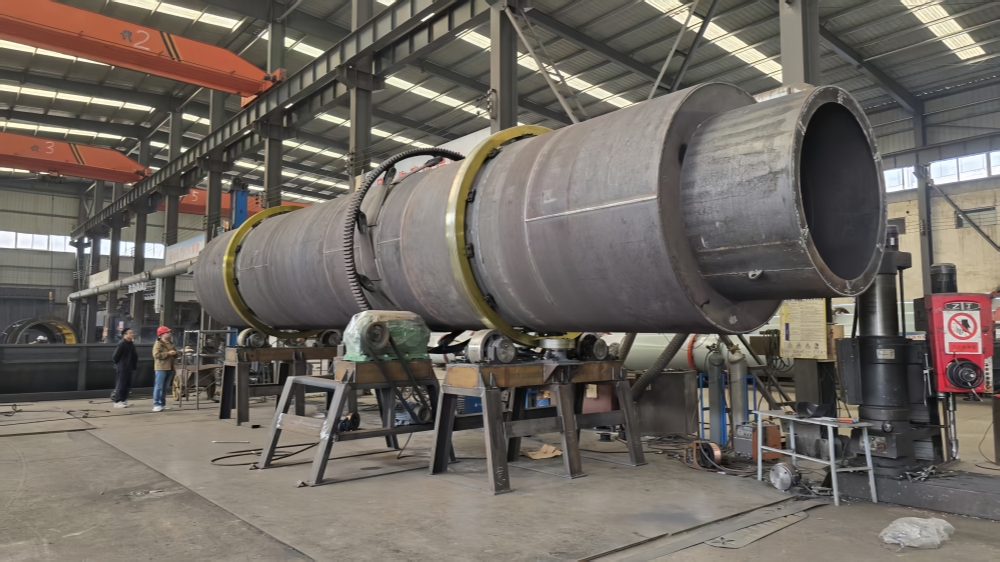
To improve rotary dryer efficiency, operators should check the following:
1.Actual feed moisture versus design moisture
2.Feeding stability and feed volume
3.Heat source temperature and combustion condition
4.Airflow balance and fan performance
5.Internal material movement in the drum
6.Sealing condition and air leakage points
7.Material sticking or buildup inside the system
8.Overall maintenance condition
It is also useful to compare current operating data with earlier stable production data. For example, compare feed moisture, discharge moisture, temperature, fuel use, and hourly output. These records can help reveal where the real efficiency loss is happening.
In summary, low rotary dryer drying efficiency is usually a process problem rather than a single machine problem. Material condition, heat source, airflow, sealing, and maintenance all affect the final result. By checking each part of the system carefully, most drying efficiency problems can be significantly improved.
Is your rotary dryer drying too slowly or producing unstable moisture content? Contact Sentai machinery with your material type, feed moisture, and current operating condition for practical troubleshooting support.
Related Articles:
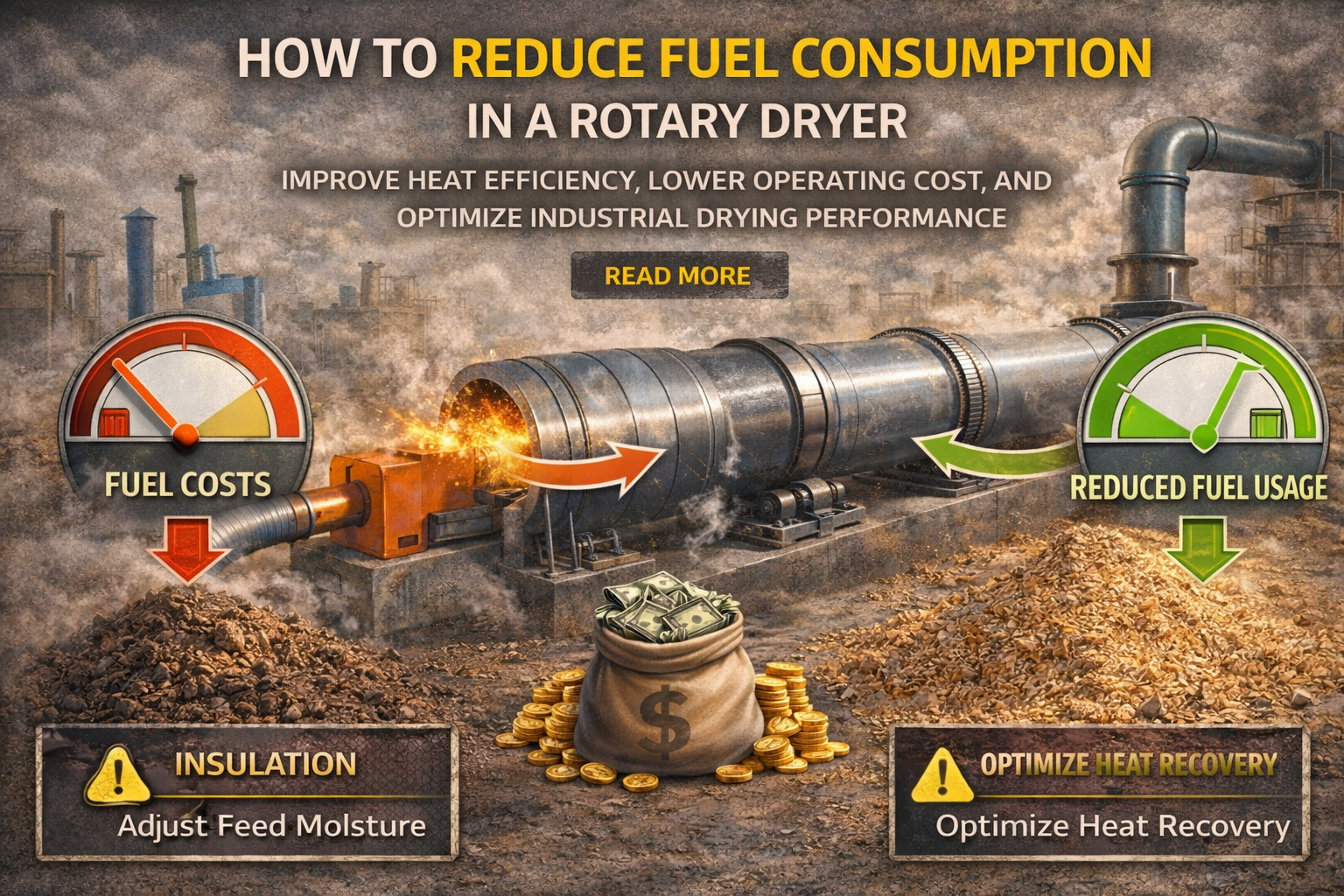
How to Reduce Fuel Consumption in a Rotary Dryer
Rotary Dryer for Sand Drying: Process, Capacity, and Advantages

 WhatsApp
 Email
Email
 +86 15538010601