
STCrushers Is A Professional Minging Equipment Manufacturer since 2004, Providing High Quality Crushers, Sand Making Machines, Drying Equipment and more.
STCrushers Is A Professional Minging Equipment Manufacturer since 2004, Providing High Quality Crushers, Sand Making Machines, Drying Equipment and more.
A rod mill can run with normal current and continuous feeding while the finished sand still changes from one shift to another. One sample contains too much oversize. The next contains more fine material. Washed sand output also rises and falls even though the mill appears stable.
This usually means the problem is moving through the circuit rather than staying inside one machine. Crushing size, feed surges, rod condition, screen efficiency, return load, washing water, fine sand recovery, and dewatering capacity can all change the result.
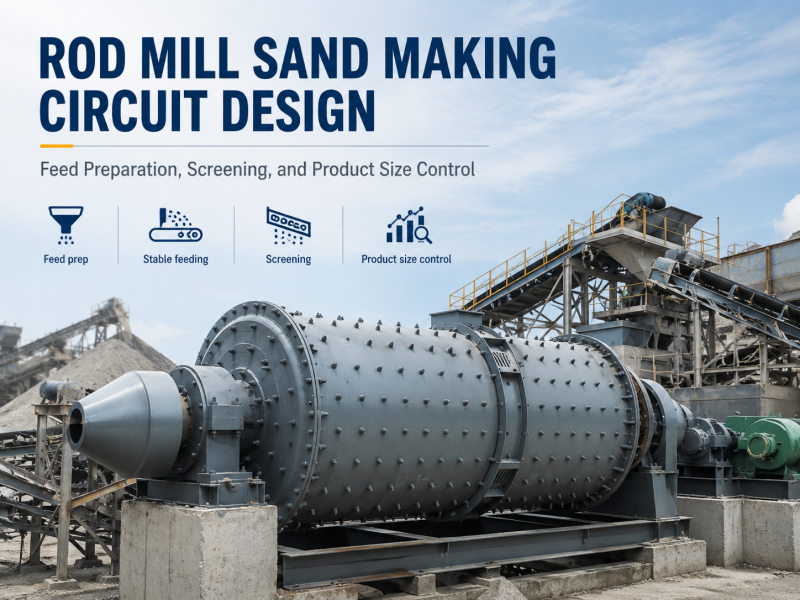
A rod mill sand making line should therefore be designed as a connected size-control system. The mill reduces the material, but the surrounding equipment decides what enters, what becomes finished product, what returns, and how much usable sand reaches the stockpile.
The process should begin with a clear product target. "0-5 mm sand" is not enough information for reliable circuit design.
The supplier also needs to know the acceptable oversize percentage, required fine content, washing demand, final moisture, and application. Sand for concrete, mortar, road construction, or general filling may require different grading and cleanliness.
These details affect screen opening, circulating load, washing arrangement, and recovery equipment. A circuit designed only around hourly tonnage may reach the planned throughput but still produce material that needs reprocessing.
A rod mill should not be expected to accept unrestricted quarry feed and complete every reduction stage by itself. Primary and secondary crushing prepare a narrower feed size.
Oversized pieces occupy mill volume and take longer to break. Too many fines also create a problem because part of the feed may already be below the target range and can be processed again without adding useful output.
The crusher discharge should therefore match the rod mill feed requirement. A protective screen or controlled crusher setting may also be needed to prevent occasional large pieces from entering the mill.
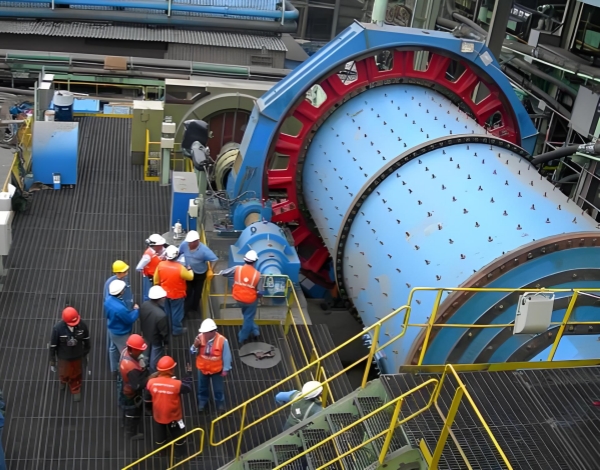
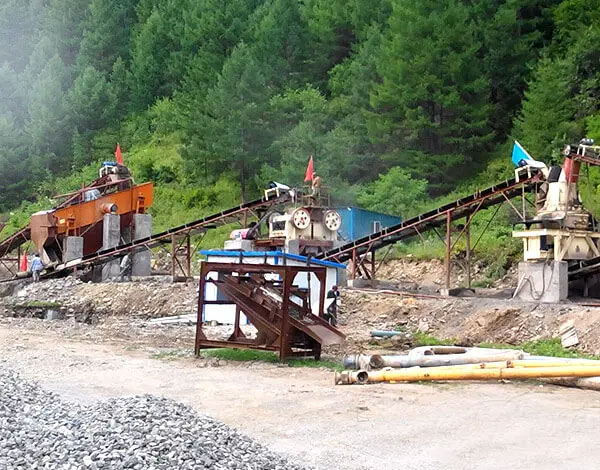
In Sentai Machinery's 100 TPH bluestone sand production case, material passes through primary and secondary jaw crushing before entering an MB2740 rod mill. The second crushing stage reduces the material to below 50 mm, while a buffer bin separates crushing from grinding.
The crusher and rod mill do not always produce and consume material at the same instantaneous rate. Without buffering, every fluctuation in crushing is transferred directly to the mill.
A short surge can reduce effective grinding. A temporary shortage lowers equipment utilization. Repeated fluctuations also make screening and washing harder to control.
A buffer bin provides short-term storage. The feeder below it should deliver a continuous rate, not only enough maximum capacity. For wet material, bin angle and outlet design also matter because bridging can create irregular flow.
Steel rod diameter, filling level, wear condition, mill speed, and feed rate work together.
Coarser or harder feed may require a suitable proportion of larger rods. As rods wear, the media combination changes. Only adding new rods without removing badly worn rods can create an uneven charge.
Too little rod charge reduces grinding capacity. Excessive charge can limit material movement and increase power demand. Increasing feed may raise tonnage temporarily but leave more oversize in the discharge.
The operating team should track rod wear, motor load, feed condition, and discharge grading together. A setting that works with one stone source may not remain suitable after hardness or crusher discharge changes.
The rod mill creates a range of particle sizes. The screen decides which part is accepted.
Screen aperture is only the first decision. Effective screening also depends on area, feed distribution, moisture, slurry concentration, spray water, vibration condition, and mesh cleanliness.
If the screen is overloaded or blocked, oversize can enter the finished product. Usable sand can also remain on the screen and return unnecessarily. Both conditions distort the real capacity of the line.
Feed should spread across the screen width. Wet screening must maintain enough water and open area to move fine particles through the mesh without creating excessive dilution.
In an open circuit, material leaving the rod mill moves forward without oversize returning to the same mill. The arrangement is simpler and may suit projects with a wider product tolerance.
In a closed circuit, the screen sends oversize back for further reduction. This can improve top-size control, but it also creates circulating load.
The mill processes fresh feed plus returned material. A line receiving 80 tons per hour of new feed may carry a much higher internal flow when return load is included. Conveyors, bins, screens, and the mill must be evaluated against this quantity.
If return material rises, the cause may be coarser crusher discharge, worn rods, excessive fresh feed, harder material, damaged mesh, or poor screening efficiency. Increasing return conveyor capacity does not solve these causes.
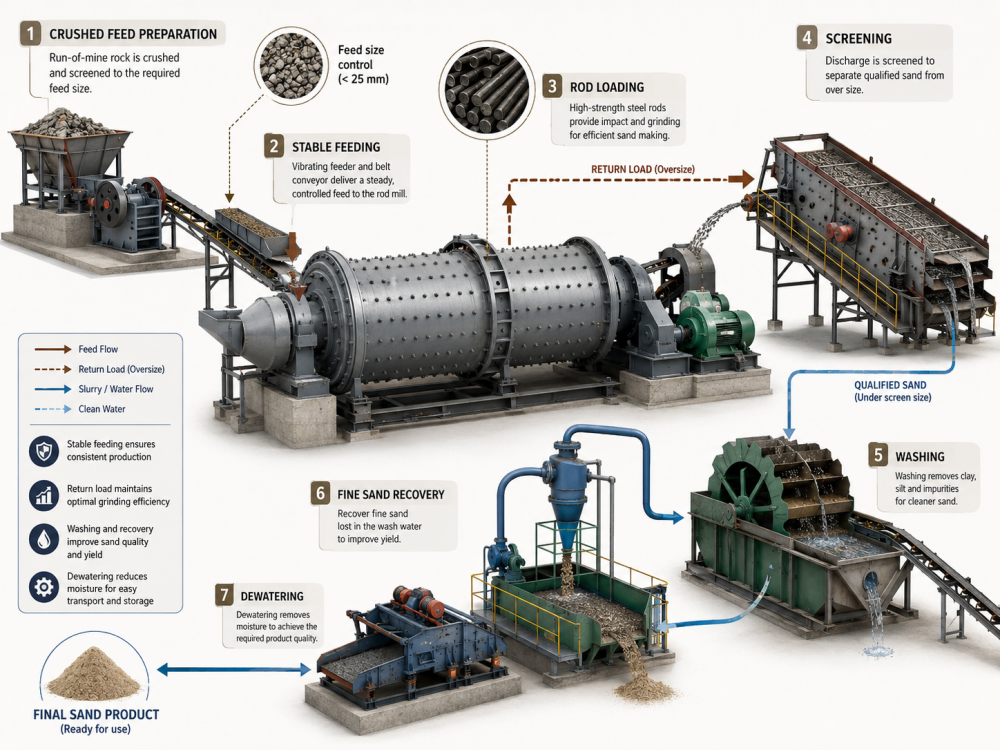
Washing removes clay, dust, and unwanted contamination. Fine sand recovery captures usable particles that would otherwise leave with process water. Dewatering reduces product moisture for conveying and stockpiling.
Increasing wash water may improve cleanliness, but it can also carry more fine sand into the slurry. A recovery system that is too small may lose saleable material. A dewatering screen selected only by dry plant capacity may be overloaded by the actual wet feed.
The 100 TPH Sentai Machinery case combines an MB2740 rod mill with a spiral sand washer, fine sand recovery machine, and dewatering screen. This shows why the wet end should be planned as a recovery and moisture-control section, not as one generic washing machine.
Finished Product Symptom | Possible Cause | First Check |
Oversize increases | Coarser feed, weak grinding, poor screening | Crusher setting, rod wear, screen |
Fine material increases | Excessive residence or repeated return | Feed rate, return load, rod charge |
Output fluctuates | Irregular feeding or changing return load | Bin, feeder, screen efficiency |
Fine sand loss rises | Excessive water or weak recovery | Water flow, recovery equipment |
Final moisture stays high | Dewatering capacity is insufficient | Feed concentration, screen area |
Tracing the symptom backward is more useful than adjusting only the final machine.
A rod mill route can be practical when the plant has controlled crushing before grinding, a defined fine product target, and enough water and space for screening, washing, recovery, and dewatering.
Another route may be more practical when particle shape is the main target, water is limited, the site cannot support a wet circuit, or a VSI and screen can reach the required product more directly. The decision should reflect the whole plant.
1. Raw material and approximate hardness.
2. Maximum feed size.
3. Size after primary and secondary crushing.
4. Required finished sand size and application.
5. Required hourly output.
6. Moisture, clay, and fine content.
7. Open or closed circuit.
8. Washing and fine sand recovery requirements.
9. Final moisture target.
10. Available water, power, and site area.
11. Planned working hours.
12. Any sample test or existing production data.
The rod mill provides the grinding action, but it cannot stabilize the line alone. Crushing defines the feed. The buffer bin and feeder control short-term load. Rod condition affects reduction. Screening separates acceptable product from oversize. Return load changes real throughput. Washing, fine sand recovery, and dewatering decide how much usable sand reaches the stockpile and in what condition.
Sentai Machinery can review these stages as one circuit. Share the raw material, feed and product sizes, capacity, washing requirement, water condition, and site layout. The configuration should be based on material flow and product control rather than the rod mill model alone.
1. Ball Mill vs Rod Mill: Which One Should You Choose for Your Plant?
2. How to Choose Equipment for a Sand Making Plant
3. Why Finished Sand Quality Depends on More Than the Sand Maker
4. Before Building a Sand Making Plant, Check These Site and Material Conditions
5. VSI Sand Making Machine Feed Control: Why Gradation and Moisture Change Sand Shape
1. Rod Mill
2. Jaw Crushers

 WhatsApp
 Email
Email
 +86 15538010601