
STCrushers Is A Professional Minging Equipment Manufacturer since 2004, Providing High Quality Crushers, Sand Making Machines, Drying Equipment and more.
STCrushers Is A Professional Minging Equipment Manufacturer since 2004, Providing High Quality Crushers, Sand Making Machines, Drying Equipment and more.
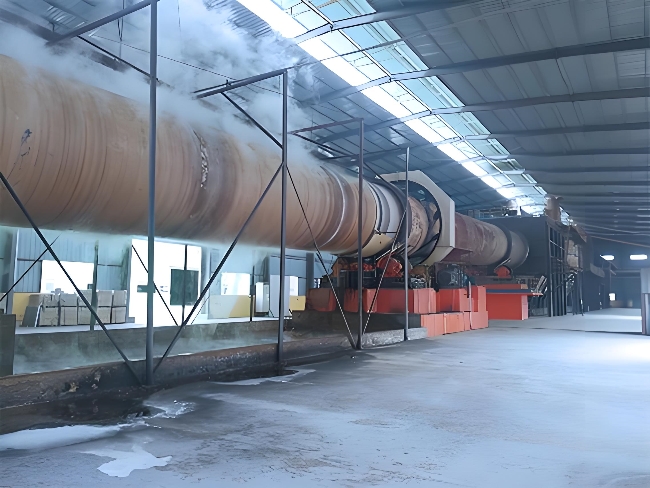
In a lime production plant, the rotary kiln may look normal from outside.
The kiln is rotating. The flame looks stable. Limestone is being fed into the system. Quicklime is being discharged from the kiln outlet.
But after checking the final product, the buyer may still find a serious problem.
Quicklime quality is not stable.
Some material is under-burned. Some material is over-burned. The activity of quicklime changes during production. The color, hardness, and reaction performance may not stay consistent. The plant is producing lime, but the product quality does not meet the expected level.
At this point, many buyers first think about kiln temperature. They may ask whether the temperature should be raised or whether the burner is powerful enough.
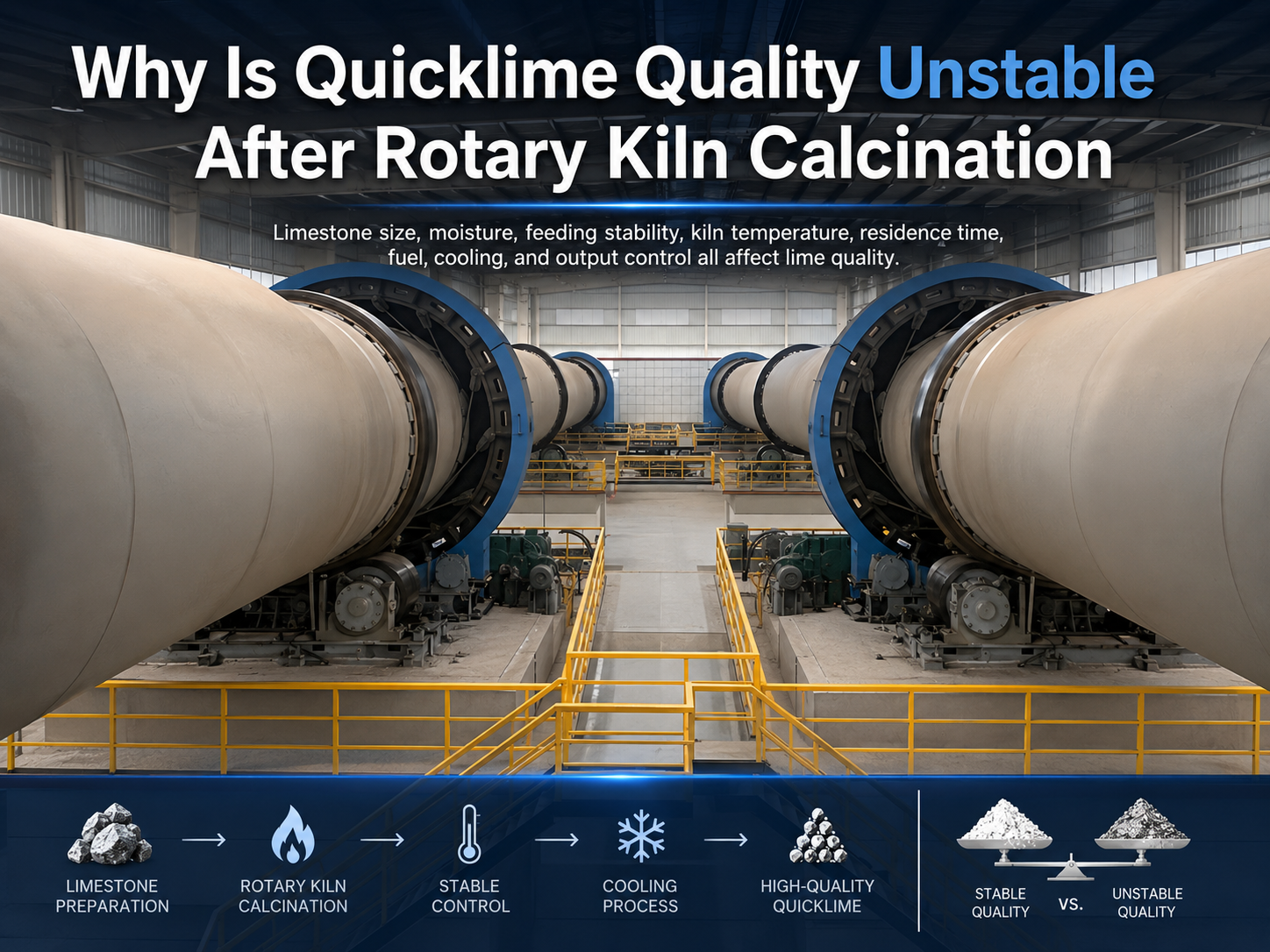
Temperature is important, but quicklime quality is not decided by temperature alone. Limestone size, moisture, feeding rhythm, kiln speed, residence time, fuel stability, flame shape, material layer, cooling, and output pressure can all affect the final result.
For Sentai Machinery, this kind of problem should be checked from the discharged quicklime backward through the whole calcination system.
Before adjusting the kiln, the site team should identify the type of quality problem.
Under-burned lime means the limestone has not been fully calcined. The inside of the material may still contain unreacted limestone. This can happen when the material size is too large, residence time is not enough, heat penetration is poor, or feeding is too heavy.
Over-burned lime means the material has received too much heat or stayed too long in the high temperature zone. It may become dense, less reactive, and harder to use in later applications.
These two problems are different. If the plant has both under-burned and over-burned material at the same time, it usually means the calcination condition is uneven, not simply too hot or too cold.
This is why the first step is not to raise the temperature immediately. The first step is to understand what type of instability appears in the final product.
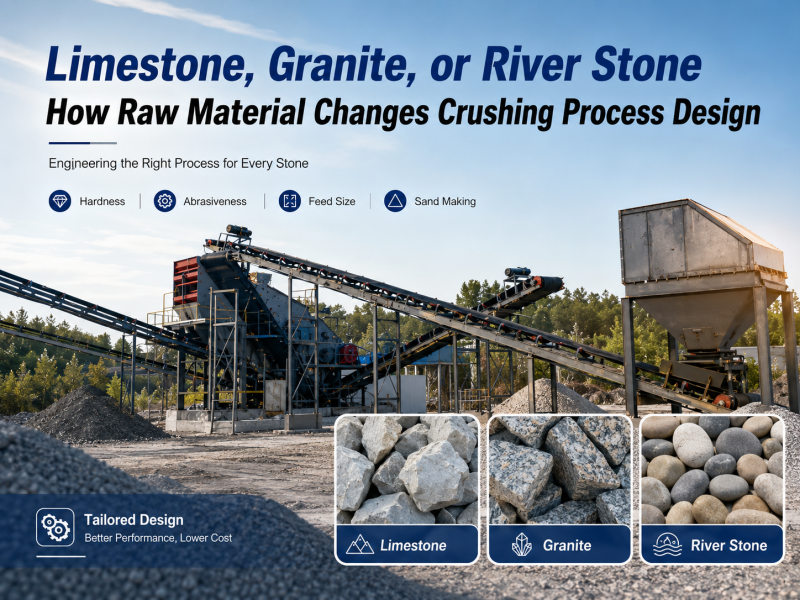
Limestone particle size is one of the most important factors in lime calcination.
If the limestone size is too large, heat may not penetrate to the center fast enough. The surface may look calcined, but the inside may remain under-burned. If the size range is too wide, small pieces and large pieces will not need the same calcination time.
Small pieces may be over-burned while large pieces are still under-burned.
This is a common reason why quicklime quality becomes unstable even when the kiln temperature seems normal.
Before limestone enters the rotary kiln, the crushing and screening process should control the feed size range. A narrower and more suitable size range helps the kiln produce more consistent quicklime.
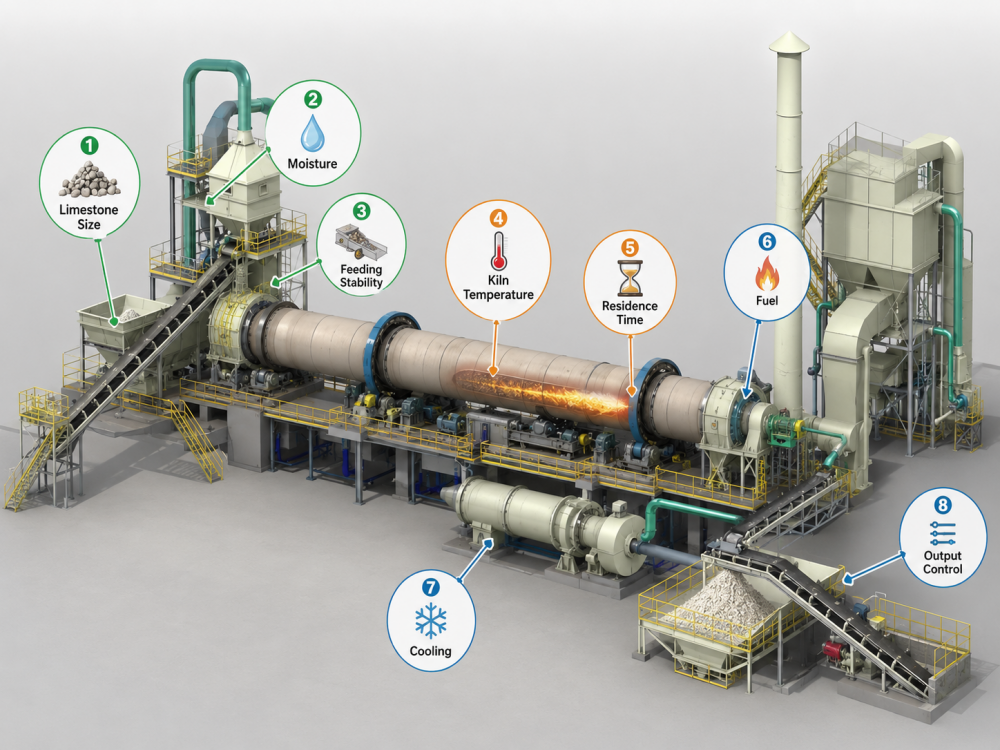
Moisture in limestone also affects calcination stability.
If the moisture content changes during production, part of the heat must first be used to evaporate water before calcination can proceed. This changes the heat balance inside the kiln. When wet material enters suddenly, the kiln system may need more heat, and the calcination result may fluctuate.
Impurities can also affect quicklime quality. Clay, soil, and other unwanted materials may change how the feed behaves inside the kiln. They may create dust, affect airflow, or reduce final product consistency.
For this reason, raw material preparation before kiln feeding is not a small detail. It is part of quicklime quality control.
A rotary kiln needs stable feeding.
If limestone enters the kiln unevenly, the heat load inside the kiln changes. When too much material enters suddenly, the kiln may not provide enough heat and residence time for full calcination. When feeding becomes too low, some material may receive excessive heat.
This feeding fluctuation can create both under-burned and over-burned lime in the same production period.
Stable quicklime quality requires stable feeding volume, stable material size, and stable material condition. The feeding system should not only deliver tons per hour. It should deliver material continuously and evenly.
Many operators focus on the temperature setting, but the real calcination result depends on heat distribution inside the kiln.
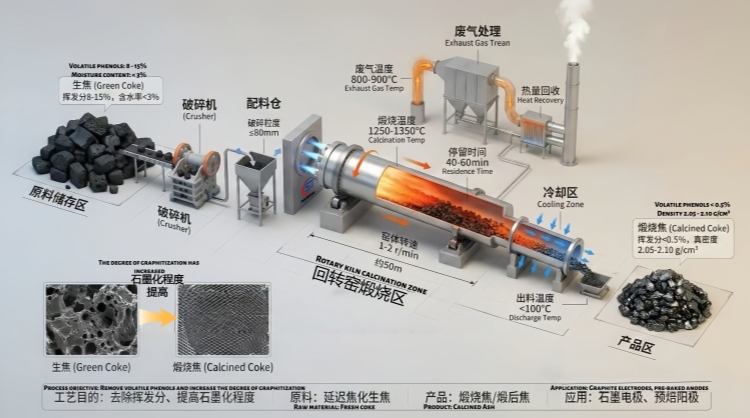
A lime rotary kiln is not a simple heating pipe. Material moves through different temperature zones. Heat transfer depends on flame condition, airflow, material layer thickness, kiln speed, slope, and residence time.
Even if the displayed temperature looks acceptable, the material may not receive uniform heat. Some parts of the material bed may be heated more strongly, while other parts may not be heated enough.
This is why quality problems cannot be solved only by looking at one temperature number. The kiln system should be judged by the actual calcination result, not only by the control panel.
Limestone needs enough time inside the high temperature zone.
If kiln speed is too fast or feed volume is too high, material may pass through the kiln before calcination is complete. This can create under-burned lime.
If kiln speed is too slow or production load is too low, material may stay too long in the kiln. This can create over-burned lime and reduce quicklime activity.
The suitable residence time depends on limestone size, kiln size, feed rate, target output, fuel condition, and final quicklime requirement.
So the kiln should not be operated only for maximum output. It should be operated for balanced output and stable calcination quality.
Fuel condition also affects quicklime quality.
If fuel quality changes, heat supply may become unstable. If the flame is too short, too long, too weak, or poorly controlled, the heat distribution inside the kiln may become uneven. This can affect both calcination completion and quicklime activity.
For some projects, the problem is not the kiln shell or the main drive. The problem is unstable fuel supply, poor combustion control, or improper air volume matching.
Stable fuel and stable flame are necessary for stable quicklime quality.
The quality control process does not end at the kiln outlet.
Cooling can also affect quicklime handling and final condition. If cooling is not suitable, the discharged material may remain too hot, create handling problems, or affect later storage and transportation. Poor discharge control may also make product sampling less representative.
In some plants, quicklime quality is judged from a small sample, but the sample may not represent the full discharge condition. The site should check product quality over a production period, not only from one moment.
Many quicklime quality problems appear when the plant tries to increase output too much.
Higher feed rate may increase short term production, but it can also reduce residence time and increase heat load. If the kiln system, fuel supply, airflow, and cooling system are not adjusted together, quality may drop.
In lime production, capacity and quality must be balanced. A kiln that produces unstable quicklime at a higher output may create more downstream problems than value.
When quicklime quality is unstable after rotary kiln calcination, buyers can check the system in this order.
Check Point | What to Look At | Why It Matters |
Final quicklime | Under-burned or over-burned | Defines the quality problem |
Limestone size | Too large or too wide range | Affects heat penetration |
Moisture content | Stable or changing | Affects kiln heat balance |
Impurities | Clay, soil, unwanted material | Affects calcination consistency |
Feeding rhythm | Continuous or fluctuating | Affects heat load |
Kiln temperature | Setting and actual performance | Affects calcination condition |
Residence time | Kiln speed and feed rate | Controls calcination completion |
Fuel and flame | Stable or changing | Affects heat distribution |
Cooling and discharge | Smooth and controlled | Affects final handling |
Production load | Reasonable or overloaded | Balances output and quality |
Unstable quicklime quality is not caused by kiln temperature alone.
The real reason may come from limestone size, moisture, impurities, unstable feeding, uneven heat distribution, unsuitable residence time, fuel fluctuation, poor cooling, or excessive production load.
For buyers, the better question is not only "Should we raise the kiln temperature?" A more useful question is "Why is the material not receiving stable and uniform calcination from feeding to discharge?"
When the problem is checked from the discharged quicklime backward, it becomes easier to locate the real cause and improve lime production stability.
If your quicklime quality is unstable after rotary kiln calcination, Sentai Machinery can help review your lime production process according to limestone size, moisture, feed condition, kiln operation, fuel type, target output, cooling method, and final quicklime requirement.
Send us your raw limestone photos or videos, feed size range, current output, fuel condition, quicklime quality problem, and site layout. Our team can help analyze the possible cause and recommend a suitable lime rotary kiln production solution.
1. What Affects Calcined Product Quality in a Rotary Kiln
2. Why Raw Material Preparation Matters Before Rotary Kiln Calcination
3. Why Rotary Kiln Output Is Not Only Decided by Kiln Size
4. Kaolin Calcination: Why Drying and Particle Control Matter Before the Kiln
5. What Site Information Should Buyers Provide Before Plant Layout Design
 WhatsApp
 Email
Email
 +86 15538010601