
STCrushers Is A Professional Minging Equipment Manufacturer since 2004, Providing High Quality Crushers, Sand Making Machines, Drying Equipment and more.
STCrushers Is A Professional Minging Equipment Manufacturer since 2004, Providing High Quality Crushers, Sand Making Machines, Drying Equipment and more.
For many overseas buyers, ordering a ball mill is only the first step.
The next concern is usually more practical: Can this machine be loaded safely? Will the motor, reducer and liner parts be protected during transport? Can we load spare parts and steel balls together without overweight? Will the supplier provide photos and videos before shipment?
These questions are normal. A ball mill is heavy, long, and not as easy to handle as small spare parts. If loading is not planned properly, the buyer may face problems before the machine even arrives at the port.
That is why overseas shipment should be considered as part of the project, not just the last step after production.
Before loading, the first thing to confirm is not the shipping price. It is whether the equipment can be safely loaded into the selected container.
For smaller and medium ball mills, a standard container may be possible. For larger models, the shipment may require special loading arrangements, partial disassembly, open-top container, flat rack container, or other shipping methods.
Item to Check | Why It Matters |
Overall machine size | Determines whether the machine can enter the container. |
Machine weight | Avoids overweight problems and unsafe loading. |
Drum length and diameter | Affects loading angle and fixing method. |
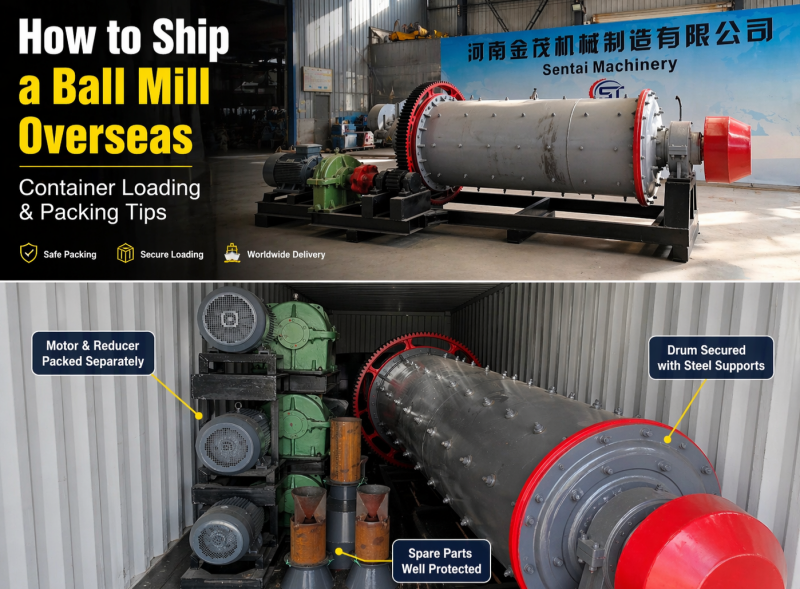
Motor and reducer position | May need protection or separate packing. |
Spare parts and steel balls | Must be calculated together with total container weight. |
Destination port unloading condition | Helps choose a safer shipping and unloading plan. |
A good loading plan should be made before the truck arrives at the factory gate.
A ball mill body is strong, but not every part should be treated roughly. During shipment, some components need extra attention:
<!--[endif]-->motor
<!--[endif]-->reducer
<!--[endif]-->electrical cabinet
<!--[endif]-->bearing parts
<!--[endif]-->coupling
<!--[endif]-->liner plates
<!--[endif]-->bolts and small accessories
spare parts
<!--[endif]-->steel balls
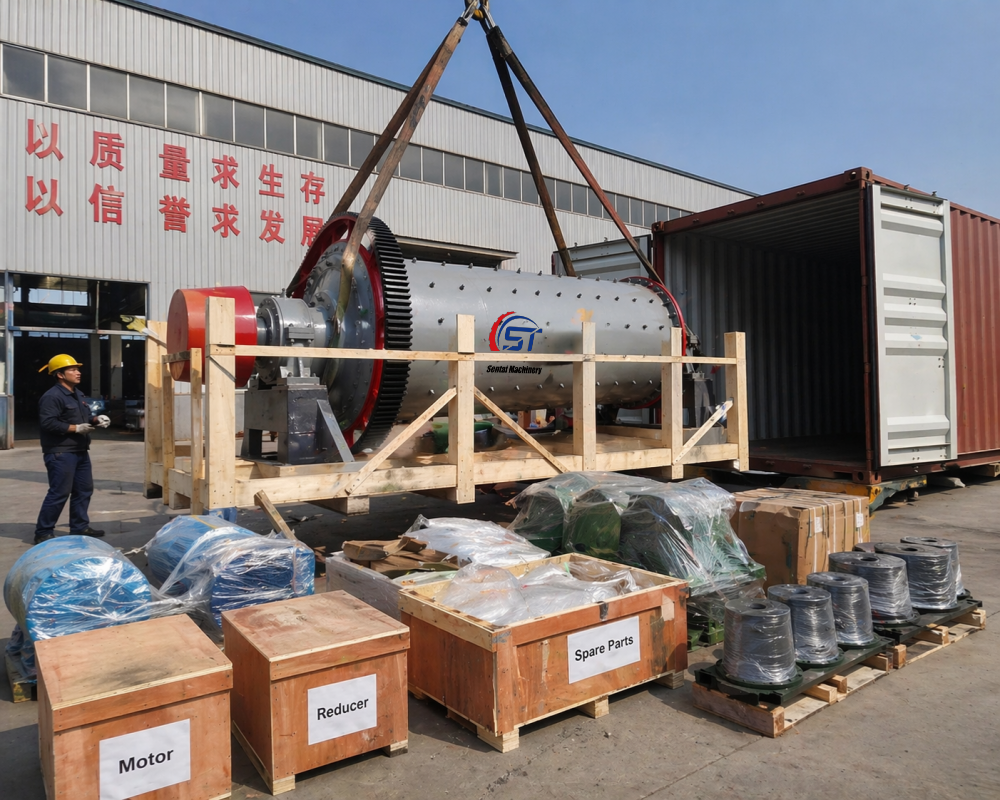
The mill drum itself is usually strong enough for transport, but exposed parts should be protected against impact, rain, rust and movement during shipping.
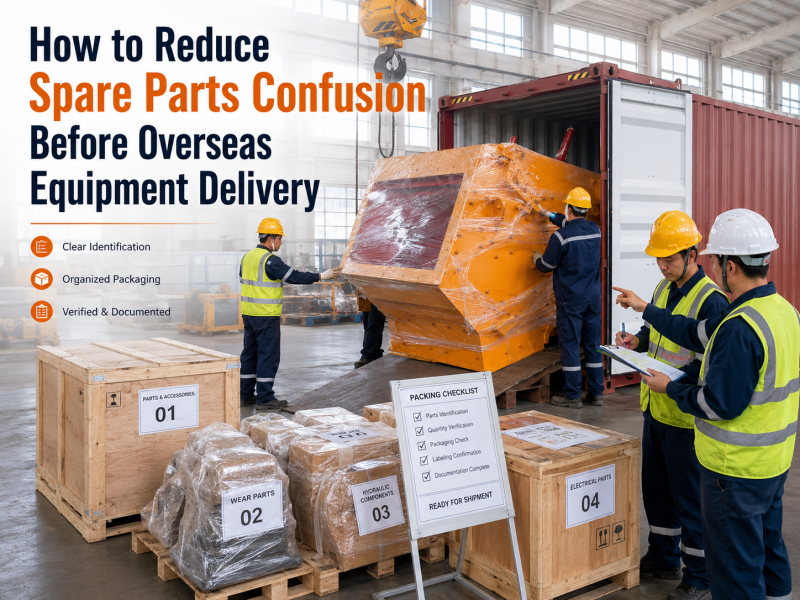
For accessories, wooden boxes or strong packages are often used. Small parts should be clearly labeled, because the customer will need them during installation.
One common mistake is loading the main machine properly but packing small parts carelessly. When the machine arrives, missing bolts, damaged electrical parts, or mixed accessories can delay installation.
Many customers want steel balls to be shipped together with the ball mill. This makes sense because the machine can be used more quickly after arrival.
But steel balls are heavy. If the container is already close to the weight limit, loading too many steel balls may create safety or customs problems. In some projects, it is better to load part of the steel balls with the machine and let the customer buy the rest locally.
A practical way is:
<!--[endif]-->calculate the safe loading weight first
<!--[endif]-->load the ball mill and essential accessories first
<!--[endif]-->load steel balls only within the remaining safe weight
<!--[endif]-->clearly mark the loaded quantity
<!--[endif]-->confirm with the customer before final sealing
This is not just a logistics detail. It affects the buyer’s cost, delivery safety and project schedule.
For heavy mining equipment, container loading should follow a plan. A typical loading process includes:
<!--[if !supportLists]-->1. <!--[endif]-->Clean the machine before loading
<!--[if !supportLists]-->2. <!--[endif]-->Check whether vulnerable parts need removal or protection
<!--[if !supportLists]-->3. <!--[endif]-->Prepare wooden blocks, supports and fixing materials
<!--[if !supportLists]-->4. <!--[endif]-->Lift or pull the machine into position carefully
<!--[if !supportLists]-->5. <!--[endif]-->Fix the machine to prevent movement during transport
<!--[if !supportLists]-->6. <!--[endif]-->Pack accessories separately
<!--[if !supportLists]-->7. <!--[endif]-->Take photos and videos for customer confirmation
<!--[if !supportLists]-->8. <!--[endif]-->Seal the container after final inspection
The most important point is stability.
During sea transport, the container may experience vibration, shaking and angle changes. If the machine is not fixed properly, even a strong machine can suffer surface damage, accessory damage or movement inside the container.
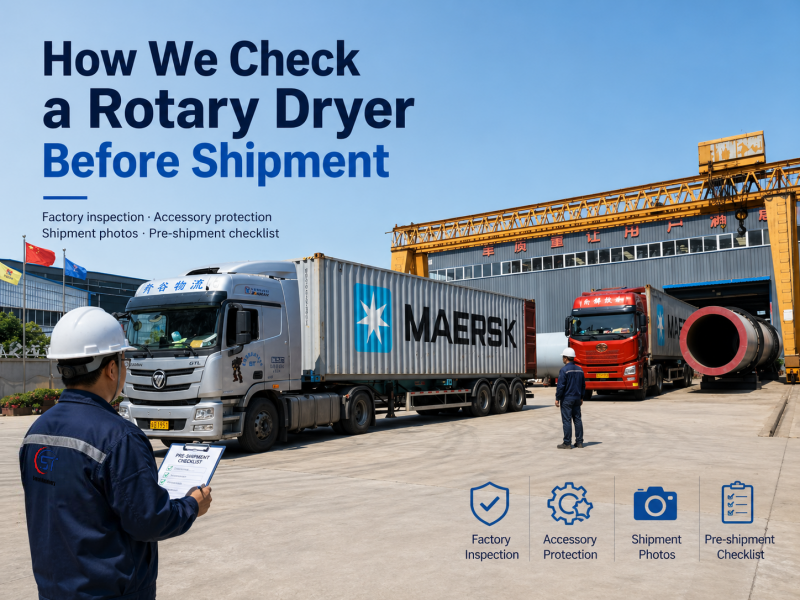
For overseas customers, they cannot stand in the factory and watch the loading process. So loading photos and videos are not just extra service. They are a way to reduce customer uncertainty.
Before shipment, it is useful to provide:
<!--[endif]-->machine appearance photos
<!--[endif]-->nameplate photos
<!--[endif]-->accessory packing photos
<!--[endif]-->inside-container loading photos
<!--[endif]-->fixing and lashing photos
<!--[endif]-->final container sealing photos
<!--[endif]-->container number photo
These materials help the buyer confirm that the machine, spare parts and accessories were loaded correctly. They can also be useful later if there is a shipping claim, customs check, or unloading question.
Question | Why It Is Important |
Is the machine model correct? | Avoids wrong equipment shipment. |
Are motor and reducer specifications correct? | Affects local installation and power matching. |
Are spare parts packed and labeled? | Helps installation and maintenance. |
Are steel balls included? | Affects startup preparation. |
Is the container weight safe? | Avoids overweight and port problems. |
Are loading photos provided? | Gives proof before shipment. |
Are documents prepared? | Supports customs clearance. |
Many delivery problems are not caused by production quality. They are caused by unclear communication before shipment.
In some mineral processing projects, the customer may order a ball mill together with other equipment, spare parts and grinding media.
In this case, the supplier should not simply load everything until the container is full. The safer approach is to calculate the weight first and make the loading plan around safety.
For example, after placing the ball mill and accessory boxes, the remaining container capacity can be used for part of the steel balls. If the weight limit is close, the supplier should stop loading more steel balls instead of taking unnecessary risk.
This is especially important for customers in Africa, Southeast Asia and South America, where port handling conditions and inland transport may vary from project to project.
A careful loading plan can reduce trouble after arrival.
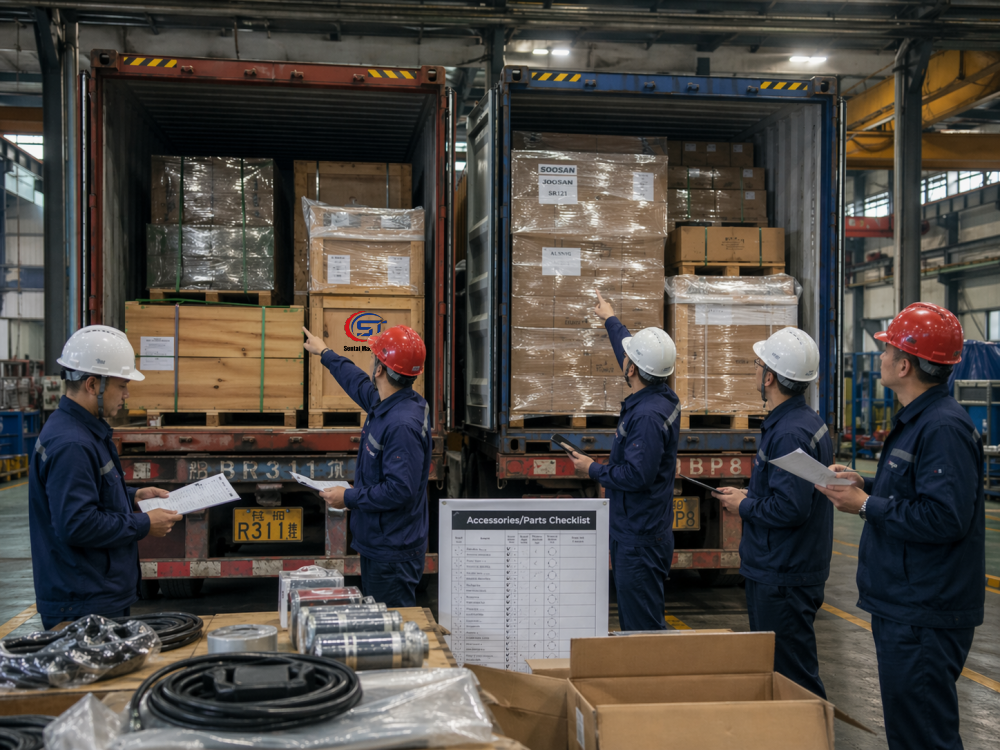
For overseas buyers, a reliable supplier should not only provide a quotation. A reliable supplier should also help answer:
How will the machine be packed?
<!--[endif]-->How will it be loaded?
<!--[endif]-->Which parts need protection?
<!--[endif]-->Can accessories be shipped together?
<!--[endif]-->Will the container be overweight?
<!--[endif]-->What photos or videos will be provided?
<!--[endif]-->What should the customer prepare before arrival?
These details show whether the supplier has real export experience. A machine may look simple on a quotation sheet. But delivery is where many practical problems appear.
Shipping a ball mill overseas is not only a logistics step. It is part of the whole project delivery.
A good shipment plan protects the machine, reduces customer worry, prevents missing parts, and helps the buyer prepare for installation after arrival.
At Sentai Machinery, we pay attention not only to equipment production, but also to packing, container loading, accessory checking and shipment communication. For overseas mining equipment projects, careful delivery planning can save time and reduce unnecessary problems after the machine arrives.
Planning to purchase a ball mill or mineral processing equipment from China? Contact Sentai Machinery to discuss equipment selection, packing, container loading and overseas delivery details before shipment.
Related Articles:
Ball Mill vs Rod Mill: Which One Should You Choose for Your Plant?
How to Choose a Ball Mill for Mineral Processing
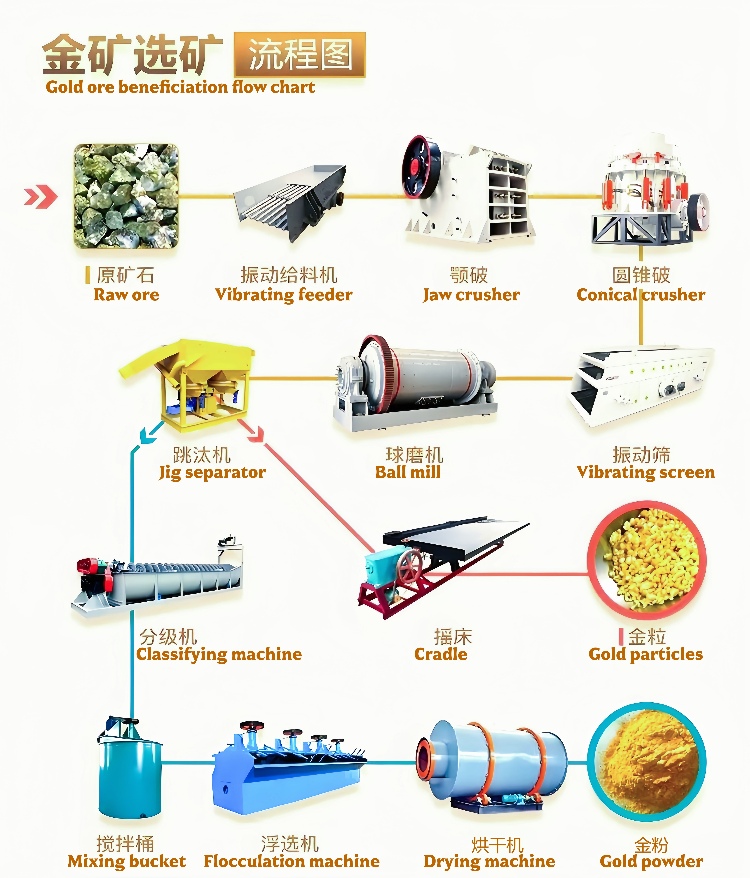
Gold Ore Processing Plant Design: From Crushing to Separation
Suggested Solutions Page Links:
 WhatsApp
 Email
Email
 +86 15538010601