
STCrushers Is A Professional Minging Equipment Manufacturer since 2004, Providing High Quality Crushers, Sand Making Machines, Drying Equipment and more.
STCrushers Is A Professional Minging Equipment Manufacturer since 2004, Providing High Quality Crushers, Sand Making Machines, Drying Equipment and more.
When equipment finally arrives at the project site, many buyers want to unload quickly and start installation as soon as possible.
This is understandable. The project has already gone through production, packing, customs clearance, transport, and site preparation. Everyone wants the machines to start working.
But for heavy machinery projects, the first day after arrival should not be only about unloading. It should also be the day for checking, recording, and confirming.
For crushers, ball mills, rotary dryers, rotary kilns, vibrating screens, and complete production lines, a careful arrival inspection can prevent many later problems. If package damage, missing parts, wrong labels, or unclear spare parts are discovered only during installation, the project may face delay and confusion.
For Sentai Machinery, we usually suggest that overseas buyers make a simple arrival inspection before moving directly into installation.
Before opening packages or moving machines, the buyer should first check the outside condition.
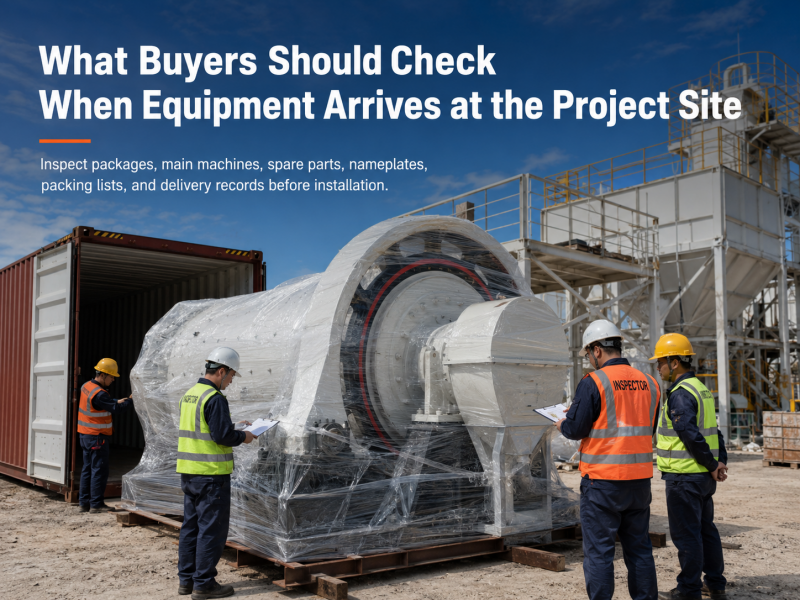
If the goods arrive by container, take photos of the container number, seal condition, and opening process. If the goods arrive by truck from the port, record the package condition before unloading.
This step is useful because it creates a clear delivery record. If the wooden case is broken, steel frame is bent, paint is scratched, or parts look displaced, photos taken before unloading can help identify when the damage may have happened.
The goal is not to create conflict. The goal is to keep a clean record so the buyer, supplier, freight forwarder, and insurance side can understand the real situation if there is a problem.
After checking the outside condition, the next step is to compare the goods with the packing list.
The packing list usually shows equipment names, package numbers, quantity, gross weight, volume, and sometimes item descriptions. Buyers should check whether the number of packages matches the document.
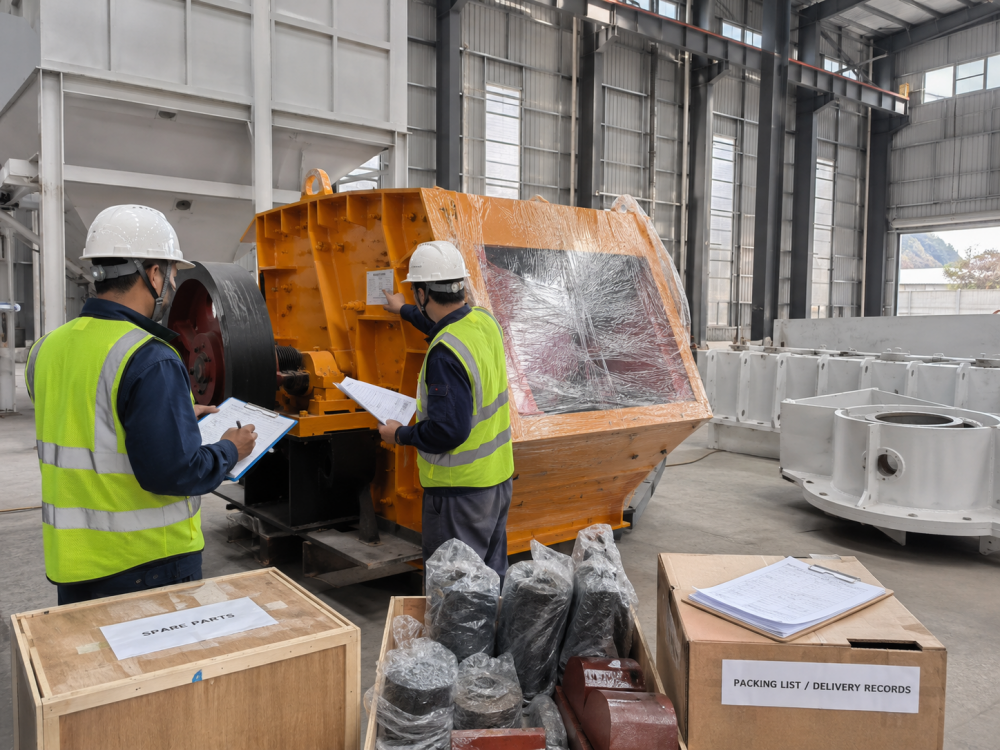
For a complete plant, this step is very important. A production line may include main machines, motors, reducers, control cabinet, spare parts, guards, bolts, screen mesh, belts, tools, and small components. Some items may be packed separately in wooden cases.
If package numbers are not checked when the goods arrive, it may become difficult to know later whether a part was missing during shipment, left at the port, or already stored in another area of the site.
Before the machine is moved to its final foundation position, the buyer should inspect its visible condition.
For a jaw crusher, check the frame, feed opening, discharge area, motor position, guards, and base. For a ball mill, check the cylinder, end cover, bearing seat, girth gear area, motor, reducer, and liner related packages. For a rotary dryer or rotary kiln, check the drum body, riding rings, support rollers, drive system, inlet and outlet parts, and related duct or sealing parts.
For vibrating screens, check the screen body, springs, motor, screen mesh package, and support frame.
The inspection does not need to be complicated at the beginning. The buyer should first confirm whether there is obvious deformation, missing cover, broken part, serious paint damage, or transport impact.
Small scratches may happen during long distance transport, but structural damage should be recorded and reported quickly.
Nameplates are often ignored, but they are useful for later installation, maintenance, and spare parts communication.
Buyers should take clear photos of machine nameplates, motor nameplates, reducer nameplates, and control cabinet labels. These photos can help confirm model, power, voltage, speed, and other technical information.
If the project includes several motors or reducers, nameplate photos help the site team match each part with the correct machine.
This is especially useful for complete lines. When many parts arrive together, clear records can prevent confusion during installation.
Spare parts and small items need special attention.
Many problems during installation are not caused by the main machine. They are caused by small items that are not found in time, such as bolts, belts, guards, screen mesh, tools, electrical parts, liners, or wearing parts.
If spare parts are packed in wooden cases, buyers should open them carefully and compare the items with the spare parts list or packing list. It is better to take photos before and after opening each case.
Do not mix parts from different machines before checking. If the site team opens several boxes at the same time and moves the items around, later identification may become difficult.
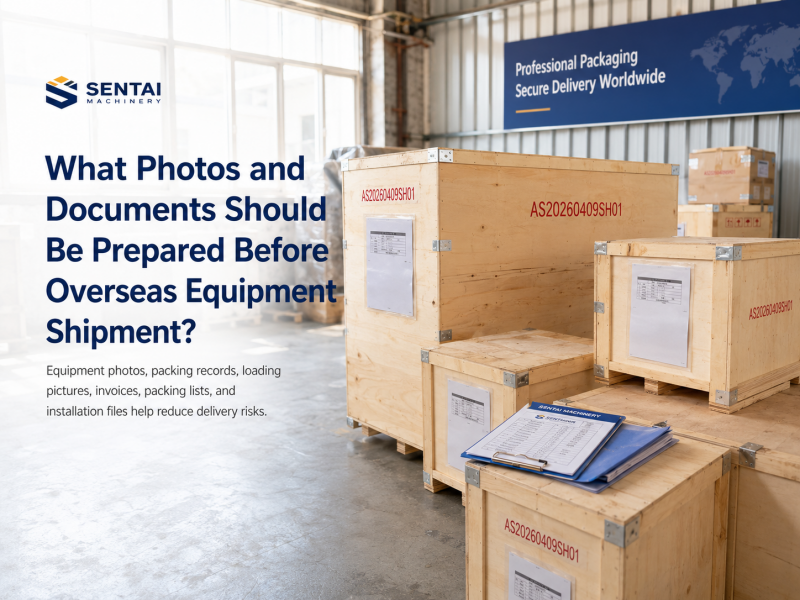
If the supplier provided pre-shipment photos, loading photos, or packing photos, the buyer should use them as a reference after arrival.
For example, compare the wooden case number, package shape, machine appearance, spare parts box, and container loading record with the actual goods at the site.
This simple comparison can help confirm whether the goods arrived in the same condition as they left the factory.
It also helps both sides communicate faster if something looks different.
If the buyer finds a problem, it is better to record it before installation starts.
Useful records include:
1. Clear photos of the problem area.
2. Package number or machine name.
3. Nameplate photo if related.
4. Short description of the issue.
5. Date of arrival and unloading.
6. Whether the package was damaged before opening.
7. Whether the part affects installation or operation.
This information helps the supplier judge the problem quickly. It also avoids unclear messages such as "one part is missing" or "the machine has a problem" without enough details.
A good record can save a lot of communication time.
Some documents, labels, drawings, or small packages may be placed inside wooden cases or attached to equipment. The site team should keep them carefully.
Foundation drawings, installation notes, operation manuals, electrical drawings, and spare parts labels may be needed later. If these documents are lost during unloading, installation may become slower.
Buyers should assign one person to collect and store documents and labels during arrival inspection.
Buyers can follow this order when equipment arrives.
1. Take photos of container, truck, packages, and seals.
2. Check package quantity against the packing list.
3. Inspect outside condition before unloading.
4. Open packages carefully and record the process.
5. Check main machines for obvious damage.
6. Take photos of nameplates, motors, reducers, and control cabinet.
7. Count spare parts and small items.
8. Compare arrival condition with pre-shipment photos.
9. Keep drawings, manuals, labels, and package records.
10. Report any problem to the supplier before installation starts.
This flow is simple, but it helps make the project more organized.
Equipment arrival inspection is not a formality. It is a practical step before installation.
For overseas machinery projects, the equipment may travel a long distance before reaching the site. During this process, packages may be moved many times. A clear arrival inspection helps buyers confirm what has arrived, what condition it is in, and whether all key parts are ready for installation.
For buyers, the better question is not only "Has the equipment arrived?" A more useful question is "Have we checked and recorded the equipment properly before installation?"
When arrival inspection is done carefully, installation becomes easier, communication becomes clearer, and project risk becomes lower.
If your equipment from Sentai Machinery has arrived at the project site, our team can help you check the arrival records, packing list, main machine photos, spare parts photos, and installation preparation details.
Send us your site photos, package numbers, nameplate pictures, and any questions before installation. We can help confirm the next steps and support your project team.
1. What Photos and Documents Should Be Prepared Before Overseas Equipment Shipment
2. What We Usually Confirm Before Production Starts
3. How to Ship a Ball Mill Overseas: Container Loading and Packing Tips
4. What Site Information Should Buyers Provide Before Plant Layout Design
5. Why Foundation Preparation Matters Before Installing Heavy Machinery





 WhatsApp
 Email
Email
 +86 15538010601