
STCrushers Is A Professional Minging Equipment Manufacturer since 2004, Providing High Quality Crushers, Sand Making Machines, Drying Equipment and more.
STCrushers Is A Professional Minging Equipment Manufacturer since 2004, Providing High Quality Crushers, Sand Making Machines, Drying Equipment and more.
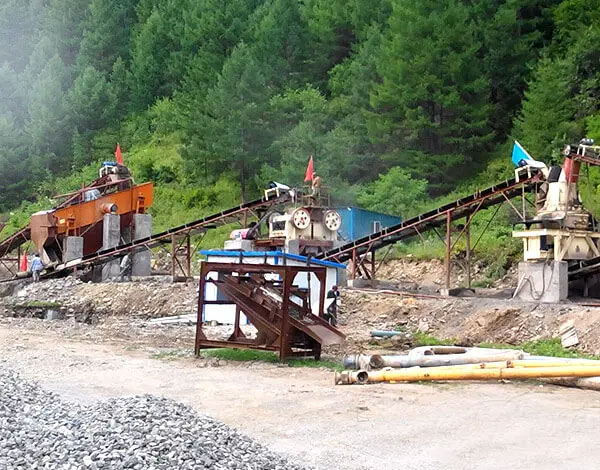
A customer wants to build a 100 TPH stone crushing plant for hard rock.
The raw material is not soft limestone. It is closer to granite, basalt, or another hard and abrasive rock. The customer wants to produce several sizes of aggregate for construction use, and the plant needs to run continuously without frequent shutdowns caused by blockage, wear, or poor screening.
This is the kind of project where equipment selection matters a lot.
For a 100 TPH hard rock plant, the goal is not simply to buy the biggest crusher within budget. The real goal is to build a balanced line where each machine can keep up with the next one.
If the jaw crusher is strong but the screen is too small, the plant will still lose output. If the secondary crusher is not suitable for hard rock, wear cost will rise quickly. If the conveyor system is poorly matched, the whole plant will look busy but produce less than expected.
So for this type of project, the question should be: What configuration gives stable 100 TPH output without creating a weak point in the line?
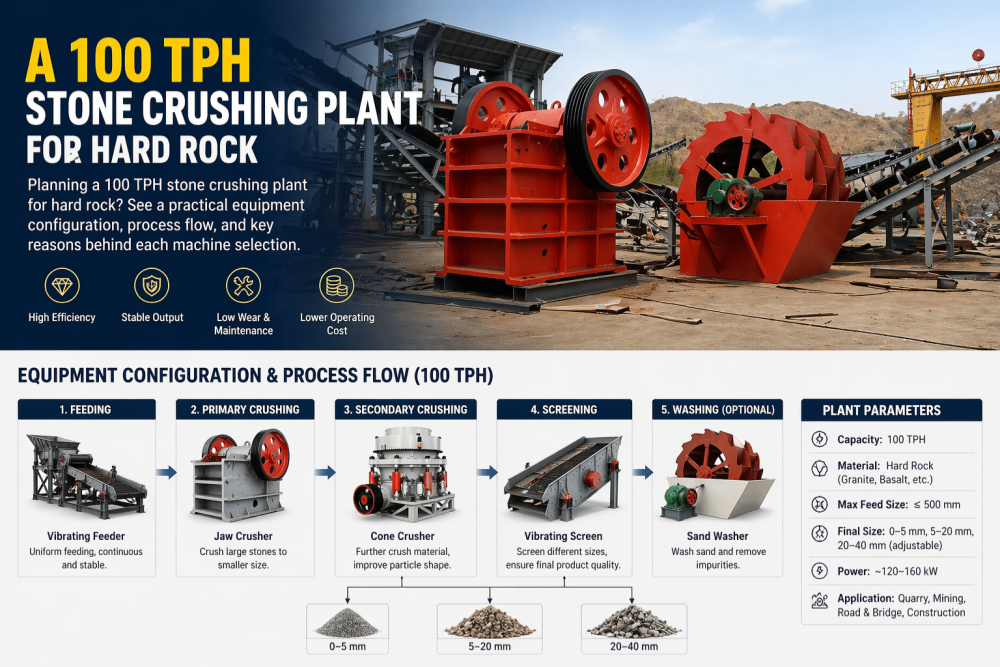
For a typical 100 TPH hard rock crushing plant, a practical process flow can be:
Raw material -> vibrating feeder -> jaw crusher -> secondary crusher -> vibrating screen -> finished aggregate / return crushing
This is a simple flow, but it works because each section has a clear job.
The jaw crusher handles large raw stone. The secondary crusher reduces the material further and helps shape the aggregate. The vibrating screen separates finished sizes and returns oversized material for re-crushing.
For hard rock, this flow is usually more reliable than trying to reduce too much material in one step.
Stage | Recommended Equipment | Main Function | Why It Is Used |
Feeding | Vibrating feeder | Sends raw stone evenly into the crusher | Prevents sudden overload and improves line stability |
Primary crushing | Jaw crusher | Breaks large hard rock into smaller material | Strong structure, suitable for large feed and hard stone |
Secondary crushing | Impact crusher or cone-type alternative depending on rock condition | Further reduces material size | Helps achieve required aggregate size and improve product control |
Screening | Vibrating screen | Separates finished aggregate by size | Controls final product specification and return material |
Conveying | Belt conveyors | Transfers material between stages | Keeps the plant continuous and reduces manual handling |
Control | Electrical control system | Coordinates line operation | Helps maintain stable operation and easier management |
This configuration is not the only possible setup, but it is a realistic starting point for many 100 TPH hard rock projects.
For hard rock, the primary crusher needs to handle large feed size and high impact from raw material. This is why a jaw crusher is usually selected as the first machine in the line.
A jaw crusher is not chosen because it sounds standard. It is chosen because hard rock needs strong compression crushing at the beginning.
If the first stage is weak, every stage after it suffers.
Common problems caused by poor primary crushing include:
oversized material entering the secondary crusher
unstable feed to the screen
higher wear in later stages
lower final output
more frequent blockage
In a 100 TPH plant, the jaw crusher should be matched to both feed size and capacity. It should not be selected only by model name. A machine that is too small may become the bottleneck from the first day of operation.
Many buyers think the secondary crusher is just “the next crusher after the jaw crusher.” That is too simple.
In hard rock plants, the secondary crusher affects final aggregate size, particle shape, wear cost, return material ratio, and overall plant stability.
If the secondary crusher is not suitable for the raw material, the plant may still work, but the operating cost can become painful.
For medium-hard stone like limestone, an impact crusher may be a very practical choice because it can produce good particle shape. But for more abrasive hard rock, the equipment selection should be more careful. The plant designer must consider wear parts, crushing ratio, and final product requirement before deciding.
This is why a real 100 TPH configuration should start from material testing or at least a clear understanding of the rock type.
In many plant proposals, the vibrating screen is treated as a supporting machine. In real operation, it is one of the most important parts of the line.
The screen decides whether the plant can actually separate finished aggregate efficiently.
If the screen is too small or the mesh configuration is not suitable, the plant may show several problems:
too much material returns to the crusher
finished product is not cleanly separated
capacity drops even when crushers are running normally
conveyor load becomes unstable
For a 100 TPH plant, the screen should be selected according to output size, number of final products, and return material volume. A good crusher cannot solve a bad screening problem.
A 100 TPH stone crushing plant may be designed to produce several aggregate sizes, depending on local market demand.
Final Product Size | Common Use |
0-5 mm | Fine aggregate, road base, or further processing |
5-10 mm | Concrete aggregate and construction use |
10-20 mm | Concrete, road construction, general aggregate |
20-30 mm | Road base, drainage material, larger aggregate use |
These sizes are only examples. The actual screen mesh and product sizes should be decided according to the customer’s local market and project requirements. This point matters because the same 100 TPH plant can be configured differently if the customer needs one product size or four product sizes.
Some customers ask: Can we make the line simpler to reduce investment?
Sometimes yes. But for hard rock, reducing equipment too aggressively often creates hidden cost later.
For example, skipping a proper screening stage may lower initial cost, but it can create unstable final product. Choosing a secondary crusher only by price may save money at the beginning, but increase wear cost during operation.
A cheaper line may be acceptable when:
the stone is soft
final product requirement is simple
working hours are low
the customer only needs rough crushed material
But for hard rock and continuous 100 TPH output, a too-simple line can become expensive in another way. The plant may lose money through lower actual capacity, higher wear part consumption, more downtime, poor aggregate quality, and frequent adjustment and maintenance. That is why configuration should not be judged only by the first quotation.
One practical point from many crushing plants: the machine with the biggest motor is not always the bottleneck.
In a 100 TPH plant, the bottleneck may be:
feeder discharge
screen capacity
return conveyor
discharge belt
hopper design
site layout
material moisture or mud content
This is why a plant should be designed as a system. If a customer only asks for “a crusher that can do 100 TPH,” the answer may be incomplete. The better question is: Can the whole line continuously produce 100 TPH of qualified final aggregate?
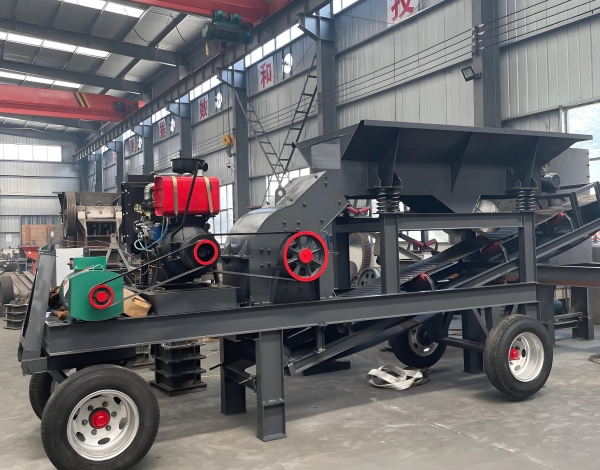
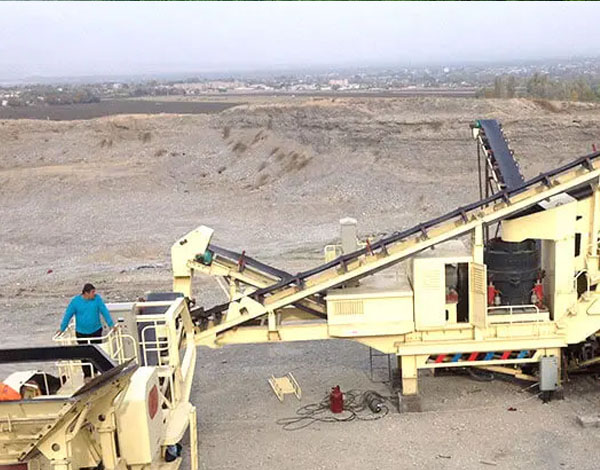
For some hard rock projects, especially short-term construction sites or projects with limited installation time, a mobile crusher may also be considered.
A mobile solution can be useful when:
the site changes frequently
foundation work needs to be reduced
installation time is limited
the customer wants easier movement between locations
However, for long-term quarry production, a stationary line may still be more suitable if the customer needs stable output, larger stockpiles, and easier process expansion. The choice between stationary and mobile crushing should depend on project duration, site condition, and production goal.
Before confirming a 100 TPH hard rock crushing plant, check these points:
Question | Why It Matters |
What is the raw material? | Hardness and abrasiveness affect crusher choice and wear cost |
What is the maximum feed size? | Determines primary crusher model and feeder size |
What final sizes are required? | Determines screen setup and crushing stages |
How many hours will the plant run per day? | Affects equipment durability and maintenance planning |
Is the stone clean or mixed with mud? | Moisture and clay can reduce screening and crushing efficiency |
Is the site fixed or temporary? | Helps decide stationary or mobile crushing solution |
Is future capacity expansion needed? | Affects layout and equipment margin |
This checklist is more useful than comparing crusher models alone.
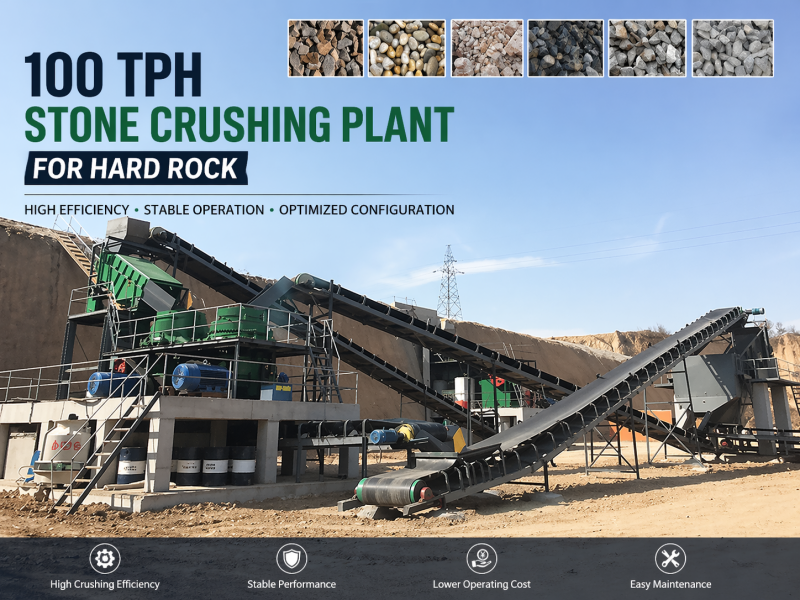
For a typical 100 TPH hard rock crushing plant, a practical configuration may include:
vibrating feeder
jaw crusher
secondary crusher
vibrating screen
belt conveyors
electrical control system
If the customer needs better particle shape or manufactured sand, additional shaping or sand making equipment may be considered. If the customer needs mobility, a mobile crusher configuration may be evaluated. The final decision should always depend on actual raw material, target product size, capacity requirement, and site layout.
A 100 TPH hard rock crushing plant is not difficult to describe on paper, but it is easy to configure poorly in real projects.
The difference between a good plant and a troublesome plant is often not one machine. It is whether the whole process is balanced.
A reliable configuration should make the material flow smoothly from feeding to crushing, screening, and discharge. It should also leave enough room for wear, maintenance, and real-world operating conditions.
At Sentai machinery, we help customers design stone crushing plant configurations based on material type, feed size, output size, capacity target, and site conditions. A good crushing plant should not only reach the target capacity in theory, but also run stably in daily production.
Planning a 100 TPH hard rock crushing plant? Send Sentai machinery your raw material, feed size, target output sizes, and site condition for a practical equipment configuration.
Related:
Best Crusher for Granite and Hard Rock Processing
Why Is My Sand Production Line Output Too Low? 7 Common Causes and Fixes
80-100 tph Stone Crusher Plant
 WhatsApp
 Email
Email
 +86 15538010601