
STCrushers Is A Professional Minging Equipment Manufacturer since 2004, Providing High Quality Crushers, Sand Making Machines, Drying Equipment and more.
STCrushers Is A Professional Minging Equipment Manufacturer since 2004, Providing High Quality Crushers, Sand Making Machines, Drying Equipment and more.
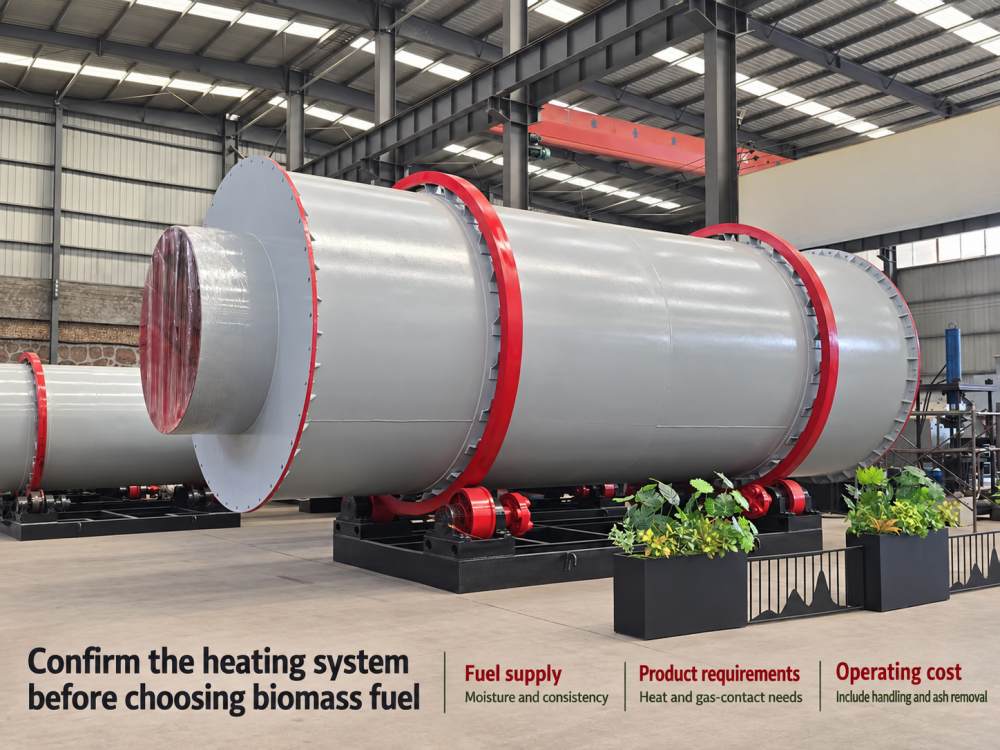
A rotary dryer can use biomass fuel when its heating system is designed for that fuel and the required drying duty. For a buyer with reliable local access to biomass pellets, this can be a practical option to investigate before ordering. The decision involves the fuel supply, supporting equipment, finished product requirements, and daily operating cost.
In a typical arrangement, biomass burns in a separate heat source, and the resulting hot gas supplies heat to the drying process. The drum moves and disperses the wet material. An industrial rotary dryer therefore needs a compatible heating package; buying the drum alone does not define which fuels the complete line can use.
This distinction also matters when replacing an existing gas or oil heat source. The supplier should review the whole system before confirming a conversion, including fuel handling, airflow, controls, and available space.
Start with the fuel that local suppliers can actually deliver throughout the year. Wood pellets, wood chips, and agricultural residues differ in size, moisture, ash, and handling behavior. A pellet burner should not be assumed to accept loose sawdust or irregular chips. Even pellets made from different raw materials may require different combustion arrangements.
Ask for a fuel specification and representative sample. Useful information includes particle size, moisture, ash content, and heating value, which describes how much energy the fuel contains. Moisture and heating value should refer to the fuel as delivered, so quotations can be compared on a common basis. A photograph helps identify the physical form but cannot establish combustion quality.
Also confirm delivery frequency and seasonal availability. A low price from an occasional supplier gives little confidence for a dryer expected to run every working day. If a backup fuel is planned, have its compatibility confirmed before purchase.
Ask the quotation to identify the complete route from fuel delivery to drying. Depending on the selected system, this may include covered storage, a receiving hopper, a metered feeder, and a biomass furnace or burner assembly. Fans and controls must coordinate heat supply with the dryer. Ash collection and access for cleaning also need space.
Clarify which items the equipment supplier provides and which the buyer must arrange locally. Storage construction, electrical connections, ductwork, installation, and exhaust treatment can materially change the project budget. A quotation for a burner alone should be assessed within that wider scope.
Fuel preparation deserves a separate question. If the available material needs screening, size reduction, or drying before it can feed the furnace reliably, include that work in the proposal. The assumed saving may shrink once additional machinery and labor are included. For an existing plant, check whether the proposed equipment can fit without obstructing maintenance or vehicle access.
Tell the supplier what happens to the material after drying. A mineral powder with strict color or purity requirements may need a different heating arrangement from a bulk material with more tolerant specifications. Temperature sensitivity and acceptable contamination should be discussed alongside the target moisture.
In direct drying, the process gas contacts the material. A combustion chamber can keep the flame away from the feed, but it does not by itself prevent combustion gases from entering the drum. Where gas contact is unacceptable, the supplier must assess a separated heat-transfer arrangement or another suitable heat source. This can change equipment size, efficiency, and cost.
Exhaust treatment must also suit the fuel and material. Describe the site's emission requirements when requesting a proposal. Biomass combustion still produces emissions, and an existing dust collector should not automatically be assumed suitable after a fuel change.
Compare the cost of producing the same quantity of acceptable dried material under the same moisture conditions. Fuel price per tonne is only one input. Delivered heating value, heat-source efficiency, transport, handling, auxiliary electricity, cleaning, and maintenance all affect the result. Ask each supplier to state the assumptions behind a fuel-consumption estimate.
For a hypothetical comparison, imagine one supplier offers inexpensive chips that arrive wet and another offers more expensive, consistent pellets. The chips may require more storage, a different feeding system, and more fuel by weight. Either option could be preferable after evaluation; the purchase price alone cannot settle the choice.
The moisture in the material being dried matters separately from moisture in the fuel. A wetter feed increases the water-removal duty. Our article on pre-dewatering before rotary drying explains when removing water upstream deserves consideration. Any comparison of heat sources should keep that drying duty consistent.
Biomass deserves a closer review when suitable fuel is reliably available, the site has room for storage and handling, and staff can manage the required cleaning and maintenance. Regular production may also make it easier to justify the additional equipment. The fuel must remain compatible with the chosen heat source across normal deliveries.
Sites with limited space, irregular production, or highly variable fuel supplies may find another heat source easier to manage. These constraints should be discussed early. A comparison based on the actual operating schedule is more useful than a general claim that one fuel is always cheapest.
Provide the material name, initial and target moisture, particle size, and required capacity. State whether capacity means wet feed or dried output. Add the finished product's use, operating hours, and any requirements for appearance or purity.
For the fuel, send its name, supplier specification, photographs, delivered price, and expected availability. Include site space, voltage, and existing drying equipment if applicable. Ask for a proposal that identifies the accepted fuel range, supporting equipment, consumption assumptions, and exclusions. This gives both sides a clearer basis for comparing quotations.
A biomass-heated rotary dryer can be a practical investment when the available fuel, heating package, and production requirements fit together. Confirm those conditions before ordering, and judge the proposal by the cost and reliability of making an acceptable dried product.
Planning to use biomass fuel for drying? Send Sentai Machinery your material details, moisture targets, capacity, and local fuel information. We can review a suitable configuration from our rotary dryer range and clarify the heating and supporting equipment required for your project.
How to Reduce Fuel Consumption in a Rotary Dryer
Should Wet Material Be Dewatered Before a Rotary Dryer? When Pre-Dewatering Reduces the Drying Load

 WhatsApp
 Email
Email
 +86 15538010601