
STCrushers Is A Professional Minging Equipment Manufacturer since 2004, Providing High Quality Crushers, Sand Making Machines, Drying Equipment and more.
STCrushers Is A Professional Minging Equipment Manufacturer since 2004, Providing High Quality Crushers, Sand Making Machines, Drying Equipment and more.
Imagine a contractor finishing a road project while stone deliveries are already scheduled for the next location. The wheeled crusher is available, but the receiving site still needs an access road and a power connection. In this hypothetical situation, arranging transport solves only one part of the move. Production depends on getting the whole crushing operation ready at the destination.
Planning wheeled mobile crusher relocation therefore starts with the next production date. Work backward through site preparation, transport, equipment positioning, and restart checks. This gives buyers a more useful basis for comparing mobile configurations and helps contractors avoid promising aggregate deliveries before the receiving site is ready.
A mobile crusher may combine feeding and crushing on one chassis, while screening and product conveyors travel separately. Other configurations integrate more equipment. Ask for a transport arrangement for the actual quoted plant, identifying each transport unit and any components that need folding, removal, or separate handling according to the manufacturer's instructions.
Follow the material through the complete production line. If graded aggregate requires separate vibrating screens, their transport and positioning belong in the same schedule. A generator, external control equipment, cables, tools, and startup spares also need an assigned destination. The crusher can arrive on time while production remains blocked by a missing supporting item.
Before booking transport, obtain confirmed dimensions and weights in the transport configuration. Clarify who prepares the equipment, arranges handling, and checks that all parts have arrived. Labeling detached components and retaining connection records can make reassembly easier. These arrangements should follow the supplied documentation; they are not a reason to improvise dismantling or lifting procedures.
A simple packing record should connect each separate load with its role at the new site. If the screen or generator will arrive later than the crusher, decide whether the planned installation sequence can accommodate that delay before dispatch.
Moving a unit within a quarry and transferring it to another project involve different conditions. Internal movement still depends on ground conditions, gradients, clearances, and the machine's approved movement method. Travel between sites adds a transport route, suitable carrying or towing equipment, and requirements that must be confirmed for that particular journey.
Wheels alone do not establish that a crusher can be towed on public roads. Ask the manufacturer to confirm the chassis arrangement and permitted transport method, then have the carrier assess the actual load and route. Depending on the equipment and local requirements, the move may involve an appropriate trailer or an approved towing arrangement. Avoid selecting a truck from operating weight alone.
This is a useful distinction when reading about mobile crusher project planning. Choosing a portable layout establishes the production concept. Each relocation still needs a practical transport plan that accounts for access at both ends.
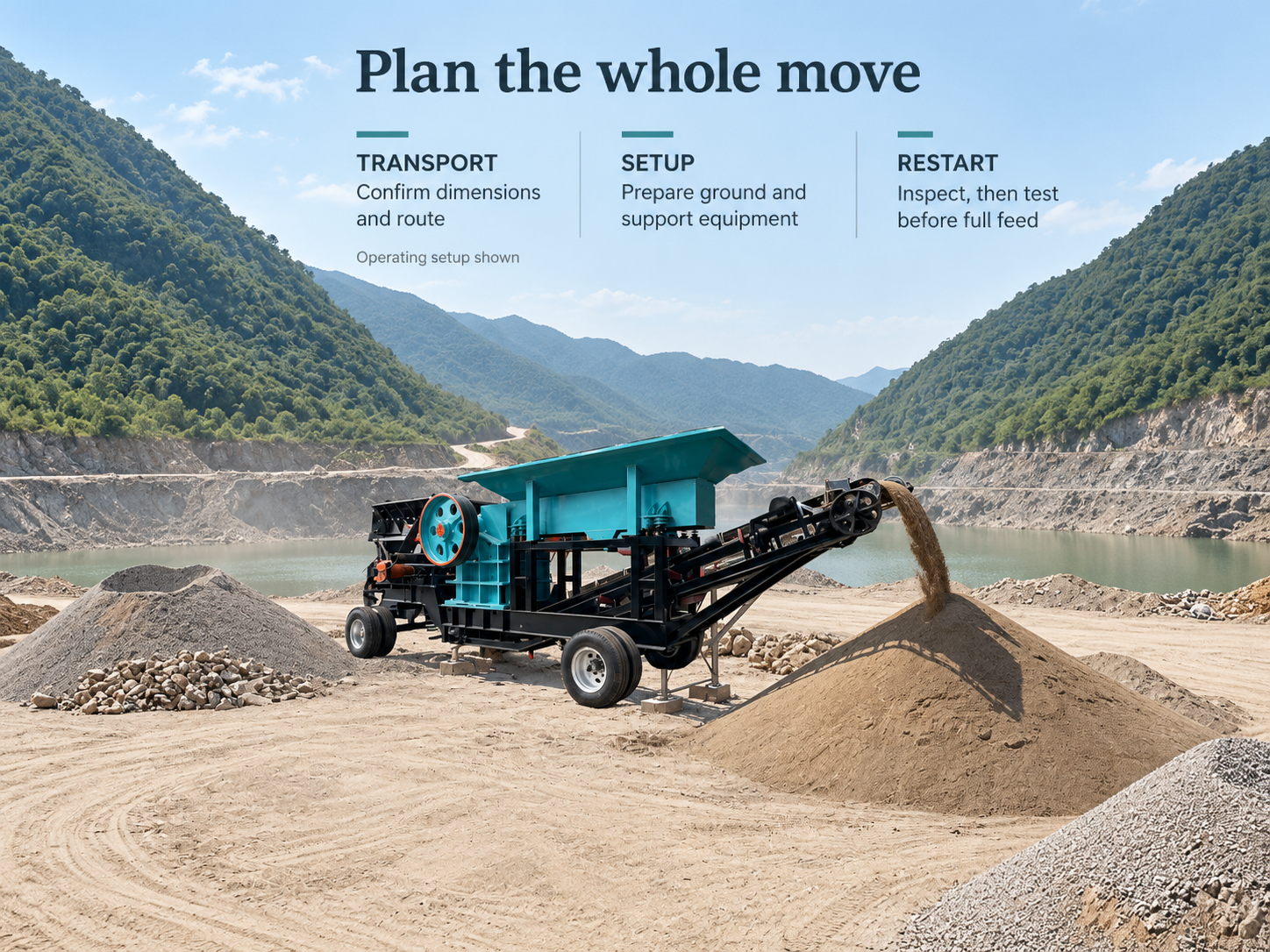
The next site can often be prepared while the plant is finishing its current job. Confirm the entrance, turning area, unloading or positioning space, and the ground support required by the equipment documentation. Drainage matters because the condition observed during a dry inspection may change before arrival. Share photographs and a site sketch early enough to resolve access problems.
Allow room for the operation around the machine. Loaders need access to feed material, conveyors need clear discharge areas, and finished products need separate stockpiles. Maintenance access must remain available after stockpiles grow. The site information needed before plant layout design is equally useful when assessing a new temporary location.
Confirm the power arrangement before dispatch. An electrically driven plant needs a suitable supply and compatible connections at its destination; a generator installation also needs space, fuel arrangements, and access for servicing. The article on mobile crusher power options explains why the proposed drive and supply arrangement should be checked for each project.
After arrival, reserve time for positioning, reconnecting separate equipment, and checks by competent personnel under the manufacturer's instructions. Relevant checks include transport damage, guards, lubrication, electrical connections, and control functions. The responsible team should confirm readiness before the planned test operation. A transport booking ending at the site gate does not define this work or who will complete it.
The next material can also change the restart task. A plant previously handling limestone may encounter harder rock, larger feed, or more clay. Customers may request different aggregate sizes. Confirm that the existing crushing and screening arrangement suits the new duty, and allow for the necessary settings and product checks before committing to a delivery rate.
Agree in advance how the first production will be accepted. Product grading, stockpile separation, and stable material flow provide practical points for review. A machine running without material does not yet demonstrate that the new site's saleable aggregate requirements have been met.
Restart is a convenient point to check wear and spare availability. Reviewing which spare parts to order with a stone crusher plant can help identify items worth having at the destination. Replacement decisions should reflect actual condition and manufacturer guidance, rather than treating every relocation as a requirement to replace parts.
Consider two hypothetical contractors. One moves once between long projects; the other serves several short jobs. The first may accept more preparation if the configuration suits months of steady production. The second needs to examine repeated transport arrangements, separate loads, reconnection work, and the availability of people to restart the plant.
Compare the complete interruption from the last usable output at one site to accepted output at the next. Include carrier costs, supporting equipment, site preparation, and time without production. Ask suppliers to explain the assumptions behind any setup estimate. A realistic relocation plan depends on the quoted configuration and receiving conditions, so a universal restart time is a poor purchasing benchmark.
A wheeled mobile plant is most useful when its transport arrangement and supporting equipment fit the way the contractor works. Preparing the next site early and assigning responsibility for the complete move makes the production schedule easier to manage.
Share your material, required capacity, product sizes, expected move frequency, travel distance, and site photographs with Sentai Machinery. These details help us review the mobile configuration and clarify transport and setup requirements before quotation.
Mobile Crusher Power Options: What Changes Between Diesel and Electric Operation
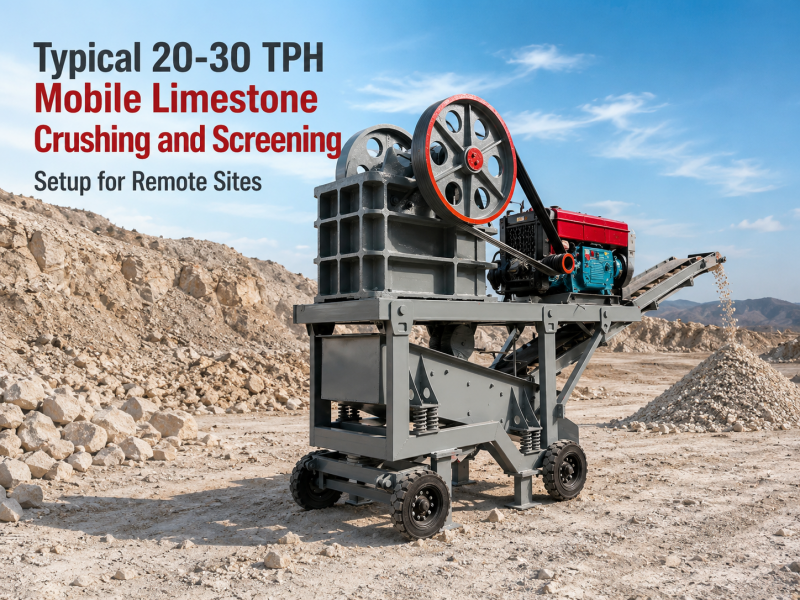
Typical 20-30 TPH Mobile Limestone Crushing and Screening Setup for Remote Sites
What Site Information Should Buyers Provide Before Plant Layout Design
What Spare Parts Should You Order With a Stone Crusher Plant?



 WhatsApp
 Email
 +86 15538010601