
STCrushers Is A Professional Minging Equipment Manufacturer since 2004, Providing High Quality Crushers, Sand Making Machines, Drying Equipment and more.
STCrushers Is A Professional Minging Equipment Manufacturer since 2004, Providing High Quality Crushers, Sand Making Machines, Drying Equipment and more.
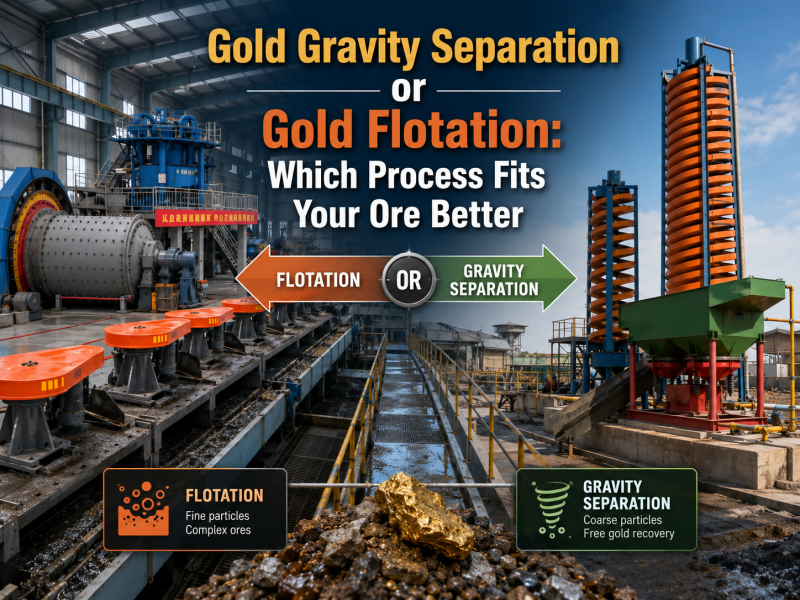
When buyers plan a gold ore processing plant, one of the most common questions is simple:
Should I use gravity separation or flotation?
This is a practical question, but it should not be answered only by equipment preference. Gold ore is not all the same. Some ores contain coarse free gold that can be recovered by gravity separation. Some ores contain fine gold associated with sulfide minerals and may need flotation. Some low grade or more complex ores may require leaching or CIP after proper preparation.
A gold processing process should not start from the machine list. It should start from the ore.
Before choosing equipment, buyers should first understand how gold exists in the ore, how fine the ore needs to be ground, what recovery target is expected, and what type of plant the site can operate steadily.
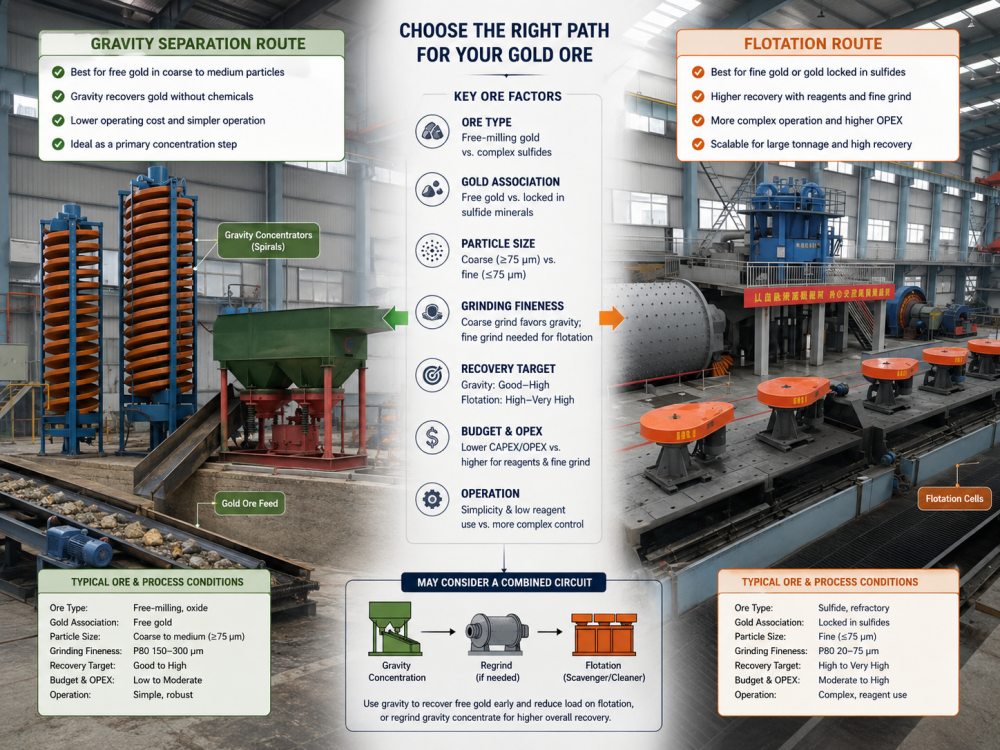
Gold gravity separation uses the density difference between gold and other minerals. Because gold is much heavier than most gangue minerals, free gold particles can often be recovered by gravity equipment when they are properly liberated.
This process is often attractive for small and medium gold projects because it can be relatively simple, has lower chemical demand, and is easier to operate than some more complex processes.
Gravity separation is usually more suitable when:
1. The ore contains visible or coarse free gold
2. Gold can be liberated at a relatively coarse particle size
3. The project wants a simpler process with lower chemical use
4. Water and power conditions are limited
5. The buyer wants easier operation and maintenance
6. The ore test shows good gravity recovery potential
For some small gold projects, gravity separation can be used as the main process or as a pre-recovery stage before other processing methods. It may help recover coarse gold early and reduce the load on later processing steps.
However, gravity separation is not suitable for every gold ore. If gold particles are very fine or locked inside sulfide minerals, gravity equipment alone may not recover enough gold.
Gold flotation is often used when gold is fine, associated with sulfide minerals, or difficult to recover only by gravity separation.
In flotation, ground ore is mixed with water and reagents. Valuable minerals attach to air bubbles and are collected as concentrate. This process can be useful when gold is connected with sulfide minerals such as pyrite, arsenopyrite, or other associated minerals.
Flotation may be more suitable when:
1. Gold particles are fine
2. Gold is associated with sulfide minerals
3. Gravity separation recovery is too low
4. The project needs to produce gold concentrate
5. The ore requires finer grinding for liberation
6. The site can manage reagents, slurry control, and flotation operation
Flotation can improve recovery for many fine gold ores, but it also requires more process control. Grinding fineness, slurry concentration, reagent dosage, aeration, flotation time, and operator experience can all affect the result.
This is why flotation should not be selected only because it looks more advanced. It should be selected because the ore needs it and the site can operate it properly.
CIP, or carbon in pulp, is another gold processing route. It is usually connected with leaching and activated carbon adsorption.
CIP may be considered when gold is fine, the ore grade is suitable, and leaching tests show that the process can work effectively. It is not the default answer for every gold project. It requires more attention to reagent use, process control, environmental management, and operating discipline.
For some ores, gravity separation or flotation may be enough. For some ores, flotation concentrate may need further treatment. For some low grade or fine gold ores, CIP may become part of the final process.
The key point is that CIP should be based on ore test results and local project conditions, not only on the idea that it may achieve higher recovery.
The size of gold particles has a strong influence on process selection.
If gold particles are coarse and free, gravity separation has a strong advantage. If gold particles are fine and locked with other minerals, grinding and flotation or leaching may be needed.
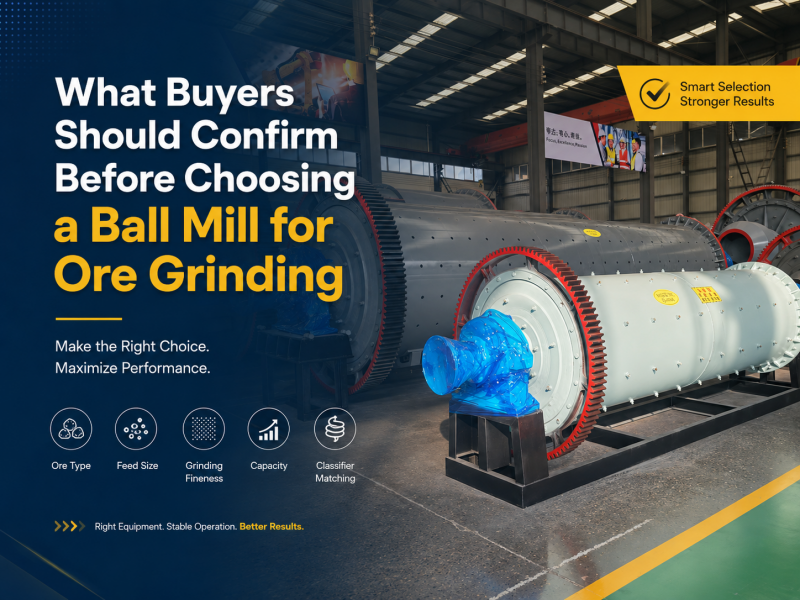
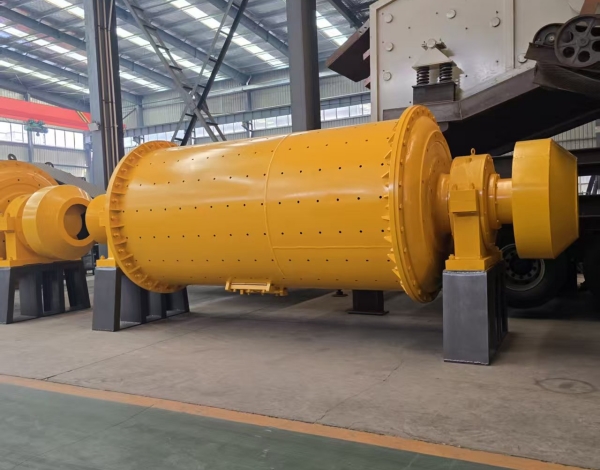
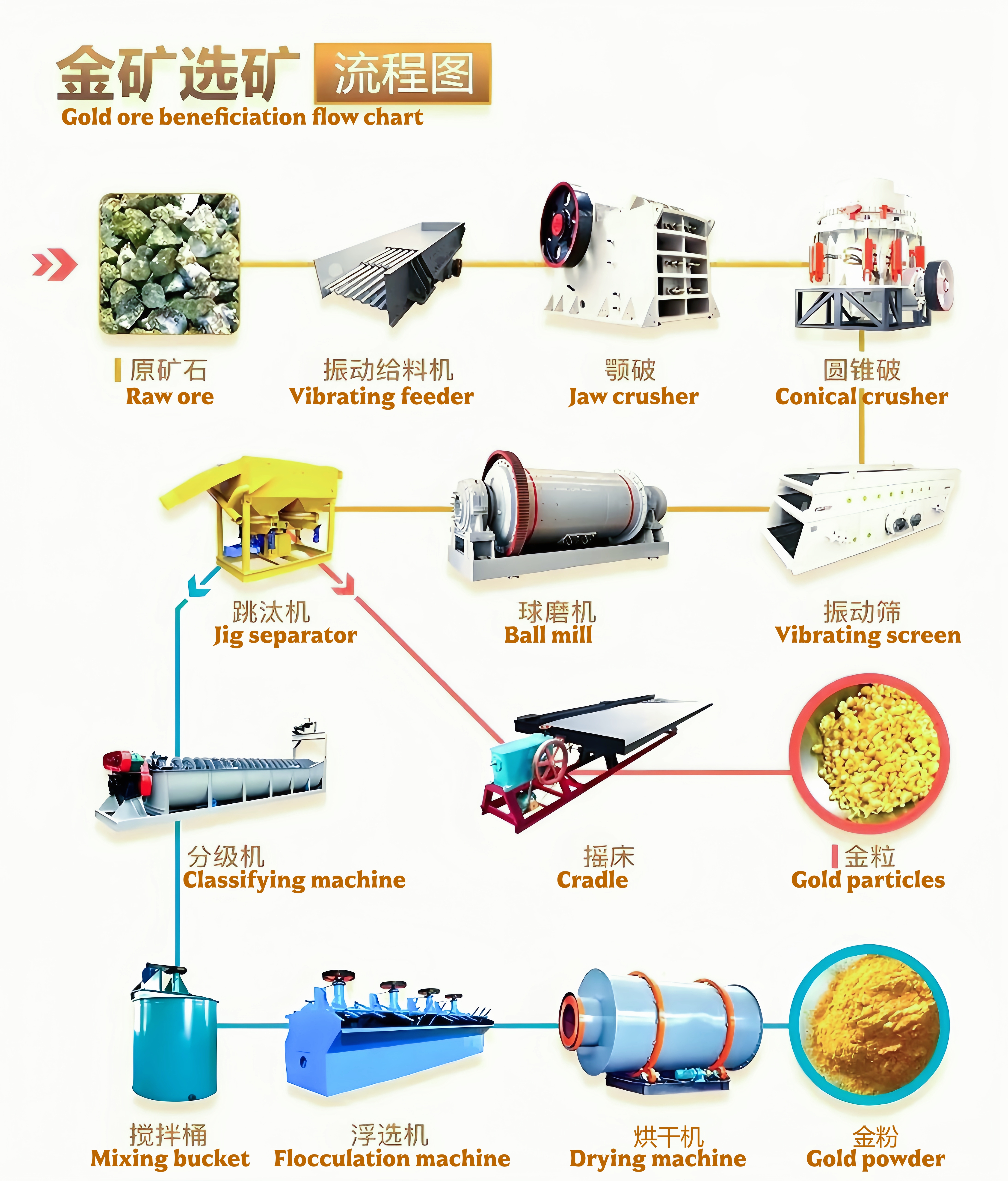
This is why crushing and grinding are important before process selection. A ball mill, classifier, and related grinding circuit may determine whether the gold minerals are properly liberated before separation.
But grinding finer is not always better. Over-grinding can create slime, increase energy cost, and make some separation processes harder. The right grinding fineness should be connected with the selected recovery process.
A good process design should ask:
What particle size releases the gold enough for recovery?
Not simply:
How fine can the ball mill grind?
Two gold ores with the same grade may require different processes.
One ore may contain free gold that separates well by gravity. Another ore may contain gold associated with sulfide minerals. A third ore may contain clay, carbonaceous material, or other components that make processing more difficult.
This is why gold grade alone is not enough for equipment selection. Buyers should also consider:
1. Whether gold is free or locked
2. Whether sulfide minerals are present
3. Whether clay or slime is high
4. Whether the ore oxidized or sulfide based
5. Whether concentrate production is acceptable
6. Whether local operation can handle chemical processes
The process should fit the mineral behavior, not only the buyer's preferred equipment list.
For small gold ore processing plants, process simplicity can be very important.
A complex flowsheet may look complete on paper, but it can become difficult to operate if the site lacks stable water supply, skilled operators, reagent management, spare parts support, or laboratory control.
Gravity separation is often easier to start with when the ore is suitable. Flotation or CIP may bring better recovery for certain ores, but they also require stronger process control.
For small projects, the best solution is not always the most complex one. The best solution is the one that matches ore recovery potential, investment level, operating skill, and long term maintenance ability.
Process | More Suitable For | Main Advantage | Main Limitation |
Gold Gravity Separation | Coarse free gold, simple ores, small projects | Simple process, lower chemical use, easier operation | Limited recovery for fine or locked gold |
Gold Flotation | Fine gold, sulfide associated gold, concentrate production | Better for many fine and sulfide ores | Requires grinding control, reagents, and skilled operation |
Gold CIP | Fine gold ores suitable for leaching | Can be effective for suitable low grade or fine gold ores | Requires stricter chemical, environmental, and process control |
Combined Process | Ores with both coarse and fine gold | Can recover different gold forms in stages | Needs better testing and process design |
This table is only a general guide. The final process should be based on ore testing and project conditions.
Before choosing gravity separation, flotation, or CIP, buyers should prepare several basic details.
Useful information includes:
1. Ore type and mining source
2. Gold grade or available test report
3. Raw ore size and planned crushing size
4. Whether visible free gold is present
5. Grinding fineness requirement, if known
6. Whether sulfide minerals are present
7. Expected capacity per hour or per day
8. Water and power conditions
9. Local environmental requirements
10. Final product target, such as concentrate or recovered gold
If these details are not clear, the equipment list may be inaccurate.
Gold gravity separation and gold flotation are not competitors where one is always better than the other. They are different process routes for different ore conditions.
Gravity separation is often suitable for coarse free gold and simpler projects. Flotation is often better for fine gold or sulfide associated gold. CIP may be considered when leaching is suitable and the project can manage the required process control.
For buyers, the better question is not only "Should I choose gravity separation or flotation?" A more useful question is "How does my gold exist in the ore, and which process can recover it under my real site conditions?"
When the process is selected according to ore behavior instead of equipment preference, the gold processing plant is more likely to run steadily and reach a practical recovery result.
If you are not sure whether your gold ore is more suitable for gravity separation, flotation, CIP, or a combined process, Sentai Machinery can help review your material condition and project requirement.
Send us your ore photos or videos, gold grade if available, raw ore size, expected capacity, site condition, and any ore test information. Our team can help analyze the process direction and recommend a suitable gold ore processing solution.
1. What Buyers Should Know Before Choosing Equipment for a Small Gold Ore Processing Plant
2. What Buyers Should Confirm Before Choosing a Ball Mill for Ore Grinding
3. What Buyers Often Miss When Matching a Ball Mill and Spiral Classifier
4. How Grinding Stability Affects Flotation Performance
2. Gold Gravity Separation Plant

 WhatsApp
 Email
Email
 +86 15538010601