
STCrushers Is A Professional Minging Equipment Manufacturer since 2004, Providing High Quality Crushers, Sand Making Machines, Drying Equipment and more.
STCrushers Is A Professional Minging Equipment Manufacturer since 2004, Providing High Quality Crushers, Sand Making Machines, Drying Equipment and more.
When buyers plan an iron ore processing plant, they often start by asking for equipment.
How many crushers are needed? What size ball mill should be selected? Which magnetic separator model is suitable? How much does the complete line cost?
These questions are necessary, but they should not be the first step.
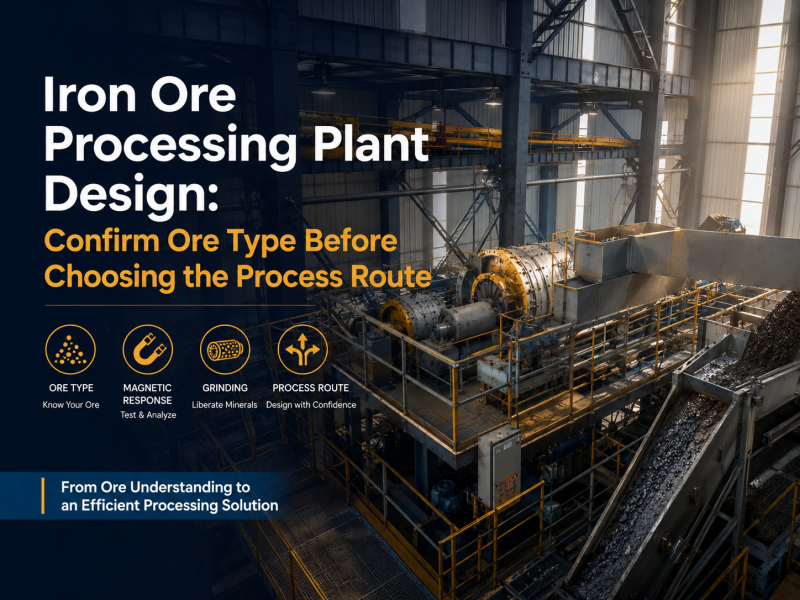
Iron ore processing plant design should start from the ore itself. Different iron ores can require different crushing, grinding, classification, magnetic separation, and tailings handling methods. If the ore type is not clear, the same equipment list may produce very different results.
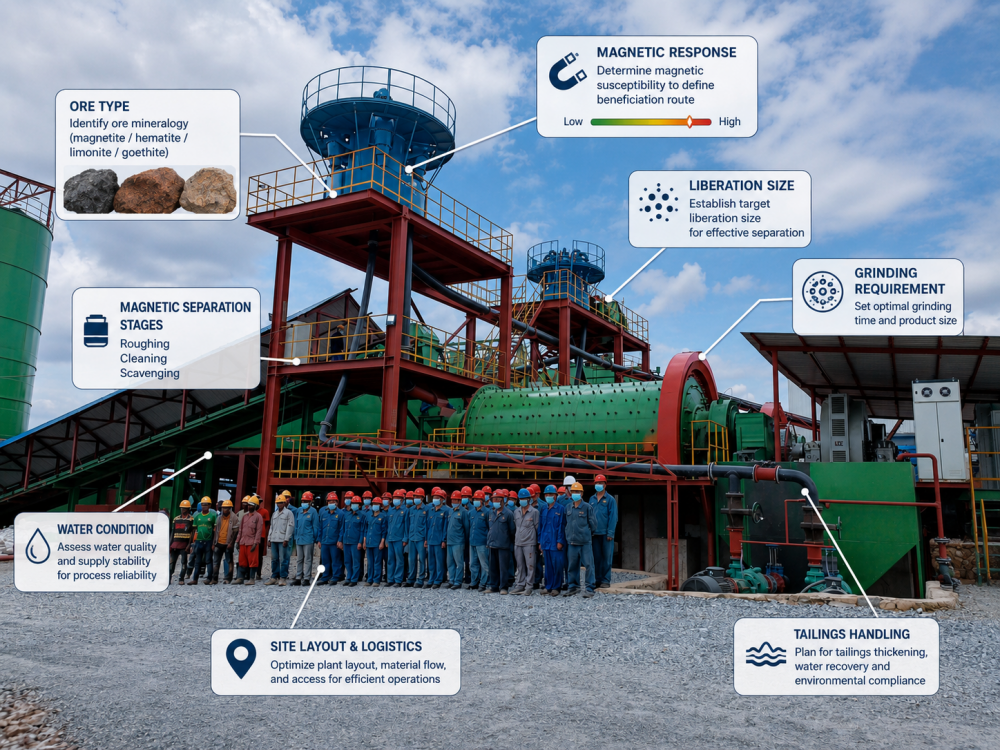
For Sentai Machinery, a reliable iron ore processing solution should be designed from material data, not only from production capacity. Ore type, magnetic response, mineral liberation size, feed condition, water availability, and final concentrate target all need to be confirmed before choosing the process route.
The first question is what kind of iron ore will be processed.
Magnetite ore, hematite ore, limonite ore, mixed iron ore, and low grade iron ore do not always use the same process. Some ores have strong magnetic response and can be processed mainly through magnetic separation. Some ores are weakly magnetic and may need a more complex route. Some ores contain clay, slime, or mixed gangue that makes separation more difficult.
Important ore information includes:
1. Iron content
2. Mineral composition
3. Magnetic response
4. Moisture and clay content
5. Particle size distribution
6. Amount of fines
7. Gangue minerals
8. Expected concentrate grade
9. Tailings requirement
If the ore is strong magnetic magnetite with suitable liberation, the process may be more direct. If the ore is low grade or mixed, testing and process adjustment become more important.
This is why buyers should not only say "iron ore." The ore type and test data decide the first direction of the plant design.
Iron ore beneficiation is closely related to mineral liberation.
If useful iron minerals are locked with gangue, crushing alone is not enough. The ore may need grinding before magnetic separation can work effectively. The required grinding fineness depends on how the iron minerals are embedded in the ore.
If the ore is ground too coarse, iron minerals may not separate well from gangue. Recovery and concentrate grade may be low. If the ore is ground too fine, energy cost may increase, slime may become difficult to handle, and the separation process may become less stable.
Ball mill and spiral classifier are often used to control the grinding and classification stage. The goal is not simply to make the ore fine. The goal is to reach a suitable liberation size for the next separation step.
Grinding design should answer several questions:
1. What feed size enters the mill?
2. What grinding fineness is required?
3. Is one grinding stage enough?
4. Is classification stable?
5. Will overgrinding create too much slime?
6. Does the magnetic separator match the particle size?
The grinding stage should be selected according to the ore test result and final separation requirement.
Many buyers think an iron ore processing plant only needs one magnetic separator after grinding. In some simple cases, this may work. But in many projects, magnetic separation may need more than one stage.
Depending on ore condition, the plant may use roughing, cleaning, scavenging, or multiple magnetic separation steps. The purpose is to improve recovery, increase concentrate grade, and reduce iron loss in tailings.
Magnetic separator selection also depends on particle size, slurry concentration, magnetic field strength, flow stability, and ore magnetic response.
If the magnetic separator is not matched with the material, the plant may face problems such as low recovery, poor concentrate grade, high tailings iron content, or unstable operation.
A magnetic separator should not be selected only by machine price or capacity. It should be selected according to ore type, grinding fineness, slurry condition, and final product target.
Crushing and screening are not separate from beneficiation. They directly affect grinding cost and separation stability.
If the crushing product is too large, the ball mill load may increase and grinding efficiency may decrease. If the feed size fluctuates too much, the mill and classifier may be harder to control. If too many fines or clay materials enter the system, slurry control and separation may become more difficult.
Jaw crushers, vibrating screens, and conveyors should be matched with the beneficiation line. The goal is to provide stable feed for grinding and separation.
A stable front end can reduce pressure on the ball mill, spiral classifier, and magnetic separator. In iron ore processing, stable feed often means more stable concentrate quality.
Iron ore beneficiation is not only about main equipment. Water, slurry, and tailings handling are also important.
Magnetic separation and classification often require stable slurry conditions. If water supply is insufficient or unstable, the plant may not run continuously. If slurry concentration is not controlled, separation performance may change.
Tailings handling also needs early planning. Tailings volume, settling condition, water recycling, pond area, and environmental requirements can affect the whole project layout.
Before confirming the equipment, buyers should consider:
1. Water source
2. Water consumption
3. Slurry concentration
4. Tailings discharge method
5. Water recycling
6. Site space
7. Local environmental requirements
Ignoring water and tailings can make a technically suitable equipment list difficult to operate on site.
The ore has good magnetic response and suitable liberation. The process may focus on crushing, grinding, classification, and magnetic separation. The main design point is to match grinding fineness with magnetic separation performance.
The ore grade is low, and useful minerals may be locked with gangue. The plant may need finer grinding or more careful separation stages. Test data becomes especially important before equipment selection.
The ore may include different iron minerals, clay, or unstable composition. In this case, buyers should not rush to buy a complete line based only on capacity. Ore testing and process confirmation should come first.
These scenarios show why one iron ore processing flow cannot fit all projects.
A common mistake is asking only for tons per hour.
Capacity is important, but it does not decide the process by itself. A 50 tph magnetite project and a 50 tph mixed low grade ore project may need very different process routes.
Another mistake is asking for a magnetic separator price without confirming grinding fineness and ore magnetic response. The separator cannot solve every problem if the ore is not properly liberated.
Some buyers also ignore tailings. Tailings still contain material, water, and site management requirements. Poor tailings planning can affect production stability.
Another misjudgment is not providing ore analysis. Without test data, the supplier can only give a general process suggestion. For serious investment, material testing is usually more reliable than guessing.
A useful project discussion should follow a clear order.
First, provide ore photos, videos, and basic analysis. If available, provide iron content, mineral composition, particle size, and magnetic response data.
Second, explain the required concentrate grade and recovery expectation. The supplier needs to know the final product target, not only the raw ore capacity.
Third, confirm the planned working capacity and working hours. This affects equipment size, power, water, and plant layout.
Fourth, explain site conditions. Water source, power supply, land area, tailings area, foundation condition, and local operation environment should be considered.
Fifth, discuss whether ore testing is needed before final design. For uncertain ore, testing can reduce the risk of choosing the wrong process route.
Iron ore processing plant design should not begin with a fixed equipment list.
The ore type, magnetic response, liberation size, grinding requirement, slurry condition, and tailings handling all affect the process route. A suitable plant is designed around the actual ore and target concentrate quality.
For buyers, the better question is not only "What equipment do I need for iron ore?" A more useful question is "What process route fits my ore type and final product target?"
When the ore condition is confirmed before equipment selection, the beneficiation plant is easier to operate and more likely to achieve stable concentrate quality.
If you are planning an iron ore processing plant, Sentai Machinery can help review your ore type, raw ore grade, particle size, magnetic response, grinding requirement, target concentrate grade, water condition, tailings plan, and site layout.
Share your ore photos or videos, material analysis, capacity target, final product requirement, and site information. Our team can help recommend a suitable iron ore beneficiation process and equipment combination based on your actual ore conditions.
1. Why Is Magnetic Separator Recovery Lower Than Expected
2. Ball Mill vs Rod Mill: How to Choose the Right Grinding Stage for Mineral Processing
3. What Buyers Often Miss When Matching a Ball Mill and Spiral Classifier
4. Why Crushing Size Before Ball Milling Affects Grinding Cost
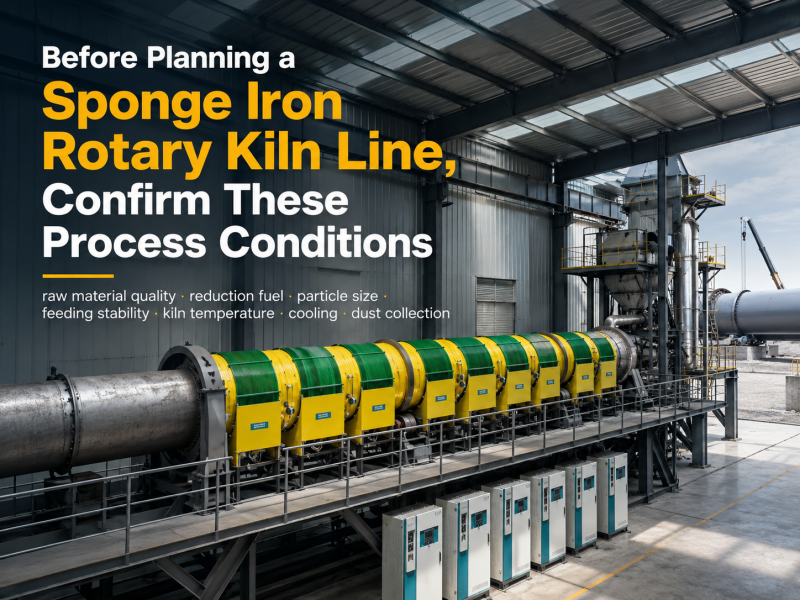
5. Before Planning a Sponge Iron Rotary Kiln Line, Confirm These Process Conditions
 WhatsApp
 Email
Email
 +86 15538010601