
STCrushers Is A Professional Minging Equipment Manufacturer since 2004, Providing High Quality Crushers, Sand Making Machines, Drying Equipment and more.
STCrushers Is A Professional Minging Equipment Manufacturer since 2004, Providing High Quality Crushers, Sand Making Machines, Drying Equipment and more.
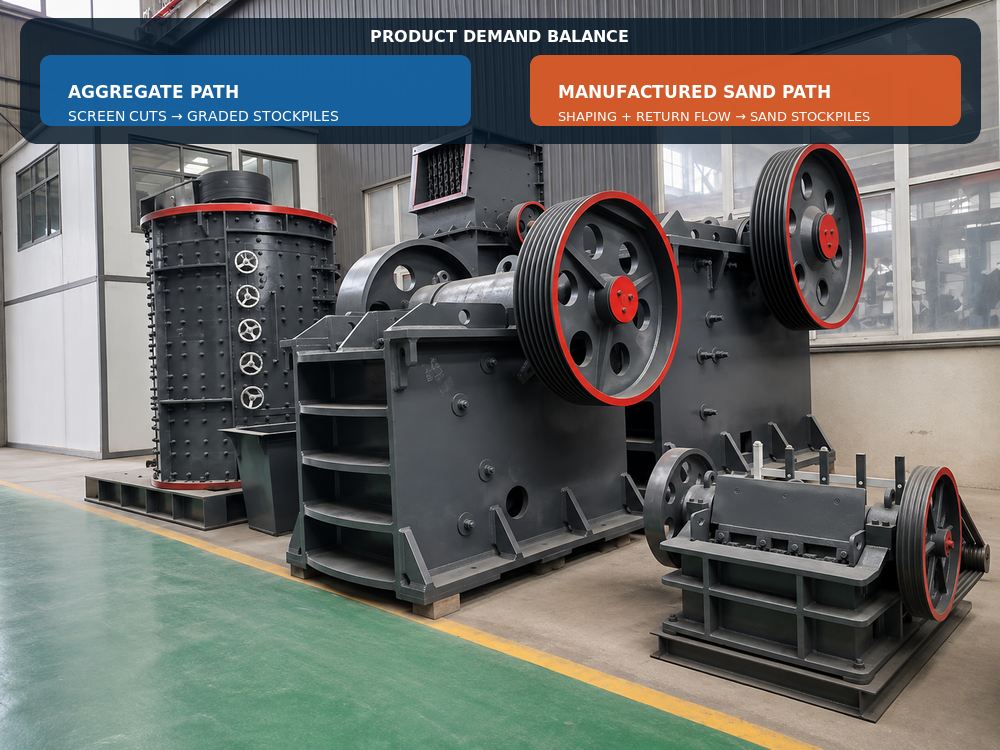
At the first screen deck, crushed quarry stone stops being one material stream and becomes a product decision. Particles retained between selected screen cuts can leave as 10-20 mm or 20-40 mm aggregate. Finer material may continue to a shaping and classification branch to become 0-5 mm manufactured sand.
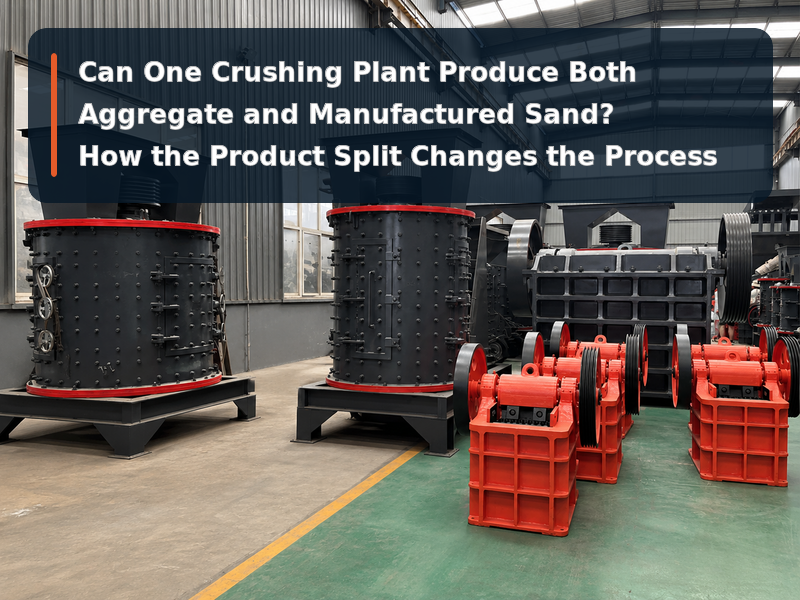
This is why a combined aggregate and sand plant must be designed around the required product split, not only the total feed rate. A plant asked to sell mostly coarse aggregate behaves differently from one expected to convert a large share of the same stone into manufactured sand. The difference appears in screen area, crusher settings, VSI duty, return flow, conveying, washing, stockpile space, and the capacity that can be sustained.
After primary and secondary crushing, the material normally contains a range of particle sizes. Screening separates that range into products and process feed. Suitable intermediate fractions can be discharged as graded aggregate, while selected fine or surplus material can be routed toward sand making. Oversize returns for further crushing. A single quarry source can therefore serve several markets, provided the rock is suitable and every branch has enough capacity to handle its assigned share.
The desired products should be defined before choosing screen apertures or calculating equipment duty. A requirement for 20-40 mm road base, 10-20 mm concrete aggregate, and 0-5 mm manufactured sand is not complete until the expected demand for each size is known. If the market consumes much more sand than coarse aggregate, simply adding a sand maker after a conventional crushing line may not work. Too little correctly sized feed may reach the sand branch, while unwanted aggregate accumulates in stockpiles.
Aggregate should leave the circuit as soon as it meets the required size and shape. Keeping acceptable 10-20 mm or 20-40 mm material in unnecessary recirculation increases screen loading, conveyor tonnage, wear, and power use without creating more saleable value. Crusher settings and screen cuts must therefore work together. A wider closed-side setting may preserve more intermediate aggregate, while a tighter setting can generate more fine feed, but the result still depends on rock hardness, feed grading, and particle shape.
Manufactured sand is not merely everything that passes a 5 mm screen. Its particle shape, grading, stone-powder content, and cleanliness influence whether it can be used in concrete, mortar, asphalt, or other applications. A dedicated VSI sand making machine can reshape selected feed and generate a more controlled fine fraction. Classification then separates the final sand from oversize return. The sand branch must be sized for the actual tonnage entering it, not for the nameplate capacity of the entire crushing plant.
Product route | Where material leaves | Main process control |
20-40 mm aggregate | After secondary crushing and screening | Upper screen cuts, secondary crusher setting, and demand for coarse product |
10-20 mm aggregate | At the intermediate screen deck | Deck area, grading stability, shape requirement, and stockpile drawdown |
0-5 mm manufactured sand | After shaping and final classification | VSI feed rate, lower screen cut, return load, powder control, and optional washing |
In a multi-product crushing plant, the vibrating screen does more than check final size. It decides which material becomes saleable aggregate, which fraction feeds the VSI, and which oversize returns to crushing. Deck aperture, open area, moisture, feed distribution, and near-size particles all affect that decision. If the screen is overloaded, misplaced material can reduce aggregate accuracy and send an unstable feed to the sand-making branch, so nominal crusher capacity alone does not define plant output.
A plant may process the same raw stone at different effective capacities as its sales mix changes. Producing more coarse aggregate can allow a larger share of material to exit after secondary crushing and screening. Producing more manufactured sand sends additional tonnage through shaping, classification, and possibly washing, where the available duty may be lower. The combined output should therefore be stated by product: tonnes of each aggregate size and tonnes of sand per hour under a defined feed condition, rather than one total figure detached from the product split.
The lower screen cut and the performance of the VSI determine how much material returns for another pass. A high circulating load occupies crusher, screen, and conveyor capacity even though it is not new feed. This effect is explained further in Why Return Material Ratio Matters in a Stone Crushing Plant. If product specifications drive excessive recirculation, increasing fresh feed can overload the sand branch before the primary crusher reaches its limit. Flow balance must include both fresh material and internal return tonnage.
Water treatment should follow the material that needs it. Coarse aggregate may require no washing when the feed is clean and the product specification allows dry processing. Manufactured sand may need washing, dewatering, or fine-powder recovery when clay, excessive fines, or market requirements make dry classification insufficient. The choice between dry screening and a wet route should be evaluated for the sand fraction, available water, drainage, sludge handling, and fines recovery, as discussed in Does Manufactured Sand Need Washing?.
Every saleable fraction needs a dedicated route that prevents mixing and allows safe stockpile management. Conveyor width, speed, transfer-point design, discharge height, dust control, and available stockpile volume should match the expected tonnage of that product. A technically balanced process can still lose output when one sand conveyor is undersized or one aggregate stockpile fills faster than trucks remove it. Buffer capacity matters because market dispatch rarely follows the exact hourly product ratio produced by the plant.
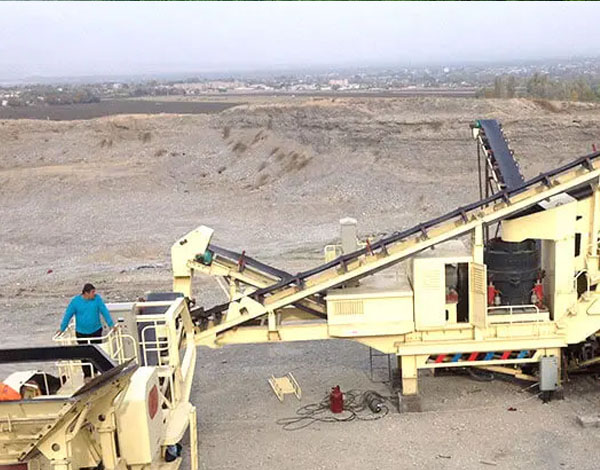
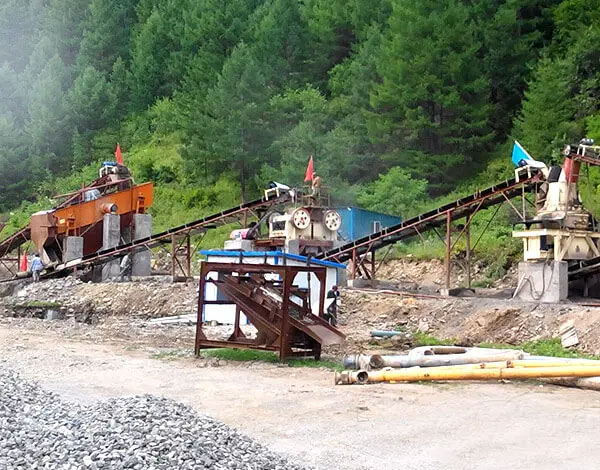
A combined plant is attractive when the quarry has a suitable rock source, local demand exists for both graded aggregate and manufactured sand, and the sales mix can use the natural yield of the crushing process. Sentai Machinery's 100-150 TPH sand making plant shows how crushing, shaping, screening, washing, and dewatering can be arranged to produce manufactured sand and graded aggregate. It is an application example, not a universal configuration: the correct equipment and product split depend on the customer's material and market.
Process design should begin with a representative material description, maximum feed size, required feed rate, target aggregate sizes, sand specification, and hourly demand for every product. Moisture, clay, permitted powder content, water, site dimensions, stockpile method, power supply, and operating hours also change the solution. These inputs allow a mass balance so screens, the VSI branch, return conveyors, washing equipment, and storage remain compatible.
One crushing plant can produce both aggregate and manufactured sand, but only when product demand is translated into a balanced material split. Aggregate should exit when it meets specification, the sand branch should receive controllable feed, and return flow should remain within available duty. Designing the screen decks, conveyors, stockpiles, and treatment steps around that split turns separate machines into a flexible production system without unintentionally overproducing one fraction.
If you are planning an aggregate and manufactured sand production line, send Sentai Machinery the raw material, maximum feed size, required total capacity, target sizes, expected share of each product, moisture and clay condition, sand quality requirement, available water, site dimensions, and power supply. Our team can review the product split and develop a balanced process around your market. Explore our stone crusher plant solutions and sand making plant solutions, or contact us through stcrushers.com.
How Many Crushing Stages Does a Stone Crusher Plant Need? One Stage vs Two Stage vs Three Stage
Why Finished Sand Quality Depends on More Than the Sand Maker
Does Manufactured Sand Need Washing? When Dry Screening Is Enough and When a Wet Process Makes Sense
Why Return Material Ratio Matters in a Stone Crushing Plant
 WhatsApp
 Email
Email
 +86 15538010601