
STCrushers Is A Professional Minging Equipment Manufacturer since 2004, Providing High Quality Crushers, Sand Making Machines, Drying Equipment and more.
STCrushers Is A Professional Minging Equipment Manufacturer since 2004, Providing High Quality Crushers, Sand Making Machines, Drying Equipment and more.
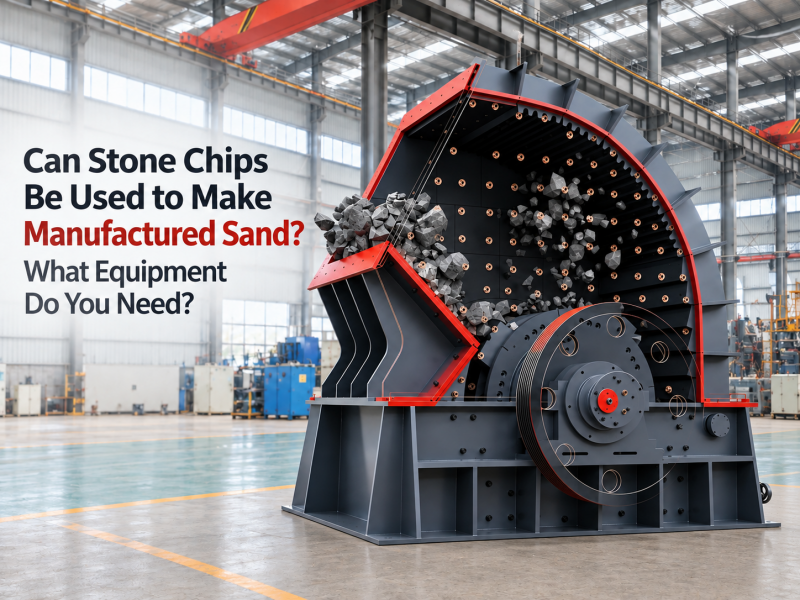
Yes, suitable stone chips can be processed into manufactured sand. For a quarry owner with slow-selling small stone, or a buyer with a steady supply of crushed material nearby, this can be a practical reason to consider a sand making plant. The equipment required depends on what is in the feed and what the finished sand must meet.
Consider a yard holding small crushed limestone left from aggregate sales. Some particles may need further crushing and shaping; others may already be sand-sized. Before ordering a machine, the owner needs to establish how much usable material is available and whether a local sand buyer will accept the proposed product. A large stockpile alone cannot answer either question.
The term stone chips can describe very different materials. Clean, durable crushed particles are a different starting point from weathered stone mixed with soil, clay, or large amounts of powder. A photograph helps explain the opportunity, but a representative sample shows what the plant will actually handle.
Identify the original rock, the largest particles, and the proportion of fine material. Hard, abrasive chips affect wear costs. Damp fines can complicate feeding and screening. If most of the stockpile is already powder, further crushing will not turn it into coarser sand; separation or blending may deserve assessment instead.
Ask the intended customer for their sand requirements early. Concrete, mortar, and other applications may require different grading and cleanliness. A product described only as 0-5 mm still needs assessment of its particle distribution, shape, and fines before acceptance for a particular use.
Already-crushed feed may allow a shorter process. When the entire feed falls within the selected sand maker's acceptable size range and suits its operating requirements, a primary crusher may be unnecessary. Oversized pieces must still be separated or reduced before they enter that machine.
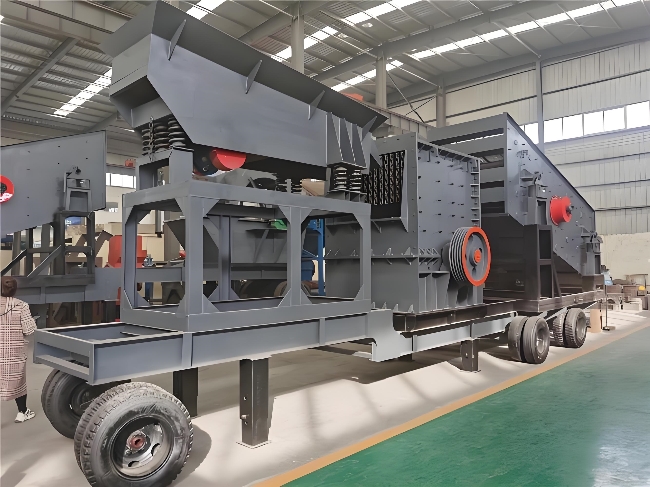
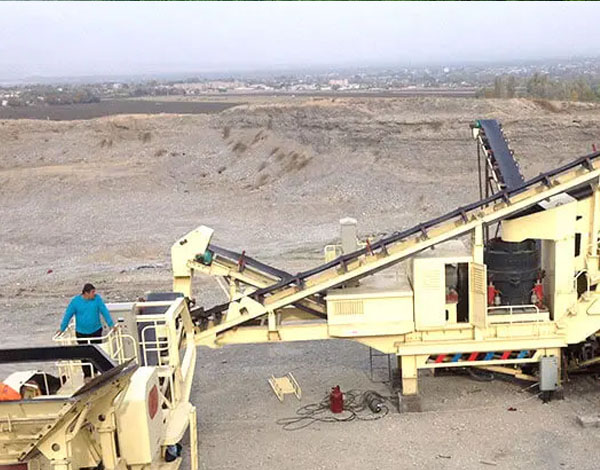
This is where using existing chips can change the equipment quotation. A complete 50-100 TPH sand making plant illustrates the wider process for rock feed, including upstream crushing. It is a configuration reference, not a package that every chips project needs. Confirm what your existing supply has already achieved before buying those stages again.
A practical arrangement starts with controlled feeding from a hopper. A feeder delivers material at a rate the process can handle. Pre-screening may separate material that already fits a useful product fraction, keeping it out of unnecessary crushing where its quality permits.
A VSI sand making machine is one option for reducing suitable chips and improving particle shape. Selection should account for the rock, feed condition, desired sand grading, and wear exposure. Buyers should ask for the expected finished sand output under those conditions, rather than treating machine throughput as saleable production.
After crushing, vibrating screens separate the required fractions. Oversize can return for further processing, while accepted material goes to its own stockpile. Conveyors, controls, and dust collection complete the working system. Their scope should appear in the quotation so installation does not depend on unpriced additions.
An existing quarry may be able to add this equipment beside its current line. A buyer processing purchased chips may need an independent feeding and storage arrangement. Reusing a conveyor or screen requires checking its available capacity and condition.
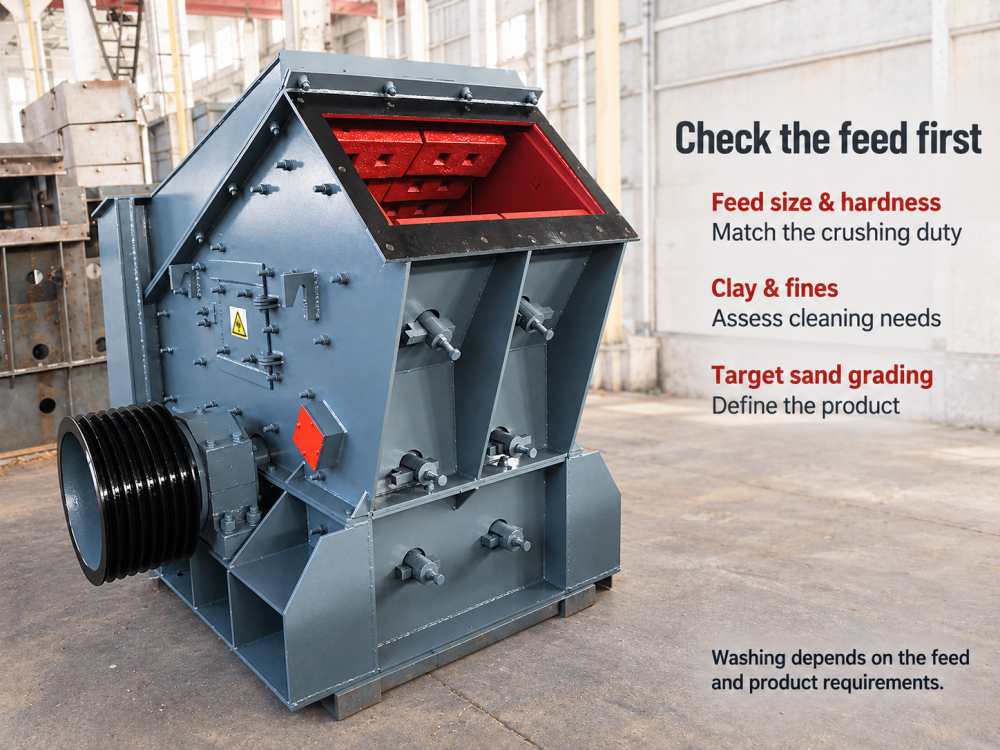
Washing is useful when it addresses a confirmed cleanliness or fines problem. Clean feed may support a dry process if the resulting sand meets the customer's requirements. Excess very fine powder can require dedicated classification; an ordinary sizing screen does not necessarily remove it effectively.
When mud or clay affects acceptance, assess an appropriate washing process. Include fine sand recovery where justified, dewatering, water reuse, and sludge handling in that assessment. These additions need space and operating resources. They should be evaluated before the buyer commits to a site layout.
The guide Does Manufactured Sand Need Washing? explains this choice in more detail. For the initial investment decision, establish which product requirement the wet section is meant to satisfy.
The equipment price is only part of the cost of starting production. Allow for delivery, foundations, electrical installation, loading equipment, and access for maintenance. Power availability should be checked against the proposed equipment and starting arrangement. A yard with lighting and a small workshop may need additional electrical capacity.
Operating costs include electricity, labor, loading, and replacement wear parts. Purchased chips also carry transport costs, which can change the value of an apparently cheap raw material. If washing is required, include water management and sludge disposal. Ask suppliers to state what their quotation includes and what must be supplied locally.
Compare quotations using the same feed and product requirements. Otherwise, a lower price may simply reflect a different equipment scope.
Discuss output on a consistent basis. Wet feed weight, recirculating material, and rejected fines should not be counted as finished sand sales. An achievable product yield based on representative feed gives a more useful business estimate than assuming every incoming tonne becomes the target sand.
Before choosing plant capacity, distinguish a one-time stockpile from a continuing supply. A large machine may clear accumulated chips quickly but then lack enough material to run regularly. Agree on likely monthly availability and check whether incoming material will remain similar after the original pile is exhausted.
On the sales side, obtain the customer's specification and arrange sample evaluation where appropriate. Ask about delivery quantities and acceptable moisture as well as particle size. This connects the equipment decision to an identifiable product and market, without relying on a promised selling price or payback period.
Manufactured sand from stone chips is worth assessing when suitable feed, a workable process, and buyer requirements align. Existing crushed material can simplify a project, but the amount of useful sand and the equipment needed must be established for that material.
Send Sentai Machinery photos of your chips, the rock type, feed sizes, available monthly supply, and required sand output. Include the intended use and any buyer specification. We can review a suitable sand making plant configuration, identify equipment that may be reused, and clarify the information needed for a quotation.
Does Manufactured Sand Need Washing? When Dry Screening Is Enough and When a Wet Process Makes Sense

 WhatsApp
 Email
Email
 +86 15538010601