
STCrushers Is A Professional Minging Equipment Manufacturer since 2004, Providing High Quality Crushers, Sand Making Machines, Drying Equipment and more.
STCrushers Is A Professional Minging Equipment Manufacturer since 2004, Providing High Quality Crushers, Sand Making Machines, Drying Equipment and more.
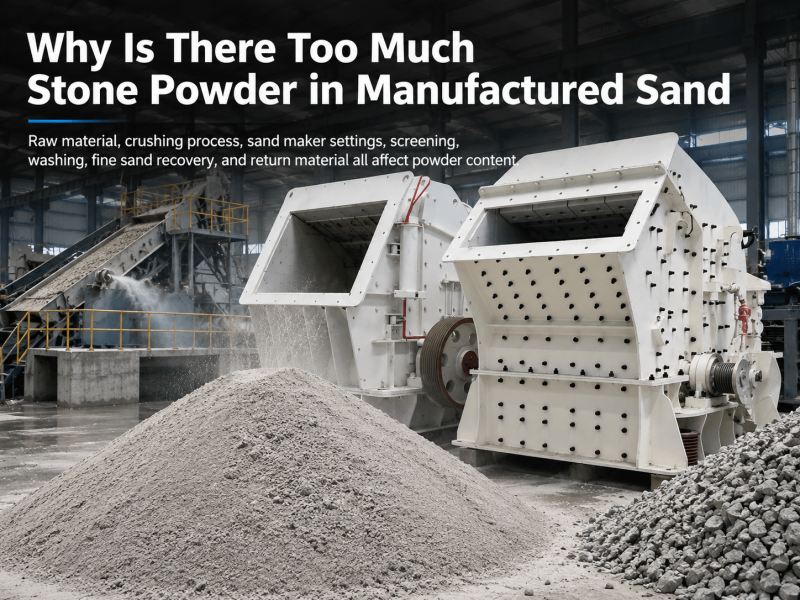
Stone has already been crushed, shaped, and screened. The 0-5 mm pile looks like finished manufactured sand. Then the proposed process adds washing, fine sand recovery, dewatering, and water treatment.
It is reasonable for the buyer to ask whether all of that is necessary.
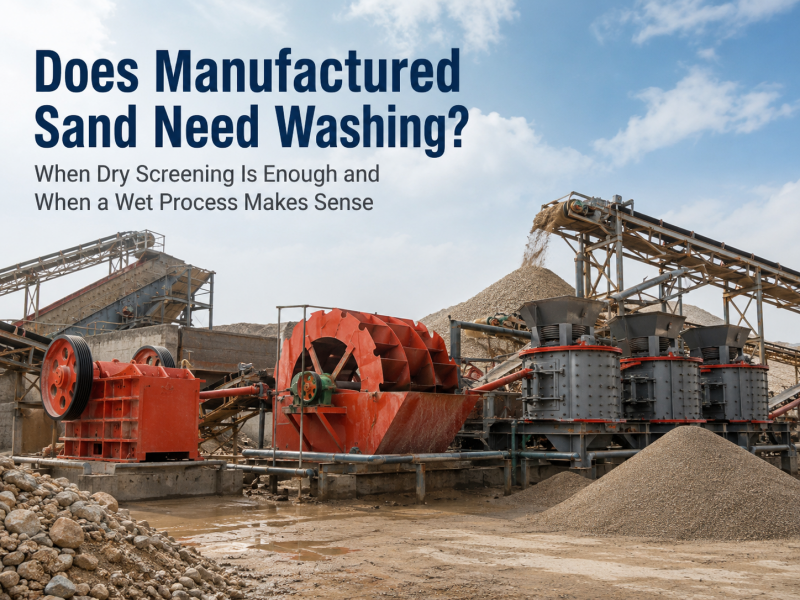
The answer is no. Not every manufactured sand plant needs a wet process. If the raw material is clean, the grading is under control, and the final market accepts the powder and cleanliness level, dry crushing and screening may be enough. Washing becomes useful only when it solves a product problem that the dry process cannot solve economically.
Start with the simplest path. Clean quarried stone with little clay or weathered contamination may produce acceptable sand after crushing, shaping, and screening. The screen removes oversize, the return loop controls unqualified material, and the finished fraction can move directly to stockpiling if it meets the required specification.
This route avoids process water, slurry handling, settling space, and wet stockpile management. It can be attractive where water is limited or the site must remain compact.
Dry does not mean uncontrolled. Feed gradation, crusher settings, VSI condition, screen efficiency, and stone powder still matter. The point is simply that water should not be added unless the finished product gives a reason to add it.
The first real fork appears when the sand contains a large amount of fine material. Buyers often describe the problem as too much powder, but the fine fraction may be stone powder, clay, mud, or a mixture of all three.
Stone powder is generated by crushing and shaping. Depending on the final use and local specification, a controlled amount may be acceptable. Clay and mud are different. They come from contaminated raw material, weathered layers, soil, or sticky fines and can affect sand cleanliness even when the particle size looks correct.
If the issue is mainly excess rock fines, process control, screening, return-load control, or dry classification may be worth considering first. If clay remains attached to the particles, washing has a much clearer purpose.
The same 0-5 mm product can be acceptable in one market and rejected in another. General fill, road material, mortar sand, and concrete sand do not always demand the same cleanliness, grading, powder level, or moisture condition.
This changes the washing decision. A plant should not wash sand simply because another plant washes sand. The correct question is what the customer buying the final product will measure.
If dry-screened sand already meets the commercial requirement, washing can add cost without adding saleable value. If clay, unwanted fines, or stricter concrete requirements prevent acceptance, the wet section becomes part of making the product.
Once water enters the process, the plant changes character. The washer can separate dirt and unwanted fine material from the product, but the discharged water now carries suspended solids and often some usable fine sand.
The design can no longer stop at the washer. The plant must decide what happens to the slurry, how much fine sand should be recovered, and how water will be clarified and reused.
A buyer who asks only for more wash water may get cleaner sand while losing more saleable fines. The wet section must be treated as a material balance, not as a cleaning box placed after the screen.
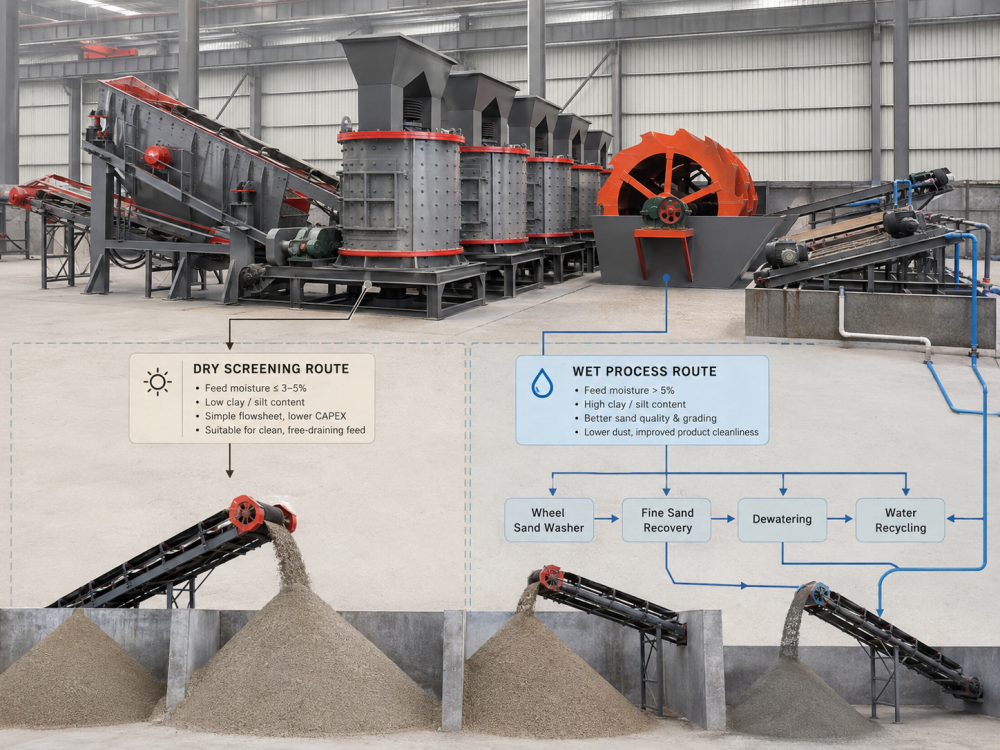
This is where fine sand recovery makes sense. If usable fine particles leave the washer with process water, recovering them can improve yield and help stabilize the final grading.
The amount worth recovering depends on the feed, the desired grading, and what the market considers useful sand rather than unwanted sludge. Recovering every fine particle is not automatically the goal. The recovered fraction still has to belong in the final product.
A wet plant should therefore be checked at more than one point. Cleaner sand can hide valuable fines leaving with the wastewater.
Clean sand leaving a washer can still be too wet for easy conveying, stockpiling, loading, or immediate sale. At this point the problem is no longer cleanliness. It is moisture.
A dewatering section removes part of the free water and produces a more manageable product for conveying, stockpiling, and loading.
The distinction matters because washing, fine sand recovery, and dewatering are three different duties. A plant may need all three, only one or two of them, or none of them. The correct combination follows the material after each process step.
A wet route that looks simple on a process drawing can be difficult at a dry or remote site. Water supply, dirty-water storage, settling area, pump access, and water recycling can occupy more attention than the washer itself.
If water is scarce, first ask whether cleaner feed management, dry screening, controlled crushing, or dry classification can reach the target. If washing is still necessary, water recovery should be planned from the beginning.
This is a site decision as much as an equipment decision. The best washing system on paper is not practical if the project cannot supply and manage its water.
There are projects where adding a wet section makes the process more complicated without improving the commercial product.
If the feed is already clean and the sand meets its target, unnecessary washing can remove useful fines, increase water demand, create slurry, raise final moisture, and expand the site.
This is an important limit. A complete sand making plant is not the plant with the most equipment. It is the plant that produces the required product with the fewest unnecessary process steps.
Consider one plant crushing clean limestone for a market that accepts the resulting powder level. After VSI shaping and screening, the 0-5 mm product can move to the stockpile. The dry route may already have done everything the customer needs.
Now consider weathered raw material with clay contamination for a concrete-sand market with tighter cleanliness requirements. The same 0-5 mm size is not equivalent. Washing may remove contamination, while fine sand recovery and dewatering may protect yield and handling.
The equipment lists are different because the product problems are different, not because one plant is more advanced than the other.
Manufactured sand does not automatically need washing. Some projects can move directly from screening to stockpiling. Others need a wet section because clay, unwanted fines, final-product requirements, or market expectations make dry processing insufficient.
The decision should begin with the raw material and the finished sand specification. Only then should the project decide whether washing is necessary, whether valuable fines need to be recovered, whether dewatering is required, and how process water will be managed.
Sentai Machinery can review raw material photos, moisture and clay condition, target sand size, final application, powder requirement, water availability, and site layout before recommending a dry or wet sand making route.
Related Articles | Why Finished Sand Quality Depends on More Than the Sand Maker | Why Is There Too Much Stone Powder in Manufactured Sand | Rod Mill Sand Making Circuit Design | What We Usually Confirm Before Quoting a Sand Making Plant |
Product Pages | |
Solution Pages | |
Related Application |
 WhatsApp
 Email
Email
 +86 15538010601