
STCrushers Is A Professional Minging Equipment Manufacturer since 2004, Providing High Quality Crushers, Sand Making Machines, Drying Equipment and more.
STCrushers Is A Professional Minging Equipment Manufacturer since 2004, Providing High Quality Crushers, Sand Making Machines, Drying Equipment and more.
In many sand making plant projects, the problem is not that the sand making machine cannot produce sand. The machine is running, the conveyor is discharging material, and the finished sand pile keeps growing.
But when the buyer checks the final product, another problem appears.
There is too much stone powder in the manufactured sand.
Sometimes the sand looks too dusty. Sometimes the grading is not stable. Sometimes the buyer adds washing equipment, but fine sand loss becomes another problem. The plant seems to be producing, but the final sand quality is not easy to control.
At this point, many buyers first blame the sand making machine. This is understandable, but it is not always correct.
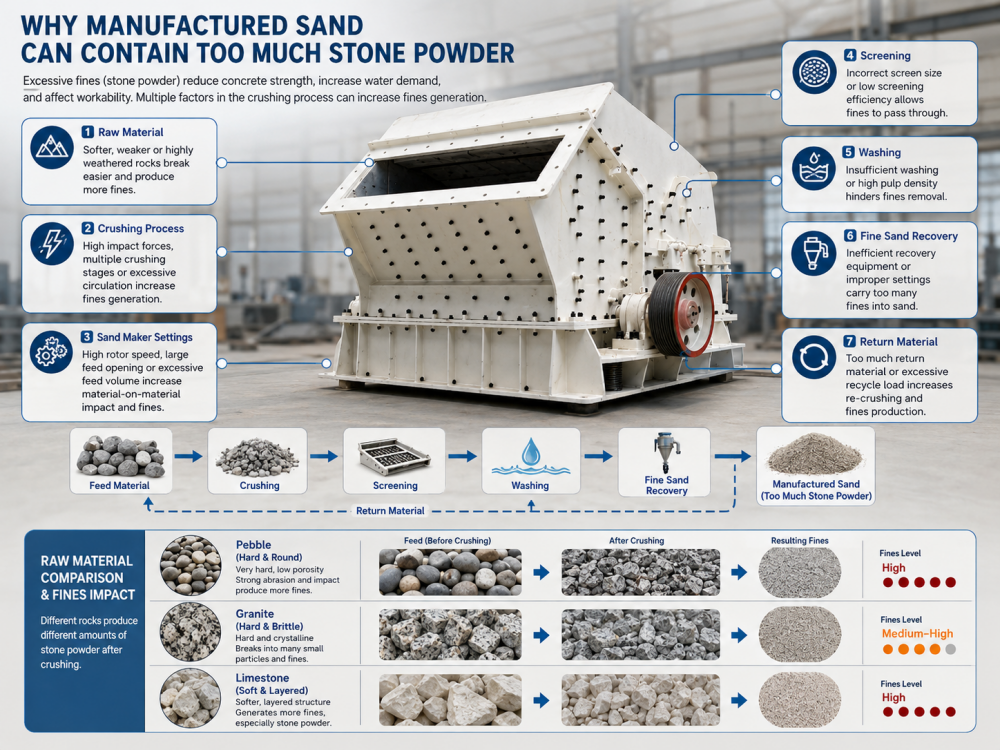
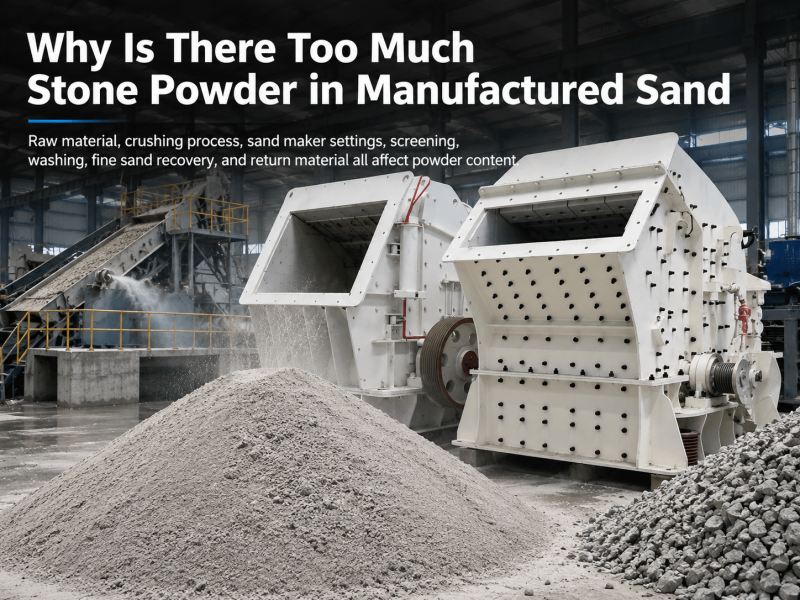
Stone powder content is not decided by the sand maker alone. It is the result of raw material condition, crushing process, feed size, machine operation, screening efficiency, washing method, fine sand recovery, and return material ratio.
For Sentai Machinery, this kind of problem should be checked from the finished sand pile backward through the whole production line.
Before adjusting equipment, the buyer should first confirm what the fine material really is.
Stone powder and mud are different problems.
Stone powder usually comes from crushing and shaping. It is fine rock powder produced during the crushing and sand making process. In some applications, a proper amount of stone powder can help improve grading and filling performance.
Mud or clay usually comes from raw material contamination. If the raw material contains soil, clay, weathered layers, or sticky fines, the finished sand may look dirty even if the crushing process is normal.
If the fine material is mostly stone powder, the solution may involve crushing adjustment, screening, air classification, washing, or fine sand recovery. If the problem is mud or clay, the site may need raw material cleaning, pre-screening, washing, or better stockpile management.
So the first step is not to ask whether the sand maker is good or bad. The first step is to identify the source of the fine material.
Different raw materials produce different amounts of powder.
Limestone, granite, basalt, river stone, tailings, and weathered rock do not break in the same way. Softer or more weathered materials may generate more fine powder. Materials with cracks or weak layers may break into small particles more easily. Materials with clay or soil can make the finished sand look worse after screening.
Even with the same sand making machine, the powder content may be different when the raw material changes.
This is why a sand making plant should not be designed only according to capacity. The supplier also needs to know raw material type, hardness, mud content, feed size, required finished sand size, and final application.
If the raw material already contains too many fines, the plant must handle them before or during the sand making process.
Stone powder can also come from the crushing stages before sand making.
If the jaw crusher, impact crusher, cone crusher, or hammer crusher produces too much fine material before the sand maker, the final sand system will carry this problem forward. The sand making machine may be blamed, but the powder was already created earlier.
For example, if the previous crushing stage uses too much impact crushing, or if the discharge size is too fine, more powder may enter the sand making stage. If return material is repeatedly crushed, the fine content may continue to increase.
A reasonable sand making plant should control the feed going into the sand maker. The goal is not only to reduce size, but also to keep the material grading suitable for shaping and final screening.
The sand making machine still plays an important role.
If the feed size is too large, too uneven, or not suitable for the machine type, the crushing chamber may not work under stable conditions. If the machine runs with unsuitable speed, excessive impact, or poor material flow, it may create more fine powder than expected.
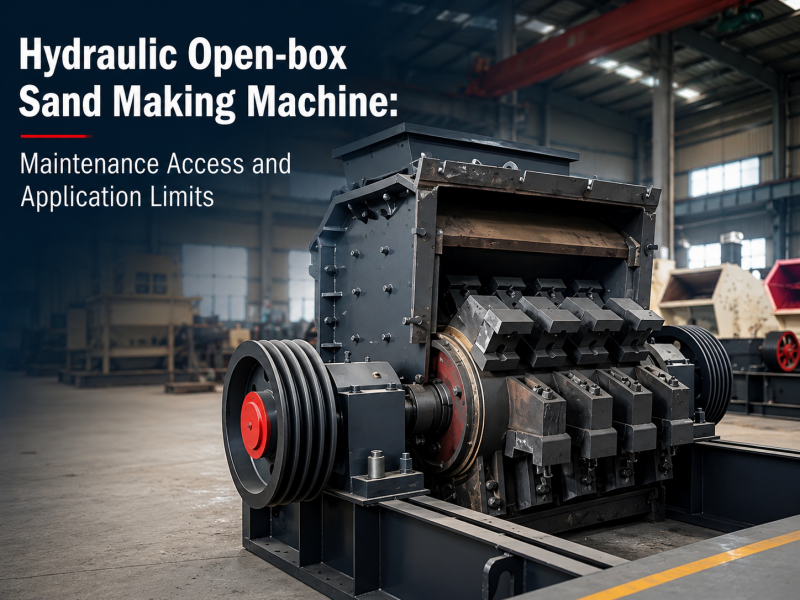
Different sand makers also have different crushing effects. VSI sand making machines, hydraulic open-box sand making machines, and vertical compound crushers are not used in exactly the same way. Their suitable materials, feed size, maintenance method, and finished product control are different.
The right machine should be selected according to material hardness, output requirement, product size, and whether the plant needs shaping, fine crushing, or both.
But even a suitable sand maker needs proper feeding and screening support. Otherwise, the finished sand may still contain too much powder.
Screening is often underestimated in stone powder control.
If the vibrating screen is not efficient, fine powder and oversize material may not be separated properly. If the mesh is blocked, worn, or not suitable for the required product size, the finished sand grading will become unstable.
Wet material, clay, and high fine content can also reduce screening efficiency. When screening is poor, more powder may enter the finished product pile, and more oversize material may return to the crusher.
This makes the whole system unstable.
A sand making plant should check screen mesh size, screen angle, vibration condition, material layer thickness, and moisture condition. Sometimes improving screening can reduce product quality problems without changing the sand maker.
Many buyers think that washing is the simplest solution when stone powder is too high.
Washing can reduce mud, clay, and part of the fine powder. It can improve the cleanliness of manufactured sand. But washing is not a complete answer by itself.
If the washing system is not matched properly, fine sand loss may become serious. The buyer may reduce powder content, but also lose valuable fine sand. This can reduce yield and affect grading.
For this reason, sand washing and fine sand recovery should be considered together. A dewatering and recovery system can help recover part of the fine sand that would otherwise be lost with wastewater.
The key is not only to wash the sand, but to wash it in a controlled way.
Return material is another hidden reason for high stone powder content.
In a sand making plant, oversize material after screening may return to the crusher or sand maker for re-crushing. This is normal. But if the return material ratio is too high, the same material may be crushed again and again.
Repeated crushing can increase the amount of fine powder.
A high return material ratio may come from poor feed size control, unsuitable crusher setting, inefficient screening, or product size requirements that are too narrow. If the return loop is not balanced, the plant may keep producing more powder while trying to improve product shape.
This is why return material should be checked as part of finished sand quality control.
Not every project has the same requirement for stone powder.
Concrete sand, dry mortar sand, asphalt aggregate, road base material, and general construction sand may have different requirements for grading, cleanliness, and powder content.
Some applications allow a certain amount of stone powder. Some require stricter control. Some need washing. Some need better screening and grading control.
Before adjusting the plant, the buyer should confirm the final use of the sand. A sand making plant should be designed around the final product requirement, not only around machine output.
When manufactured sand contains too much stone powder, buyers can check the plant in this order.
Check Point | What to Look At | Why It Matters |
Fine material type | Stone powder or mud | Decides the real solution |
Raw material | Hardness, clay, weathering, fines | Affects powder from the start |
Front crushing | Discharge size and crushing method | May create too many fines |
Sand maker feed | Feed size and grading | Affects chamber stability |
Machine operation | Speed, feeding, wear parts | Affects powder generation |
Screening | Mesh, blockage, efficiency | Controls product grading |
Washing system | Washer and water flow | Removes fines and mud |
Fine sand recovery | Recovery and dewatering | Reduces fine sand loss |
Return material | Return ratio and loop load | Prevents repeated over-crushing |
This path is more useful than simply adding a washer or changing the sand maker without checking the whole line.
Too much stone powder in manufactured sand is not always caused by the sand making machine alone.
The real reason may come from raw material, front crushing, feed size, machine operation, screening efficiency, washing method, fine sand recovery, or return material ratio.
For buyers, the better question is not only "How do I reduce stone powder?" A more useful question is "Where is the powder being created, carried, or not removed in the sand making plant?"
When the problem is checked from the finished sand pile backward, the plant can improve sand quality more effectively and avoid unnecessary equipment changes.
If your manufactured sand contains too much stone powder, Sentai Machinery can help review your sand making process according to raw material type, feed size, crushing process, sand maker model, screen configuration, washing method, fine sand recovery system, and final sand application.
Send us your material photos or videos, required finished sand size, current powder condition, washing condition, and plant capacity target. Our team can help analyze the possible cause and recommend a suitable sand making and washing solution.
1. Why Finished Sand Quality Depends on More Than the Sand Maker
2. What Changes When River Stone Is Used Instead of Limestone in a Sand Making Plant
3. What Buyers Often Ignore When Choosing a Vibrating Screen
4. How to Match Jaw Crusher and Vibrating Screen in a Stone Crushing Plant
5. What We Usually Confirm Before Quoting a Sand Making Plant
 WhatsApp
 Email
Email
 +86 15538010601