
STCrushers Is A Professional Minging Equipment Manufacturer since 2004, Providing High Quality Crushers, Sand Making Machines, Drying Equipment and more.
STCrushers Is A Professional Minging Equipment Manufacturer since 2004, Providing High Quality Crushers, Sand Making Machines, Drying Equipment and more.
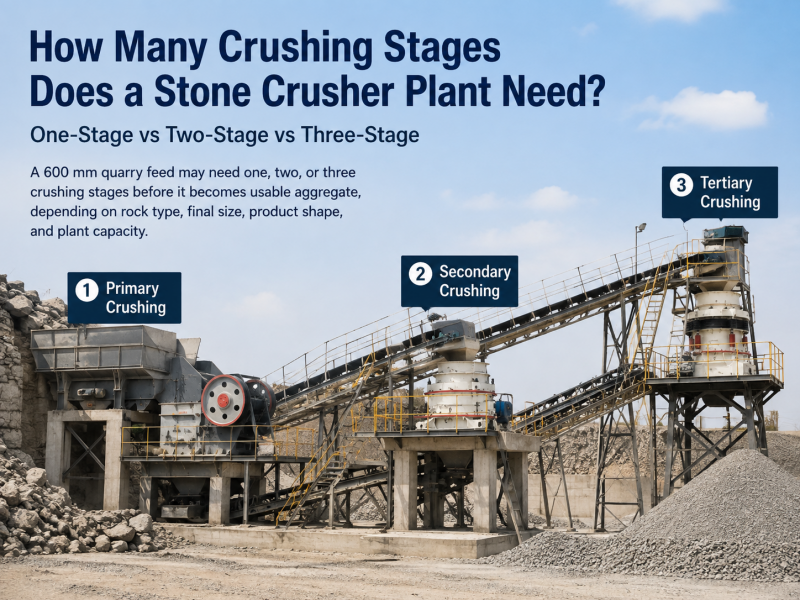
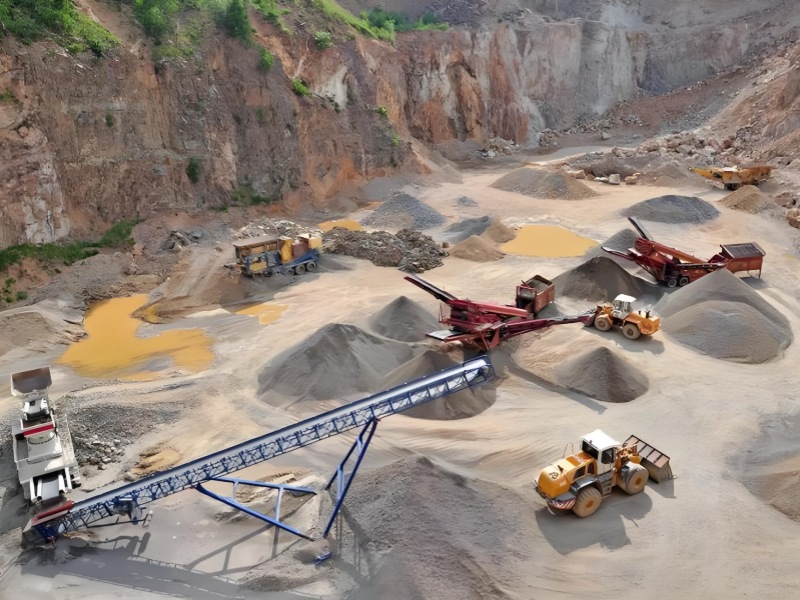
Imagine one piece of quarry stone entering the plant at about 600 mm. The buyer wants saleable aggregate around 20 mm and asks a reasonable question: can one crusher do the whole job?
Fewer machines can reduce investment, conveyors, steelwork, and maintenance. But one crusher asked to handle the entire reduction from quarry feed to tightly controlled aggregate may trade that saving for higher wear, unstable capacity, excess fines, or heavy recirculation.
Stage count should follow the total reduction path from raw feed to finished product, not a fixed rule that every plant needs two or three crushers.
For large quarry feed, the first job is normally coarse reduction. A Jaw Crusher is commonly used because it can accept large stone and reduce it to a size that downstream equipment can handle more consistently.
At this point, the plant is not yet trying to make perfect 20 mm aggregate. The first stage is mainly removing the large-size constraint. It prepares the material for stable conveying, secondary crushing, and later screening.
For a representative 600 mm feed, primary-crusher discharge depends on model, setting, rock behavior, and capacity. The next machine should receive a size it can process comfortably and continuously.
Some projects do not need a second crusher at all. If the incoming material is already relatively small, the required product is coarse, or crushing is only preparing material for grinding or another industrial process, a single-stage route may be practical.
Soft and brittle materials can allow simplified high-reduction-ratio routes when the final specification is not strict. Adding another crusher only to make the plant look more complete can raise cost without adding enough product value.
If one stage reaches the required size and capacity without unacceptable wear, fines, shape problems, or recirculation, the process does not need extra complexity.
The situation changes when the buyer wants commercial aggregate sizes rather than only smaller rock. After primary crushing, the second stage begins to control the product distribution more deliberately.
For limestone and other suitable medium-hard materials, an Impact Crusher can follow primary crushing where particle shape and controlled reduction matter. Harder and more abrasive rock may require a compression-based secondary route. In either case, the second stage brings prepared feed closer to the saleable size range.
A Vibrating Screens unit then separates qualified sizes from oversize. If material above the target size returns to the crusher, the plant becomes a closed circuit. This is where a nominal two-stage plant starts behaving as a complete production system rather than two independent machines.
A third stage becomes useful when the first two stages are being asked to do too many jobs. The plant may already make 20 mm aggregate, but the customer also wants 0-5 mm manufactured sand, better shape, or tighter grading.
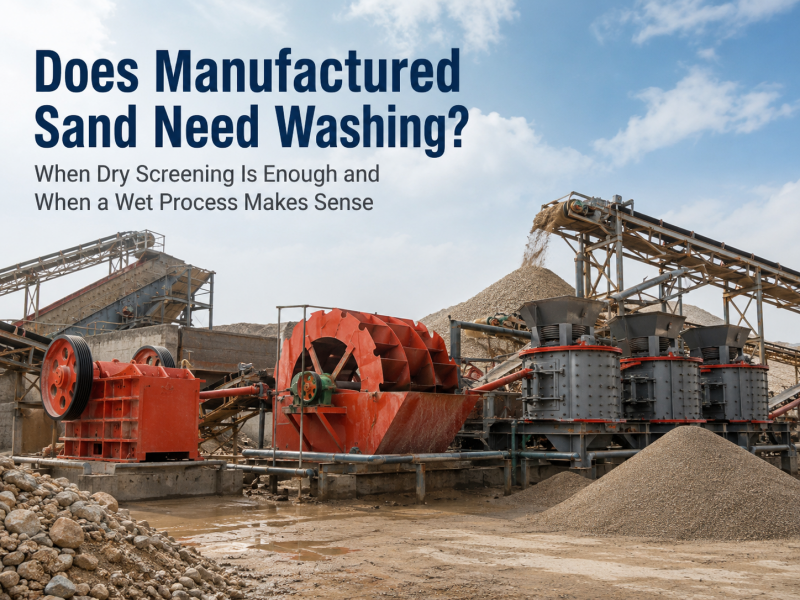
In that case, the third stage often has a different purpose. It may perform fine crushing or shaping rather than simply repeating secondary crushing. A VSI Sand Making Machine is one example when the project needs a controlled sand-making or shaping step after the earlier crushers have prepared a suitable feed.
The value of a third stage is not that three machines sound more professional than two. It comes from assigning the final reduction or shaping duty to equipment designed for that job.
Keep the same 600 mm quarry feed and change only the final product target. The process can change completely.
If the target is only below roughly 100 mm for another process, primary crushing may be enough after the rock and capacity are checked.
For graded construction aggregate such as 10-20 mm and 20-40 mm, primary crushing followed by secondary crushing and screening is more realistic because the second stage adds controlled reduction.
If the quarry also wants several aggregate sizes plus 0-5 mm manufactured sand with stronger shape requirements, the route begins to resemble a Sand Making Plant. A third fine-crushing or shaping step then has a clear job.
A three-stage plant is not automatically more capable than a two-stage plant. Every added stage brings another crusher, transfer point, motor load, conveyor, foundation area, wear system, and control relationship.
Extra crushing can generate unwanted fines, while tighter screening can increase oversize return. A heavy return loop may consume capacity by reprocessing internal material instead of producing new saleable aggregate.
The best process uses enough stages to reach the product target without forcing one crusher outside its comfortable duty, while avoiding stages that do not improve the commercial product.
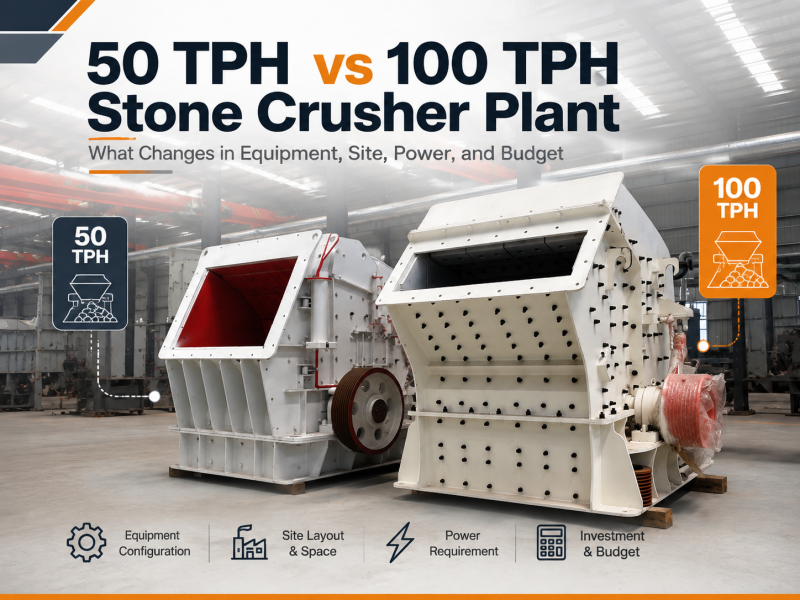
Two projects can use the same process logic and still need very different equipment. A 50 TPH line and a 100 TPH line may both use primary crushing, secondary crushing, and screening, but crusher size, screen area, conveyors, stockpiles, and power supply all change.
Stage count must be decided together with capacity. A technically correct three-stage flow can still fail if one stage, the screen, or the return conveyor cannot pass the real hourly load.
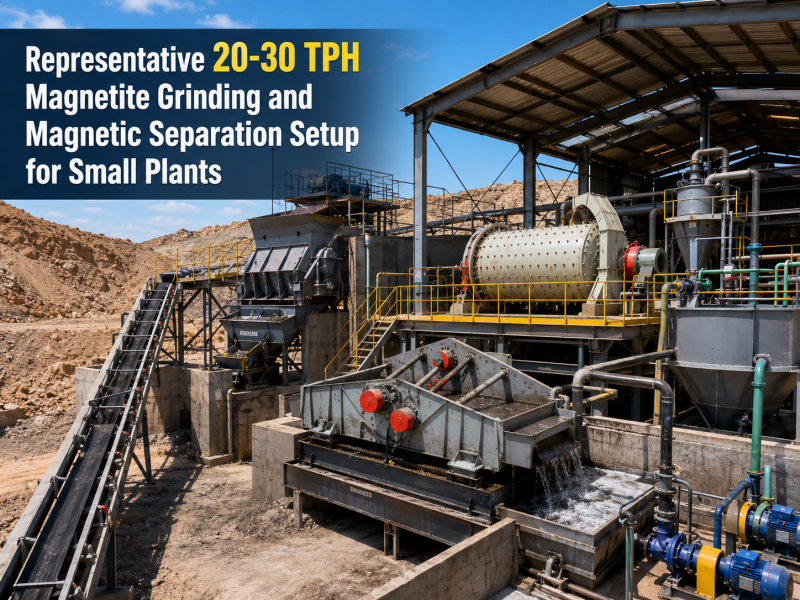
A complete Stone Crusher Plant should therefore be balanced around both reduction duty and material flow. Stage count explains how many times the material needs to be reduced. Capacity determines how large each part of that path must be.
Before adding a crusher, look at what the screen is already showing. It separates material that has reached the target from material that still needs reduction.
If most material already meets the product cuts and only a reasonable oversize stream returns, another crusher may add little value. Heavy circulation can instead show that the current reduction stage is being asked to do too much.
Screening is therefore evidence of whether the chosen number of crushing stages really matches the product target.
A one-stage plant is not automatically too simple, and a three-stage plant is not automatically advanced. Stage count depends on total reduction, rock behavior, finished size control, particle shape, and hourly capacity.
If one stage completes the required duty reliably, there is no reason to add another. If two stages produce the required aggregate with stable screening and acceptable return load, a third stage should have a clear purpose before it is added. When manufactured sand or tighter shaping becomes part of the product plan, that third stage can become justified.
For Sentai Machinery, the starting point is raw feed size, material type, capacity target, and final products. Once those are clear, stage count becomes a process decision rather than a sales assumption.
How to Choose Equipment for a Stone Crushing Plant
Impact Crusher vs Heavy Hammer Crusher for Limestone: Which One Makes More Sense
Why Return Material Ratio Matters in a Stone Crushing Plant
What Determines Finished Aggregate Shape in an Impact Crushing Process
Limestone, Granite, or River Stone: How Raw Material Changes Crushing Process Design
Jaw Crusher, Impact Crusher, VSI Sand Making Machine, Vibrating Screens
 WhatsApp
 Email
Email
 +86 15538010601