
STCrushers Is A Professional Minging Equipment Manufacturer since 2004, Providing High Quality Crushers, Sand Making Machines, Drying Equipment and more.
STCrushers Is A Professional Minging Equipment Manufacturer since 2004, Providing High Quality Crushers, Sand Making Machines, Drying Equipment and more.
The original project looked straightforward. A local contractor expected steady demand for road base and concrete aggregate, and a 50 TPH stone crusher plant appeared large enough for the first stage of the business.
Then a second customer asked about regular supply. The owner began considering 100 TPH and assumed the change would mainly mean buying a larger crusher.
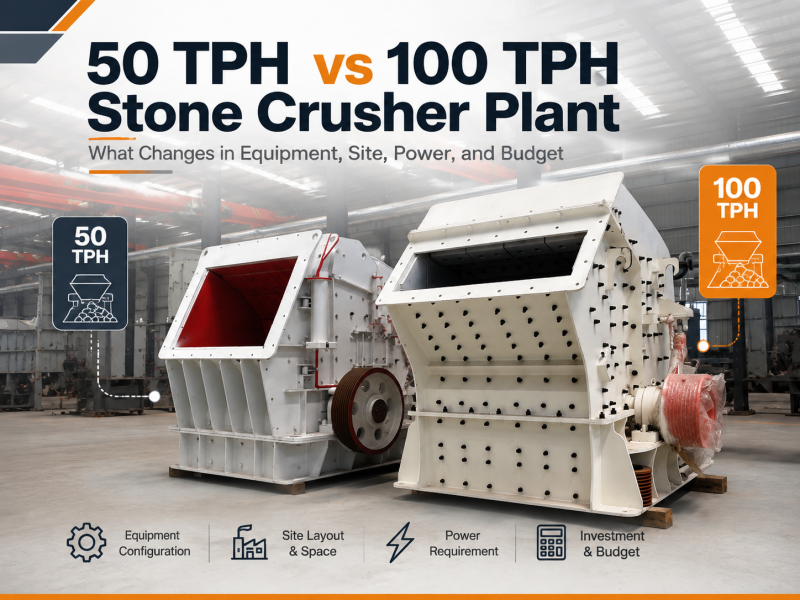
That assumption is common. A 100 TPH project is not simply a 50 TPH line with a bigger motor. Once the capacity target rises, the plant has to accept more raw stone, move more intermediate material, separate more finished product, return more oversize, store more aggregate, and supply more electrical load without creating a new bottleneck.
A capacity target should describe qualified finished aggregate, not only the amount entering the first crusher. If the market can absorb only 300 tons during a normal working day, a 100 TPH line may spend much of its time idling, starting, stopping, or running below a stable load.
The useful comparison begins with daily sales demand, operating hours, product mix, seasonal demand, and realistic plant availability. The correct plant meets the sales plan with enough operating margin, not merely the most attractive capacity label.
A 50 TPH project can often use a relatively compact arrangement when the feed size is controlled, the raw material is understood, and the number of finished products is limited. The feeder, primary crusher, secondary crusher, screen, and conveyors still have to match, but the stockpiles and transfer points are easier to fit into a smaller site.
This scale can suit a small quarry, a contractor producing aggregate for its own work, or a market that is still developing. It can also reduce the risk of installing more electrical and civil infrastructure than the business can use.
When the target approaches 100 TPH, the raw material supply must keep the plant continuously loaded. A wheel loader that comfortably supports a smaller hopper may become the first bottleneck. The hopper volume, feeder width, truck access, loading cycle, and prescreening duty all become more important.
This is why Sentai Machinery uses larger feeders, crushers, screens, and conveyors as its solution pages move toward 80-100 TPH and 100-150 TPH plants. The change is a system step, not one isolated machine change.
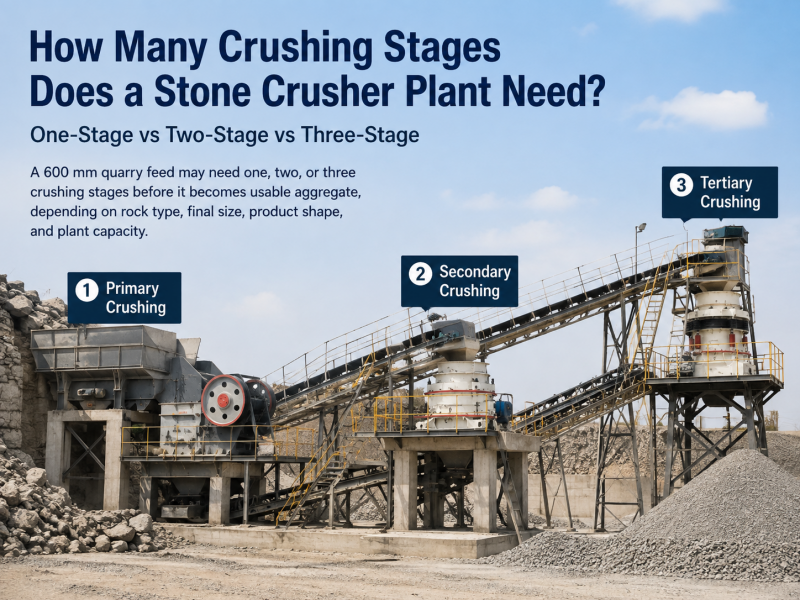
The capacity increase does not decide whether the second stage should use an impact crusher or a cone-type solution. The raw stone still decides that.
For limestone and other less abrasive materials, an impact crusher may offer a practical route with good aggregate shape. Granite, basalt, river stone, or quartz-rich material can shift the decision toward a more wear-conscious secondary crushing route.
The return loop deserves special attention. If 20 percent of screened material returns to the secondary crusher, internal equipment handles more than the fresh-feed figure suggests. That circulating load can rise without increasing saleable output.
A larger crusher cannot compensate for a screen with insufficient area, poor feed distribution, unsuitable meshes, or blocked lower decks. The plant may consume power and wear parts while the same oversize material travels around the circuit repeatedly.
The main machines occupy only part of the land. Higher capacity also needs wider material flow, larger safety clearances, more maintenance access, greater truck movement, and more space between product piles.
Site information should be considered before capacity is finalized. A narrow site may need longer conveyors and more transfer points, while a well-planned site can support simpler flow and future expansion.
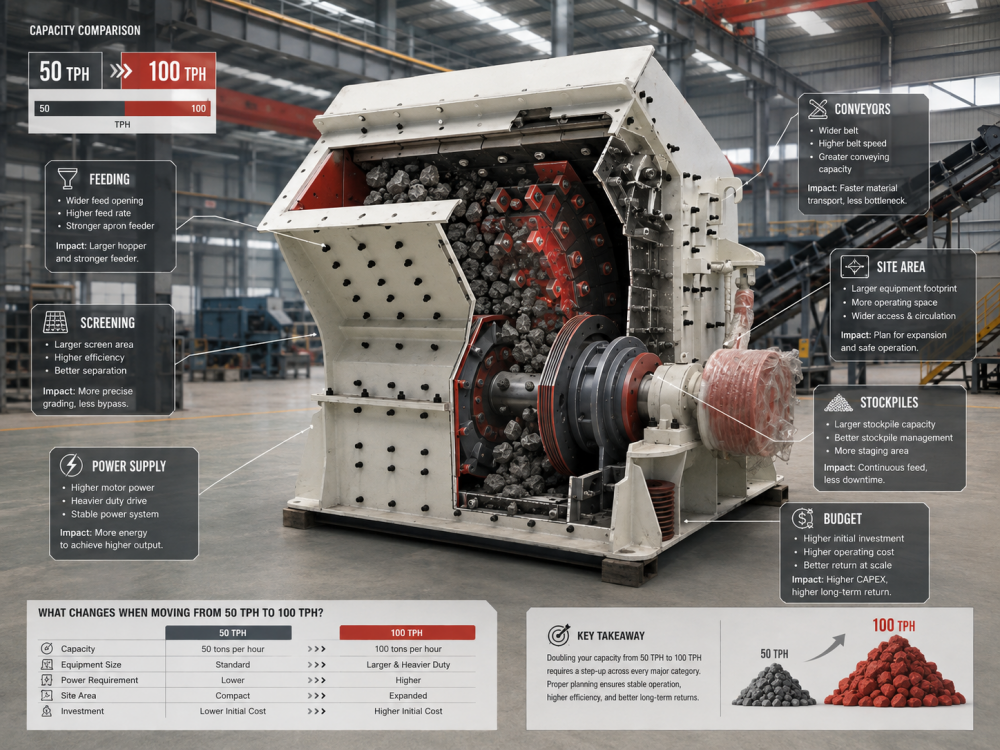
A buyer comparing 50 TPH and 100 TPH options often asks for total installed power. The electrical decision also includes transformer capacity, starting method, cable distance, voltage drop, and control logic.
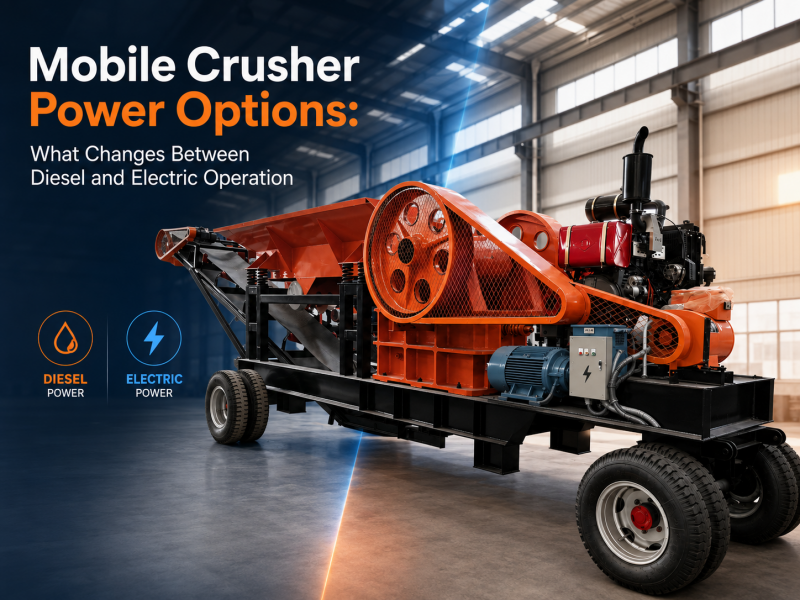
If the site uses a generator, it should be selected around operating load and motor starting demand rather than the simple sum of nameplate ratings. Power infrastructure belongs in the project comparison before equipment is ordered.
Moving from 50 TPH to 100 TPH does not mean every cost becomes exactly twice as high. Some items, such as engineering work, a control room, site mobilization, and certain service costs, may be shared across both sizes. Other costs can rise sharply because the project needs heavier structures, larger foundations, wider conveyors, a larger transformer, greater dust control, and more stockpile space.
A budget comparison should separate the main equipment price from civil work, power connection, installation, stockpile preparation, environmental control, spare parts, and working capital. The lowest machine quotation does not always create the lowest project cost.
A smaller plant may finish the required daily tonnage within one shift and leave a clear maintenance window. A 100 TPH line is often purchased because the owner expects longer supply commitments, faster truck loading, or several product orders at the same time. That changes the pressure on operators and maintenance planning.
Higher hourly output also means that a short interruption can affect more deliveries. Spare screen media, crusher wear parts, belt repair materials, loader availability, and product-pile management become part of capacity planning. The project is not truly larger if the support team and site logistics remain sized for the original 50 TPH operation.
A staged investment can be sensible when demand is uncertain. The important point is to decide which parts should already be prepared for the larger future plant.
The owner may reserve land for a larger screen and stockpiles, size the electrical room for later load, leave conveyor corridors open, and position foundations so new equipment can be added without rebuilding the entire flow.
The difference between 50 TPH and 100 TPH is not limited to crusher size. It changes how raw material arrives, how the secondary stage is loaded, how the screen handles return material, how finished products are stored, and how the site supplies power.
A 50 TPH plant can be the right commercial decision for a developing market or limited operating schedule. A 100 TPH plant can be more efficient when demand, site infrastructure, and material supply can support continuous production.
Sentai Machinery can compare both capacity routes using the same raw material, feed size, finished-product plan, operating hours, site drawing, and local power conditions. That comparison shows whether the project needs a larger plant now or a layout that can expand without starting again.
How to Choose Equipment for a Stone Crushing Plant
A 100 TPH Stone Crushing Plant for Hard Rock
Limestone, Granite, or River Stone: How Raw Material Changes Crushing Process Design
How to Choose Between a Stationary Crusher Plant and a Mobile Crusher
What Site Information Should Buyers Provide Before Plant Layout Design
40-60 TPH Stone Crushing Plant
 WhatsApp
 Email
Email
 +86 15538010601