
STCrushers Is A Professional Minging Equipment Manufacturer since 2004, Providing High Quality Crushers, Sand Making Machines, Drying Equipment and more.
STCrushers Is A Professional Minging Equipment Manufacturer since 2004, Providing High Quality Crushers, Sand Making Machines, Drying Equipment and more.
The plant is finally running. Raw stone enters the hopper, passes through crushing and screening, and finished aggregate begins to leave the conveyors. At this moment the project looks simple: machines in, stone in, product out.
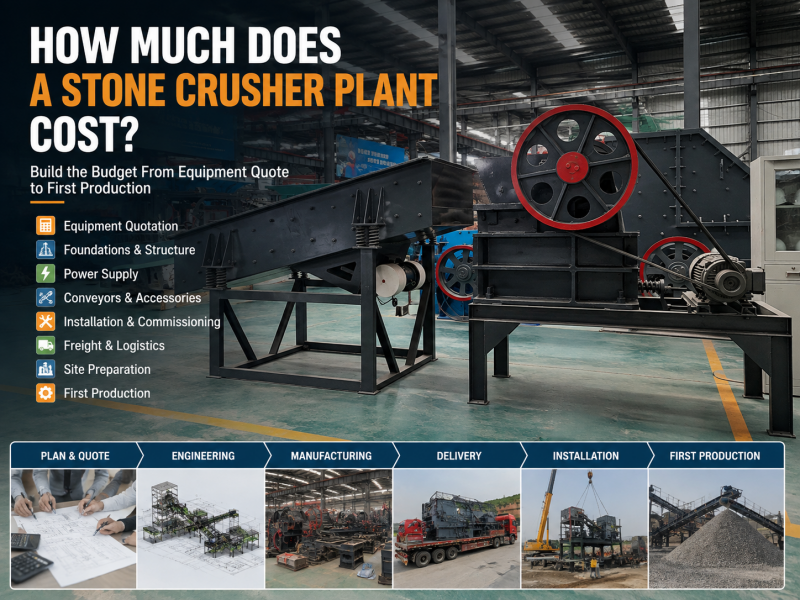
But the money required to reach this moment was not limited to the crusher quotation. The first ton carries the cost of everything that had to happen before production could begin.
This is why asking how much a stone crusher plant costs is different from asking the price of a jaw crusher, impact crusher, or screen. The project cost only becomes clear when the path to first production is defined.
A supplier can ship a jaw crusher, secondary crusher, screen, feeders, conveyors, motors, and control equipment. They still arrive as separate machines and structures. A working production line has to be assembled, aligned, connected, lubricated, tested, and commissioned.
That stage can involve lifting, mechanical installation, conveyor assembly, electrical wiring, belt tracking, lubrication, testing, and operator training. The exact scope depends on what the supplier includes and what the buyer arranges locally.
This is where similar equipment quotations can lead to different project budgets. One supplier may include structures, controls, commissioning support, or spares, while another quotes only the core equipment. The lower factory price may simply move more work to the site.
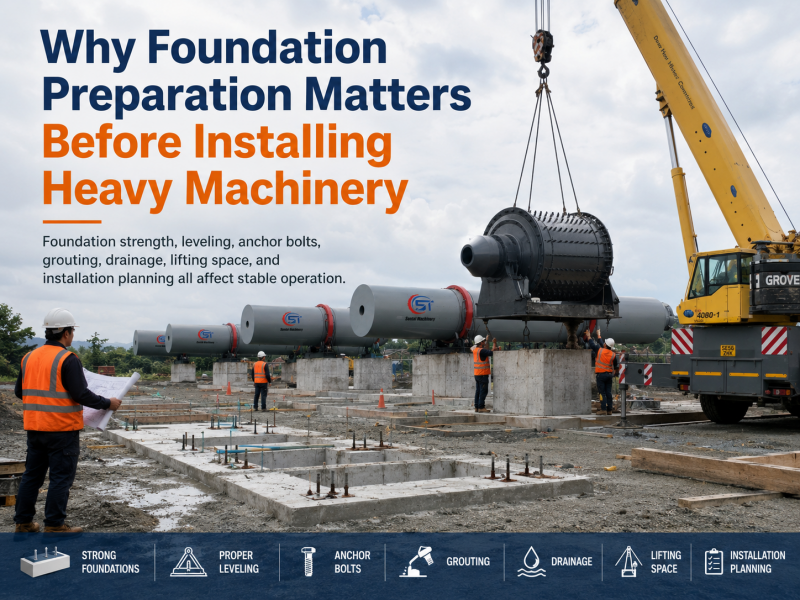
Long before the first crusher turns, the site may need foundations, equipment platforms, access roads, drainage, stockpile areas, loader routes, a feed hopper area, cable routes, and space for maintenance.
A compact 50 TPH plant and a larger 100 TPH plant do not place the same demand on these items. Higher capacity can mean larger equipment, wider product stockpiles, heavier foundations, more conveyor length, more loading activity, and more space between machines.
This is why layout design should happen before civil work is finalized. Moving a foundation after concrete is poured is expensive. Discovering that a loader cannot reach a stockpile, or that a conveyor crosses a truck route, can turn a cheap site plan into a costly correction.
The equipment quotation may include electric motors, but the project still needs a way to supply those motors with stable power.
For a grid-connected plant, the budget may involve a transformer, distribution equipment, cables, protection devices, and the connection from the local power source to the plant. For an off-grid project, a generator system may become part of the investment. Starting methods and available site voltage can also affect the electrical arrangement.
The distinction is important: motor power belongs to the machine specification. Power infrastructure belongs to the project budget. A quotation can include every motor and still leave the buyer with a significant electrical scope outside the equipment price.
Imagine two suppliers quoting the same nominal plant capacity. Quotation A looks cheaper because it focuses on the main crushers and screen. Quotation B is higher because it also carries feeders, conveyors, supporting frames, electrical controls, basic wear parts, spare parts, and export packing.
Neither quotation is automatically better. They are simply different supply boundaries.
The buyer should compare what each price is expected to deliver. If conveyors, structures, cables, control cabinets, or spare parts are missing, those costs do not disappear. They move from the supplier quotation to another purchase order, another contractor, or the construction site.
This is the core rule when comparing crusher plant prices: compare the scope before comparing the total number.
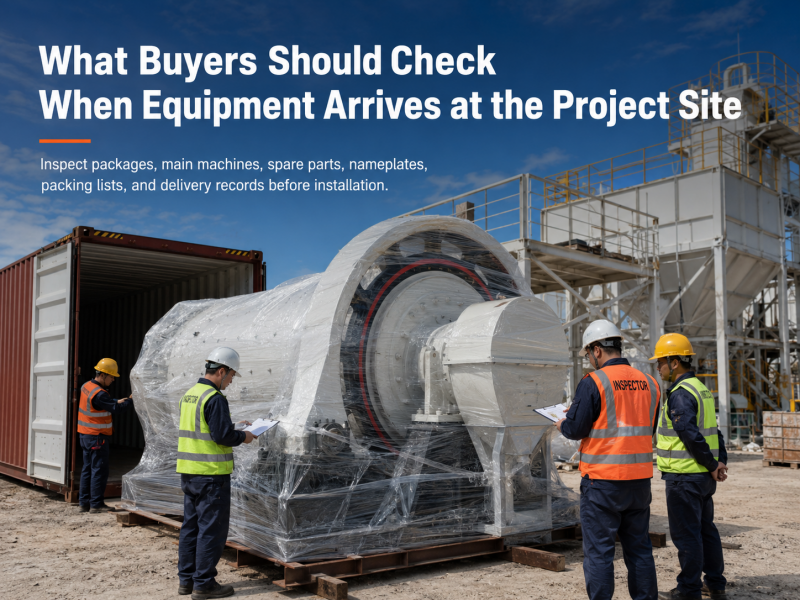
For an overseas project, the factory price is still not the landed cost. Equipment must be packed, shipped, cleared, and transported to site.
The commercial term matters because EXW, FOB, and CIF quotations stop at different points. A buyer may still face destination port charges, customs clearance, inland transport, unloading, and site handling after the supplier's quoted responsibility ends.
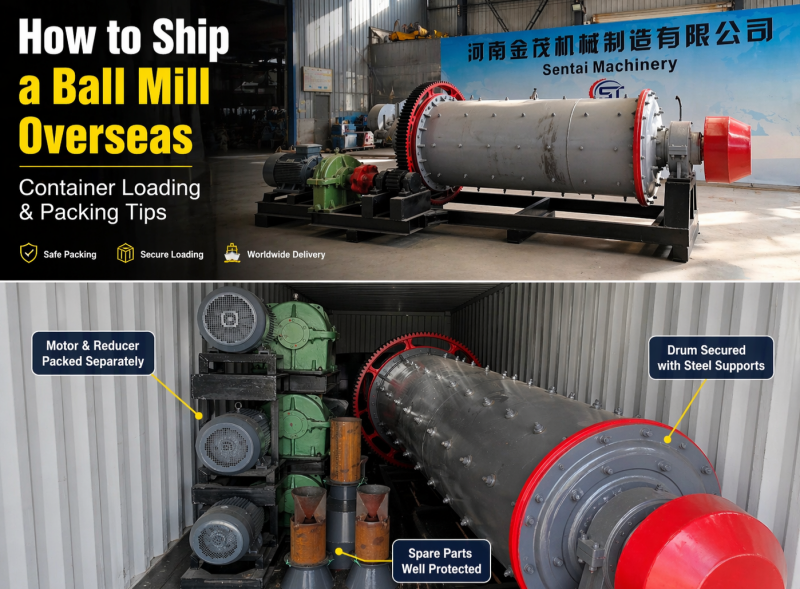
Large crushers, screens, and long conveyor structures can also affect container planning and freight cost. A plant that looks similar on a flow sheet can ship very differently depending on frame design, equipment dimensions, and how much is preassembled before dispatch.
The cheapest part of project planning happens before any machine is ordered. This is where the required capacity, raw material, feed size, final product sizes, and working hours should be defined.
A project that really needs about 50 TPH should not automatically be pushed to 100 TPH just because the larger number sounds safer. The extra capacity can increase equipment size, power demand, civil work, conveyor load, stockpile area, and loading requirements.
The opposite mistake also exists. Buying a smaller plant only because the initial quotation is lower can become expensive if market demand quickly exceeds its practical capacity and the site was never prepared for expansion.
The right capacity does more to control total investment than negotiating a small discount on the wrong process.
This is the part many buyers discover too late. A quotation can be cheaper because certain items are genuinely unnecessary, or because those items have simply been excluded.
If the buyer later has to source conveyors locally, redesign supports, buy additional controls, add a transformer, replace unsuitable cables, prepare missing foundations, or order wear parts by air freight, the original price advantage can disappear.
The cost did not vanish. It moved from the quotation to the project site.
That does not mean every supply scope should be as large as possible. Local fabrication can be sensible. The important point is to define these boundaries before comparing offers.
A useful project budget therefore has two sides. One side is the supplier scope: equipment, drives, structures, controls, spares, packing, and any installation or commissioning service included in the contract. The other side is the buyer-side project scope: civil work, site preparation, electrical infrastructure, freight beyond the quoted term, local installation, lifting, utilities, and operating preparation.
These two sides should meet at a clear boundary. If the boundary is unclear, two suppliers can appear to quote the same plant while actually pricing very different responsibilities.
This is also why a universal online price such as a fixed cost for a 50 TPH or 100 TPH stone crusher plant can be misleading. Capacity is only one variable. Rock hardness, maximum feed size, product sizes, crushing stages, motor standard, automation, site condition, destination, and supply scope can all change the final number.
When the first acceptable aggregate leaves the conveyor, the buyer has paid for much more than crushers. The project has already paid for the path that allowed raw stone to reach the hopper, machines to receive power, structures to stand in the correct positions, conveyors to move material, and operators to start the line safely.
That is the most useful way to think about stone crusher plant cost. The machine quotation tells you what the supplier sells. The project budget tells you what it takes to produce the first ton.
For Sentai Machinery, a meaningful quotation should therefore start with the project rather than a single price request. Raw material, maximum feed size, required capacity, finished product sizes, site conditions, power supply, destination, and expected supply boundary all help define what the buyer actually needs to budget for.


 WhatsApp
 Email
Email
 +86 15538010601