
STCrushers Is A Professional Minging Equipment Manufacturer since 2004, Providing High Quality Crushers, Sand Making Machines, Drying Equipment and more.
STCrushers Is A Professional Minging Equipment Manufacturer since 2004, Providing High Quality Crushers, Sand Making Machines, Drying Equipment and more.
A buyer sends several ore photos, a basic assay report, and a target production rate. The request is straightforward: recommend a complete beneficiation plant, provide the equipment list, and estimate the recovery. The project appears ready because the ore, grade, and target tons per hour are stated.
The missing information sits inside the rock. The report may show total iron, copper, or gold, but it may not show which minerals carry that value, how they are locked with gangue, how fine they must be ground, or how they respond to separation. Until those questions are answered, a supplier can discuss a process direction, but a final flow sheet and recovery promise would rest on assumptions.
An assay measures elements or compounds in a sample. Beneficiation plant design needs another layer of evidence: mineralogical characterization. Two ores with a similar metal grade can behave very differently when one contains easily liberated minerals and the other contains fine inclusions, mixed mineral phases, oxidation, clay, or harmful impurities.
For iron ore, total iron does not establish whether the main mineral is magnetite, hematite, limonite, or a mixed material. For copper or gold projects, the same reported grade can occur in different mineral forms with different flotation, magnetic, gravity, or leaching responses. The process route must follow the mineral form and its association with gangue rather than the commodity name alone.
Useful ore beneficiation test work answers design questions instead of producing a report that sits apart from the equipment quotation. The first question is where the valuable mineral occurs. Mineralogical work should identify the minerals carrying value, the main gangue, oxidation or weathering, and any components that may interfere with separation or concentrate quality.
The next question is liberation. A valuable particle can respond well to separation only after enough of it has been released from the surrounding gangue. Liberation observations at different grind sizes help define the useful target. A coarse target may leave locked particles in tailings. An unnecessarily fine target can increase grinding energy, create slime, disturb classification, and make downstream separation harder to control.
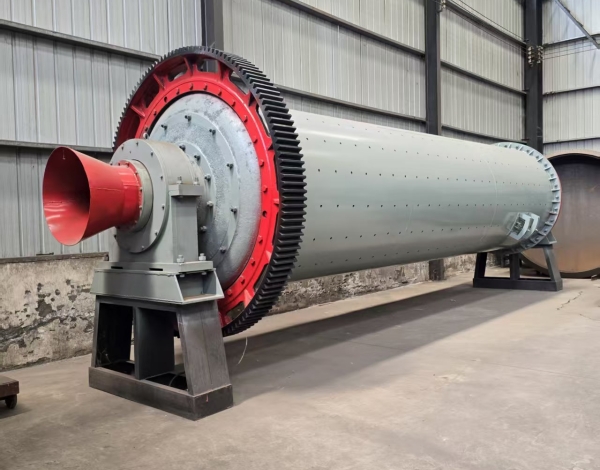
Grindability and hardness data then connect the target size to real equipment duty. The same ball mill can produce different throughputs when ore hardness, feed size, moisture, circulating load, and required fineness change. A capacity value copied from a model table cannot replace mineral processing test work that defines how much reduction the ore actually needs.
Separation tests show whether the liberated material responds to the proposed route. Magnetic testing can indicate response at different field conditions and grind sizes. Flotation testing can examine reagent response, residence requirements, selectivity, concentrate grade, and tailings loss. Gravity response may also be evaluated where mineral density and particle size make it relevant. These results define a process direction; they do not create a universal recovery figure for every future batch of ore.
A test result is only as useful as the sample behind it. Ore from one exposed face, one stockpile, or one drilling interval may not represent the material that will feed the plant over months or years. Weathered surface ore can differ from fresh ore at depth. Clay content, hardness, mineral composition, grade, and oxidation can also change across a deposit.
Representative sampling should therefore cover the expected feed and its important variations. When only limited material is available, the uncertainty should be stated openly in the design basis. A process can be planned around the best available evidence, but the quotation should identify which assumptions still need confirmation before equipment sizes and performance expectations are finalized.
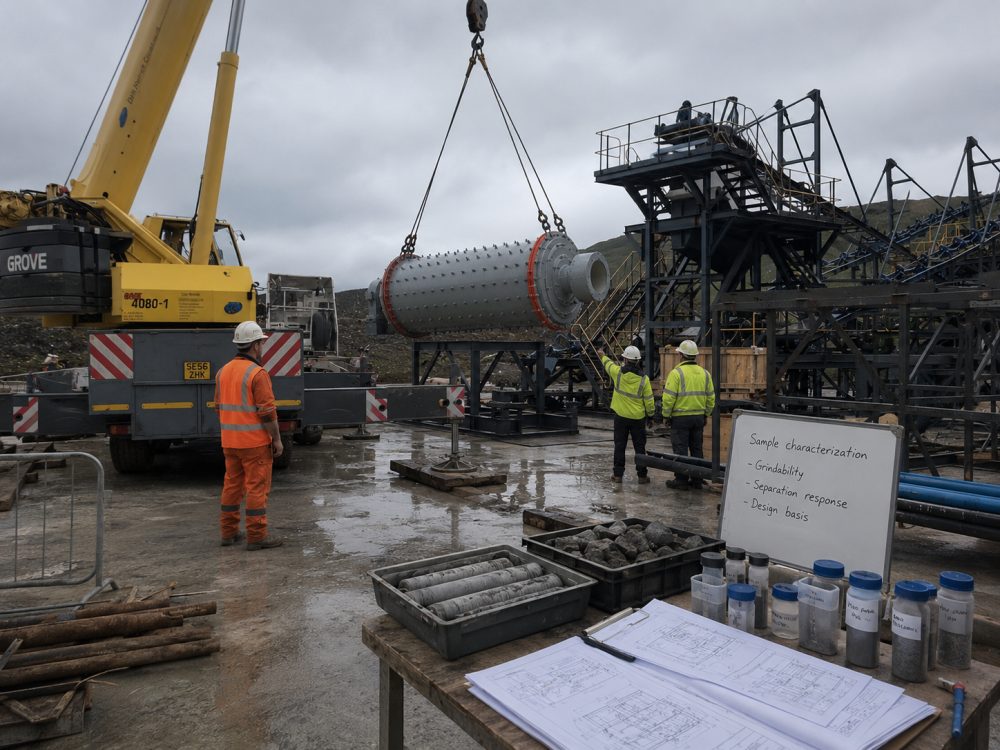
Test work affects more than the separation machine. Raw ore size, competency, and clay influence the crushing and screening arrangement. Grindability and liberation size affect ball mill duty, installed power, grinding media demand, and the load returning through a spiral classifier or another classification stage.
Magnetic response can change the number and duty of magnetic separation stages. Flotation response can change conditioning time, cell volume, roughing, cleaning, and scavenging requirements. Slurry concentration, particle-size distribution, clay, and water chemistry influence pumping, mixing, aeration, froth behavior, and reagent control. Concentrate and tailings characteristics then affect thickening, dewatering, water return, and storage planning.
A complete equipment list is therefore the output of connected decisions. If one test result changes the required grind from relatively coarse to much finer, the mill throughput, classifier load, slurry volume, and downstream equipment duty can all move with it. Selecting each machine from an isolated capacity table hides those relationships.
At the concept stage, a supplier can review the ore description, available assay, target capacity, final product, and site conditions. The result may be a preliminary process direction and a list of information still required. It is useful for early discussion, but it should not be presented as a verified plant design.
A budget quotation can go further when its assumptions are visible. It may use an expected feed size, provisional grinding target, assumed separation route, and defined supply boundary. The buyer can use it for initial investment planning while recognizing that later test results may change equipment duty or process stages.
A process-based equipment quotation needs stronger evidence. The design basis should connect representative ore data, liberation and grindability, separation response, capacity, water balance, product target, and tailings plan. At that point, equipment sizing and quotation scope can be discussed with fewer hidden assumptions and a clearer boundary between supplier equipment and site responsibilities.
A productive review starts with the reports that already exist. Buyers should share available assays, mineralogical observations, testwork summaries, sample descriptions, and any operating data from an existing plant. Raw ore size, expected variations, daily working hours, capacity target, and the required concentrate or final product should be stated in practical terms.
Site information belongs in the same discussion. Water quality and availability, power supply, elevation, climate, plant area, tailings arrangement, and local environmental requirements can change the feasible process and the supporting equipment. When a test report recommends a route without considering these conditions, the plant layout and quotation still need another engineering review.
A reliable beneficiation plant begins with evidence that connects the ore to the process. Grade, mineral form, liberation size, grindability, separation response, sample variability, and site conditions each remove a different area of uncertainty. The clearer this design basis becomes, the more useful the equipment quotation becomes.
If you are planning a beneficiation project, share the available assay and mineralogical reports, testwork summary, raw ore size, capacity target, required concentrate or product, water and power conditions, and site information. Sentai Machinery can review which assumptions are already supported, which questions remain open, and which equipment scope can be discussed responsibly. A clearer design basis creates a safer path from sample results to continuous plant operation.
Iron Ore Processing Plant Design: Confirm Ore Type Before Choosing the Process Route
Flotation Machine Selection: Why Ore Type and Slurry Condition Matter Before Cell Configuration
Why Is Magnetic Separator Recovery Lower Than Expected?
 WhatsApp
 Email
Email
 +86 15538010601