
STCrushers Is A Professional Minging Equipment Manufacturer since 2004, Providing High Quality Crushers, Sand Making Machines, Drying Equipment and more.
STCrushers Is A Professional Minging Equipment Manufacturer since 2004, Providing High Quality Crushers, Sand Making Machines, Drying Equipment and more.
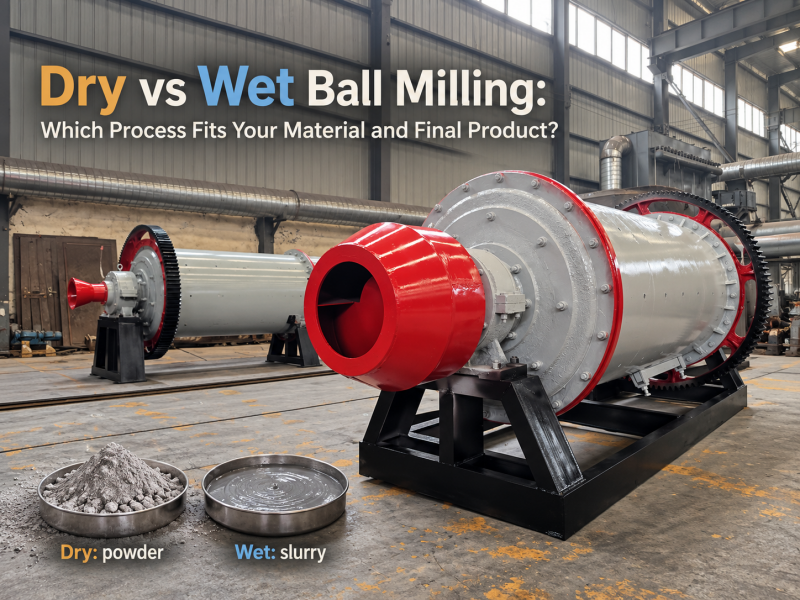
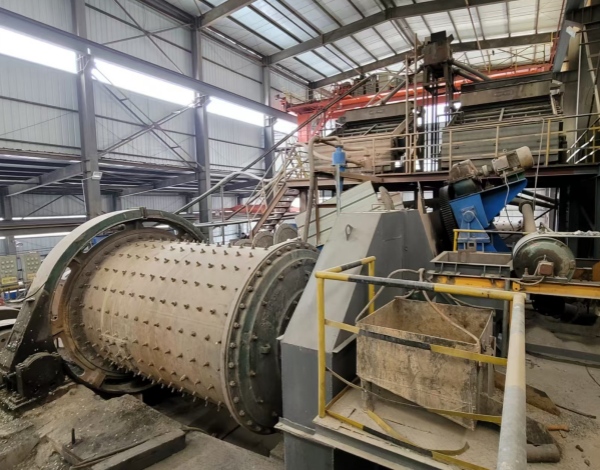
Will the ground material go into a powder silo, or flow as slurry to the next process? That question gives a ball mill buyer a useful starting point. Dry grinding produces a powder stream, while wet grinding uses liquid, usually water, to produce slurry. Both reduce particle size, but they require different arrangements around the mill.
The dry vs wet ball milling decision therefore starts with the intended product and its next destination. Material behavior, feed moisture, target fineness, and available utilities then determine whether that route is practical. A dry final product does not automatically rule out wet processing, but any later water removal must have a clear purpose and cost.
Before selecting a ball mill, describe the output in terms a supplier can evaluate: material, required particle size, moisture condition, and dry solids throughput. A slurry flow rate includes water and cannot be compared directly with tonnes of dry powder.
Dry grinding deserves consideration when the ground material must remain a powder for storage, blending, packing, or direct use. Cement finish grinding is a familiar example. In a cement grinding plant using purchased clinker, the grinding section must deliver cement suitable for the specified storage and dispatch arrangements. Adding water to create slurry would change that process substantially.
Feed condition still matters. Damp or sticky material can interfere with feeding, powder movement, and classification. Depending on the material and equipment, drying or conditioning may be required before or during grinding. There is no single acceptable feed moisture limit for every dry ball mill application; the supplier needs representative moisture information, including seasonal changes.
Some materials also change physically or chemically when water is introduced. That can favor a dry route, subject to product requirements and testing. Dry operation nevertheless needs suitable powder containment, collection, and temperature control. These are part of the proposed grinding system and should appear in its equipment scope.
Wet grinding is often a practical fit when subsequent processing already requires slurry. Flotation and wet magnetic separation are examples. A compatible wet grinding circuit can feed those stages without first producing and handling a separate dry powder. The required fineness should follow the separation objective, supported by ore test work, rather than a general request for the finest possible product.
Water addition must be controlled. Slurry that is too thick or too dilute for the selected circuit can affect transport, classification, and downstream operation. The appropriate operating condition depends on the material and process; it cannot be specified from the mill diameter alone.
Water supply and recovery also belong in the initial discussion. Buyers need to understand fresh water demand, recycled water quality, and where water leaves with products or tailings. The beneficiation plant water planning guide explains those connections. Wet grinding should not be selected on the assumption that all process water will be recovered without losses or further treatment.
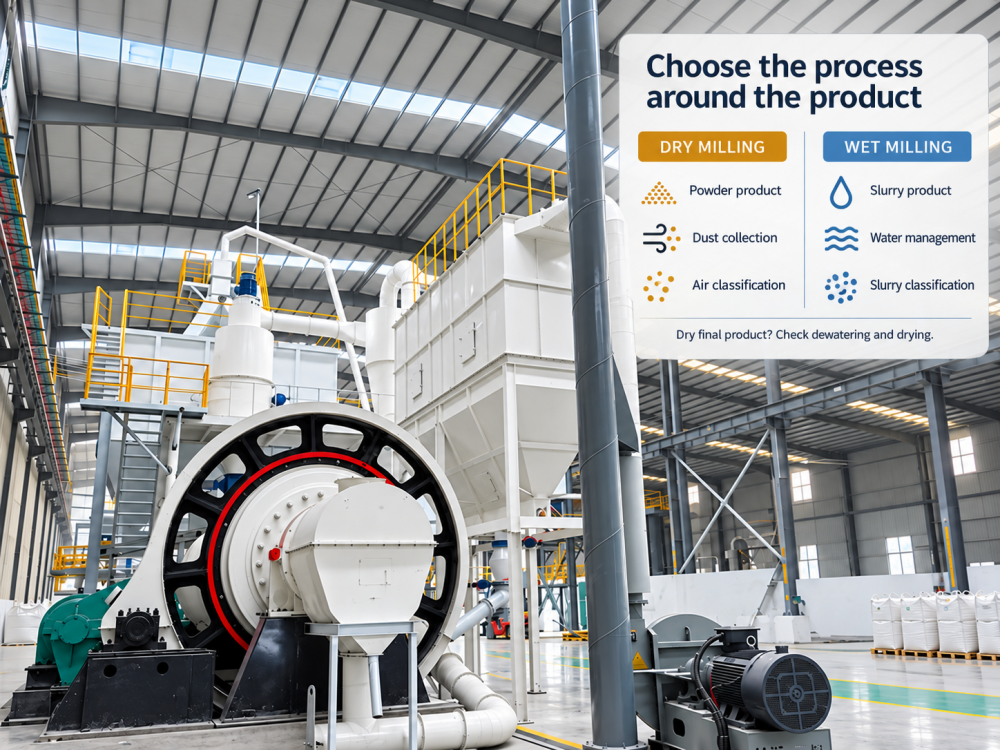
Two quotations may show similar mill sizes but include very different equipment. Ask each supplier to follow the material from the feed bin through grinding, size control, and discharge to the next process. The following comparison describes common arrangements; the final equipment list depends on the application.
System duty | Dry grinding route | Wet grinding route |
Material transfer | Suitable enclosed conveyors or pneumatic transport | Slurry sumps, pumps, and piping where required |
Size control | Air classification where specified | Hydrocyclones or other suitable wet classifiers |
Process support | Dust collection, ventilation, and possible drying | Water supply, controlled addition, and recovery arrangements |
Product handling | Powder storage, blending, or packing | Direct slurry use or later dewatering and possible drying |
Neither column is a universal package. For example, a wet beneficiation project may need concentrate filtration even though the grinding section discharges directly to separation. A dry powder circuit may need substantial air handling equipment. Space, maintenance access, and utility connections should be checked against the complete arrangement.
The mill purchase price is only one part of the comparison. Use the same feed material, dry solids rate, fineness requirement, operating schedule, and product specification for both proposals. Otherwise, a lower price may simply reflect a different duty or a smaller supply scope.
For a dry route, consider any feed drying, ventilation, filtration, and powder conveying. For a wet route, include water supply, pumping, recovery, and any required product dewatering or thermal drying. Both routes also incur grinding media, liner, maintenance, and electricity costs. Their relative importance depends on the project.
Agree on how the finished material will be checked. A maximum particle size and a percentage passing a specified size describe different requirements. Product moisture and acceptable contamination may also matter. Recording these conditions alongside the capacity target gives both suppliers the same basis for their proposals and helps prevent a seemingly comparable quotation from covering a different product.
A useful hypothetical comparison is a buyer selling bagged mineral powder and another feeding an existing flotation line. The first must evaluate the cost of removing water if wet grinding is proposed. The second must evaluate how a dry grinding section would connect to slurry preparation. Neither example establishes a universal cheaper option. Ask for the assumptions behind operating cost estimates and identify which remain subject to testing.
A ball mill model family may include dry and wet versions, but that does not establish that an installed machine can alternate freely. Feed and discharge arrangements, liners, seals, classification, transport equipment, and controls all need review for the intended duty.
Changing routes is therefore a process modification. Ask the manufacturer to assess the specific mill and its supporting equipment before planning a conversion. The broader ball mill selection guide provides the remaining purchase information to confirm once the route is defined.
Choose the grinding route that can deliver the required material condition reliably through the whole process. Start with the downstream use, then check material compatibility, feed condition, water availability, and the supporting equipment. A well-defined duty makes quotations more useful and exposes costs that a mill price alone cannot show.
Send Sentai Machinery your material details, feed size and moisture, required fineness, dry solids capacity, and intended product use. Include available water and any existing downstream equipment. These details help the team compare suitable configurations and identify whether sample testing is needed before selecting the mill.
Can You Produce Cement From Purchased Clinker? Equipment Needed for a Cement Grinding Plant
How Much Water Does a Beneficiation Plant Need? Planning Fresh Water, Recycling, and Tailings Flow
What Buyers Should Confirm Before Choosing a Ball Mill for Ore Grinding
 WhatsApp
 Email
Email
 +86 15538010601